


The Executive Yuan yesterday approved a proposed amendment to the Civil Code that would prohibit parents from harming the mental and physical health of their children when disciplining them.
Article 1085 of the Civil Code stipulates that parents may, within the limit of necessity, punish their children. The article is widely perceived as a legal basis that establishes the right of parents to punish their children.
The amendment proposed by the Ministry of Justice would delete the statement and change it to: “Parents should protect and raise underage children by considering their age and mental development and respecting their character. They must not engage in violent behaviors that harm mental and physical health.”
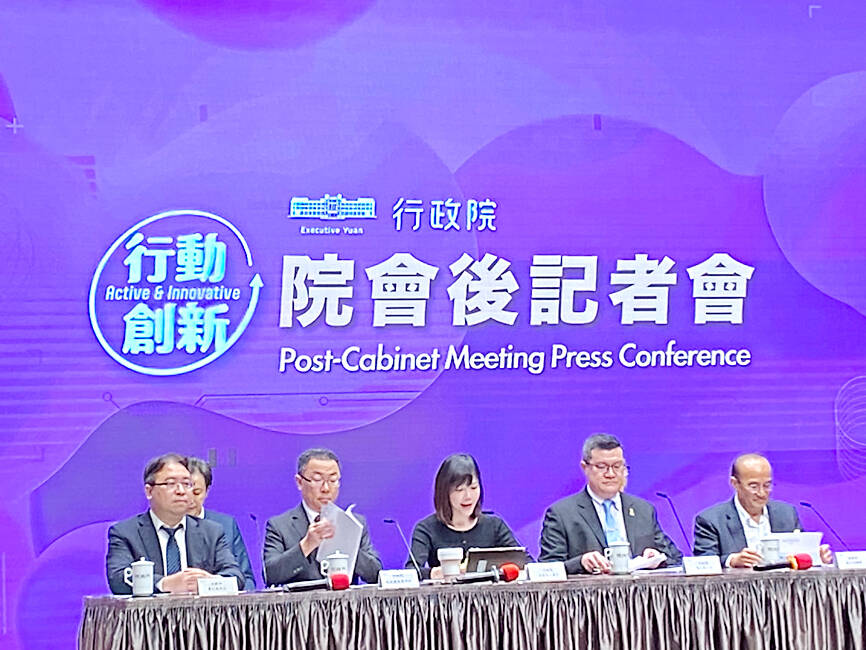
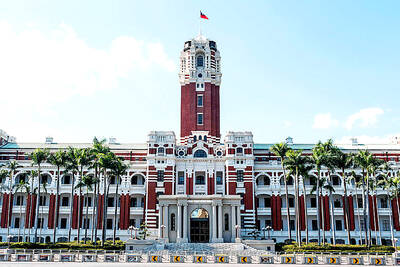
Photo: Chung Li-hua, Taipei Times
The proposed changes face further deliberation in the legislature.
The ministry said it consulted Article 19 of the Convention on the Rights of the Child and the Control Yuan’s National Human Rights Commission, adding that the wording of the proposed amendment is in line with similar statutes that Japan and South Korea passed in the past few years.
The purpose of the proposed change is to clarify the principle that parents should follow when they exercise their right to discipline their children, the ministry said, adding that supporting measures would be stipulated in the Protection of Children and Youths Welfare and Rights Act (兒童及少年福利與權益保障法).
Minister Without Portfolio Lin Min-hsin (林明昕) said that courts in multiple cases have established that parents must not harm their children’s mental and physical health when disciplining them, a “red line” that parents must not cross.
The judicial system and parental education policies would not change significantly because of the proposed amendment, Lin said.
The proposal is not intended to prohibit parental discipline of their children, Department of Protective Services Deputy Director Kuo Tsai-jung (郭彩榕) said.
“We hope that they would adopt a more positive approach,” Kuo said.
The Ministry of Education said that parents can seek advice at family education centers across the country.
They can also consult the ministry’s family education Web site at https://familyedu.moe.gov.tw or call the family education hotline on (02) 412-8185, the education ministry added.
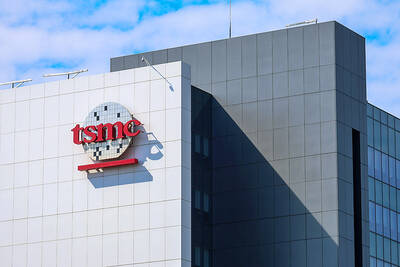
Taiwan Semiconductor Manufacturing Co (TSMC, 台積電), the world’s largest foundry service provider, yesterday said that global semiconductor revenue is projected to hit US$1.5 trillion in 2030, after the figure exceeds US$1 trillion this year, as artificial intelligence (AI) demand boosts consumption of token and compute power. “We are still at the beginning of the AI revolution, but we already see a significant impact across the whole semiconductor ecosystem,” TSMC deputy cochief operating officer Kevin Zhang (張曉強) said at the company’s annual technology symposium in Hsinchu City. “It is fair to say that in the past decade, smartphones and other mobile devices were
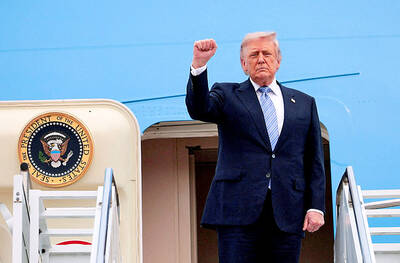
US-CHINA SUMMIT: MOFA welcomed US reassurance of no change in its Taiwan policy; Trump said he did not comment when Xi talked of opposing independence US President Donald Trump yesterday said he has not made a decision on whether to move forward with a major arms package for Taiwan after hearing concerns about it from Chinese President Xi Jinping (習近平). Trump’s comments on Taiwan came as he flew back to Washington after wrapping up critical talks in which both leaders said important progress was made in stabilizing US-China relations even as deep differences persist between the world’s two biggest powers on Iran and Taiwan. “I will make a determination,” Trump said, adding: “I’ll be making decisions. But, you know, I think the last thing we need right
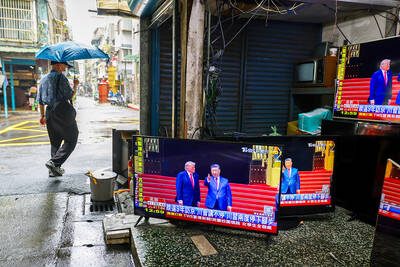
TAIWAN ISSUE: US treasury secretary Scott Bessent said on the first day of meetings that ‘it wouldn’t be a US-China summit without the Taiwan issue coming up’ There were no surprises on the first day of the summit between US President Donald Trump and Chinese President Xi Jinping (習近平), the Mainland Affairs Council (MAC) said yesterday, as the government reiterated that cross-strait stability is crucial to the Asia-Pacific region, as well as the world. As the two presidents met for a highly anticipated summit yesterday, Chinese state media reported that Xi warned Trump that missteps regarding Taiwan could push their two countries into “conflict.” Trump arrived in China with accolades for his host, calling Xi a “great leader” and “friend,” and extending an invitation to visit the White House
SECURITY: Taipei presses the US for arms supplies, saying the arms sales are not only a reflection of the US security commitment to Taiwan but also serve as a mutual deterrent against regional threats Taiwan is committed to preserving the cross-strait “status quo” and contributing to regional peace and stability, the Presidential Office said yesterday. “It is an undeniable fact that the Republic of China is a sovereign and independent democratic nation,” Presidential Office spokeswoman Karen Kuo (郭雅慧) reiterated, adding that Beijing has no right to claim sovereignty over Taiwan. The statements came after US President Donald Trump warned against Taiwanese independence. Trump wrapped up a state visit to Beijing on Friday, during which Chinese President Xi Jinping (習近平) had pressed him not to support Taiwan. Taiwan depends heavily on US security backing to deter China from carrying


 RSS
RSS