


More than 180,000 people yesterday celebrated LGBTQ+ equality and diversity in Taipei at East Asia’s largest Pride march, joined by Vice President Hsiao Bi-khim (蕭美琴) and the reigning queen of RuPaul’s Drag Race, Nymphia Wind.
Taiwan legalized same-sex marriage in 2019 in a first for East Asia, a region where the rights of sexual minorities are often either suppressed or outlawed.
The theme of the 22nd iteration of the march was “embracing inclusion,” said Fletcher Hong (小鯨), chairman of the Taiwan Rainbow Civil Action Association, the parade’s organizer.
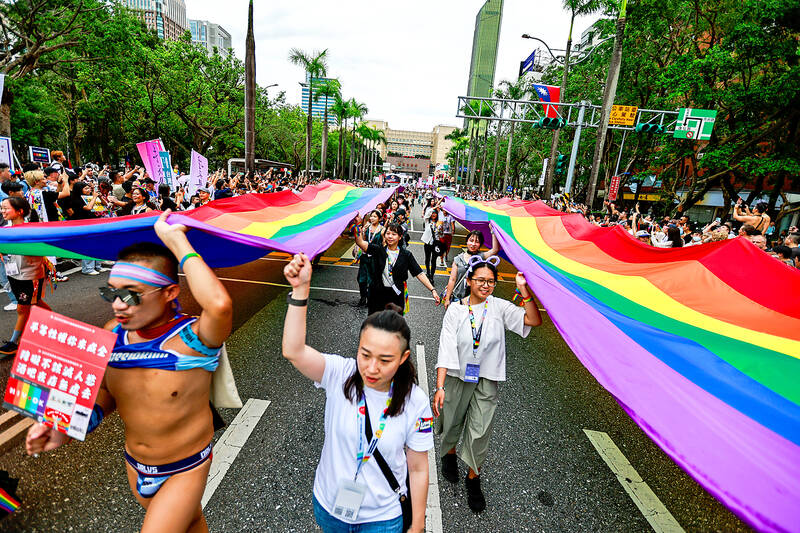
Photo: Daniel Ceng, EPA-EFE
Inclusion has long been a goal of the LGBTQ+ community and the organizers hope that every person can be included in making national decisions and that people can respect each other’s differences, he said.
Regarding criticism of a ruling that allows Taiwanese to change their gender on their national identification card without reassignment therapy, Hong said the LGBTQ community supports people’s right to not have their identity challenged by others.
The discourse surrounding transgender women using women’s restrooms is about sowing fear and mistrust, not protecting women’s safety, he added.
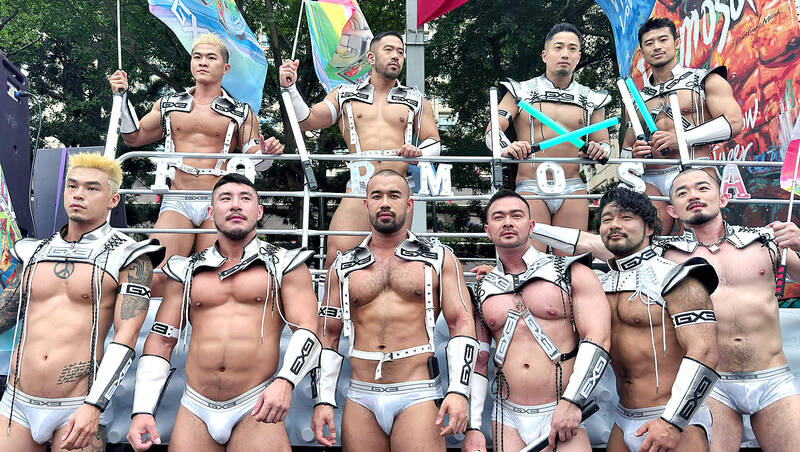
Photo: Liu Hsin-de, Taipei Times
Association spokesman Simon Tai (戴佑勳) said 194 groups signed up for this year’s parade, with 100 vendors including 30 nonprofit stalls in the “rainbow market” and more than 20 vendors supporting LGBTQ-friendly hotels.
Australian, British, Canadian, New Zealand, Swedish and US representative offices and groups from Malaysia, Hong Kong and Japan joined the event, he said.
Non-governmental organizations invited to speak at the event’s stage included advocacy groups for indigenous people and people with HIV, with the latter calling for attention to inadequate long-term care for aging AIDS patients, he said.
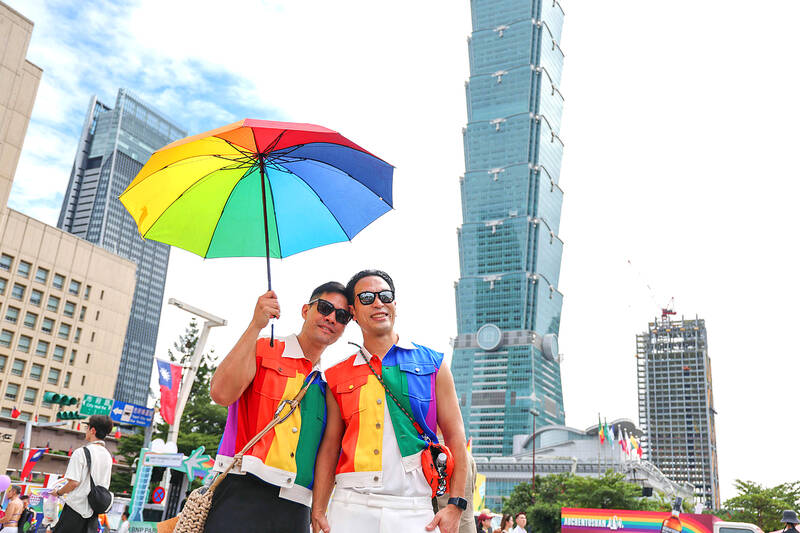
Photo: by Yu Chien-huang, AFP
Nymphia, who won RuPaul’s Drag Race in April, appeared at the parade wearing an outfit inspired by medieval armor with a rainbow flag shoulder cape.
“I just have to come back every year for the parade,” she said, describing her armor look as representing the defense of gay rights.
Hsiao led the Democratic Progressive Party delegation, marching behind a banner reading “Be Yourself.”
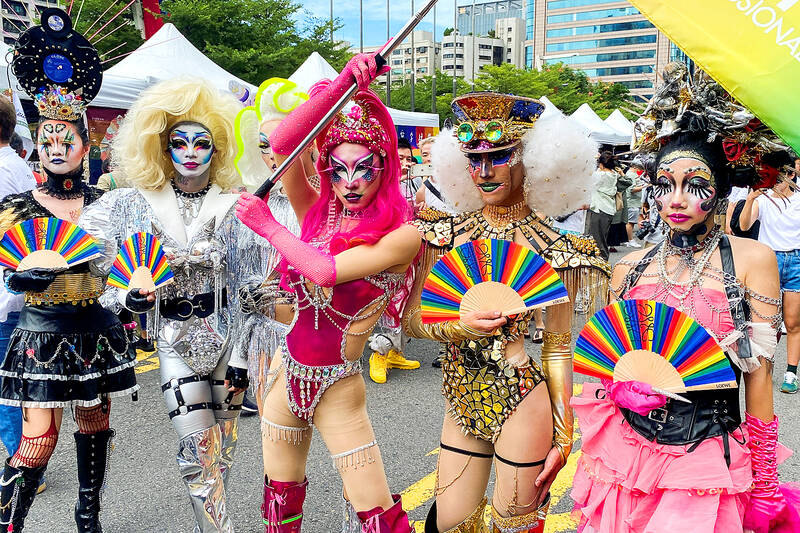
Photo: Ben Blanchard, Reuters
She said Taiwanese should be proud of their hard work in making the nation a beacon of progressive values.
President William Lai (賴清德) posted a video message of support on social media, saying he could not march in person this year due to prior appointments and for security reasons.
“The government will continue to work hard to put into practice gender equality so everyone in this land of Taiwan can embrace inclusion and not fear what others think,” he said.
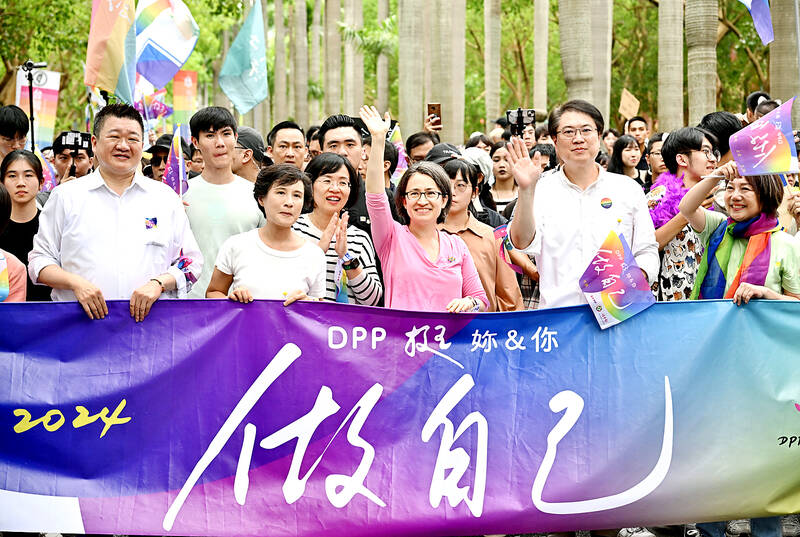
Photo: Liu Hsin-de, Taipei Times
Taiwan People’s Party (TPP) Legislator Vivian Huang (黃珊珊) said political parties should work together to make Taiwan a more harmonious society by supporting the right to have children regardless of sexual orientation or gender identity.
TPP Legislator Chen Gau-tzu (陳昭姿) said that surrogacy legalization would benefit same-sex couples that want to raise a family.
First launched in 2003, the annual Pride parade in Taipei has grown over the years to become one of the largest in Asia.
Event organizers said that the more than 180,000 people who participated in yesterday’s event was more than last year’s 176,000 attendees.
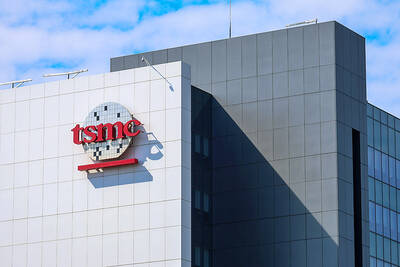
Taiwan Semiconductor Manufacturing Co (TSMC, 台積電), the world’s largest foundry service provider, yesterday said that global semiconductor revenue is projected to hit US$1.5 trillion in 2030, after the figure exceeds US$1 trillion this year, as artificial intelligence (AI) demand boosts consumption of token and compute power. “We are still at the beginning of the AI revolution, but we already see a significant impact across the whole semiconductor ecosystem,” TSMC deputy cochief operating officer Kevin Zhang (張曉強) said at the company’s annual technology symposium in Hsinchu City. “It is fair to say that in the past decade, smartphones and other mobile devices were
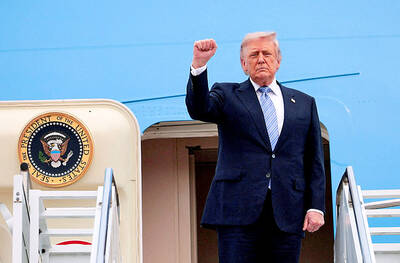
US-CHINA SUMMIT: MOFA welcomed US reassurance of no change in its Taiwan policy; Trump said he did not comment when Xi talked of opposing independence US President Donald Trump yesterday said he has not made a decision on whether to move forward with a major arms package for Taiwan after hearing concerns about it from Chinese President Xi Jinping (習近平). Trump’s comments on Taiwan came as he flew back to Washington after wrapping up critical talks in which both leaders said important progress was made in stabilizing US-China relations even as deep differences persist between the world’s two biggest powers on Iran and Taiwan. “I will make a determination,” Trump said, adding: “I’ll be making decisions. But, you know, I think the last thing we need right
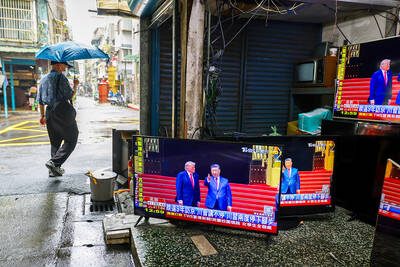
TAIWAN ISSUE: US treasury secretary Scott Bessent said on the first day of meetings that ‘it wouldn’t be a US-China summit without the Taiwan issue coming up’ There were no surprises on the first day of the summit between US President Donald Trump and Chinese President Xi Jinping (習近平), the Mainland Affairs Council (MAC) said yesterday, as the government reiterated that cross-strait stability is crucial to the Asia-Pacific region, as well as the world. As the two presidents met for a highly anticipated summit yesterday, Chinese state media reported that Xi warned Trump that missteps regarding Taiwan could push their two countries into “conflict.” Trump arrived in China with accolades for his host, calling Xi a “great leader” and “friend,” and extending an invitation to visit the White House
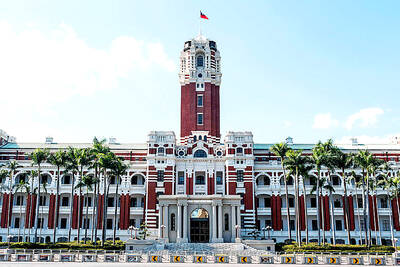
SECURITY: Taipei presses the US for arms supplies, saying the arms sales are not only a reflection of the US security commitment to Taiwan but also serve as a mutual deterrent against regional threats Taiwan is committed to preserving the cross-strait “status quo” and contributing to regional peace and stability, the Presidential Office said yesterday. “It is an undeniable fact that the Republic of China is a sovereign and independent democratic nation,” Presidential Office spokeswoman Karen Kuo (郭雅慧) reiterated, adding that Beijing has no right to claim sovereignty over Taiwan. The statements came after US President Donald Trump warned against Taiwanese independence. Trump wrapped up a state visit to Beijing on Friday, during which Chinese President Xi Jinping (習近平) had pressed him not to support Taiwan. Taiwan depends heavily on US security backing to deter China from carrying


 RSS
RSS