


The estranged brother of former Singaporean prime minister Lee Hsien Loong (李顯龍) said he has been given political asylum by the British government on grounds of a “well-founded fear” of persecution.
Lee Hsien Yang (李顯揚), 67, in a Facebook post said he had become a “political refugee,” as he and his late sister “feared the abuse of the organs of the Singapore state against us” after a very public feud over the fate of a home that belonged to their father and the country’s founding prime minister Lee Kuan Yew (李光耀).
Lee Hsien Yang said he applied for asylum back in 2022.
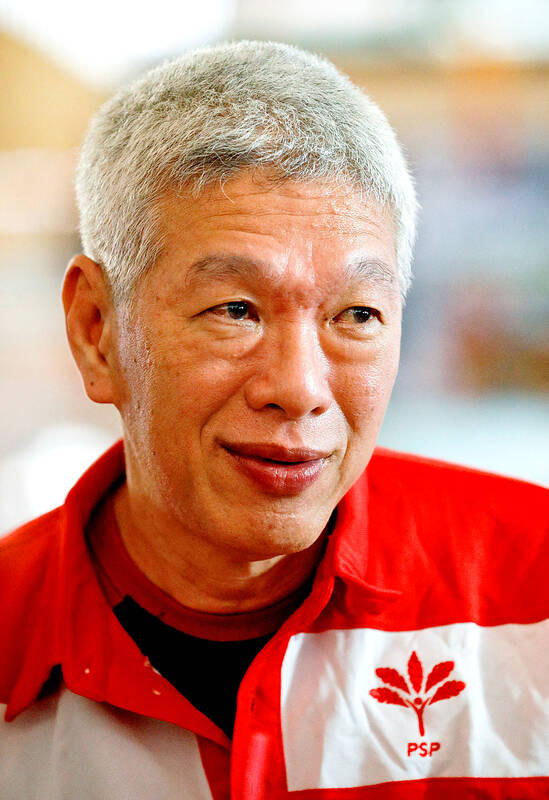
Photo: Reuters
The UK approved the former Singapore Telecommunications CEO’s asylum request in August, and he is permitted to remain in the country for five years, according to a letter from the British Home Office shared by Lee Hsien Yang.
He has lived in self-imposed exile in Europe since June 2022 following a police investigation of him and his wife over their handling of the last will of his father.
The revelation over Lee Hsien Yang’s asylum is the latest twist in a bitter family feud that centers on a years-long disagreement over whether to demolish the family home. The dispute resurfaced this month after the death of his sister Lee Wei Ling (李瑋玲) who was living at the colonial-era house at 38 Oxley Rd near Singapore’s glitzy shopping district.

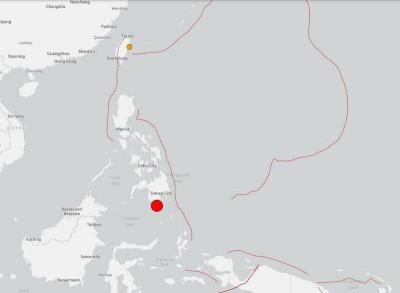
A magnitude 7.8 earthquake struck off the southern coast of Mindanao in the Philippines at 7:38am today, prompting the US Tsunami Warning System to issue an alert for neighboring countries, including Taiwan. The system issued a purple alert indicating a "tsunami threat." The potential threat zone includes Taiwan, the Philippines, Papua New Guinea, Yap and Palau. A spokesperson for Indonesia disaster mitigation agency said there were no reports of damage so far. Arlene Hollero, disaster chief of Maasim town in the Philippines' Sarangani Province, said their evacuation was underway in coastal villages and there were no reported casualties so far. DZBB radio, broadcasting from the

RESILIENCE: Taiwan plays a key role in semiconductors, energy, information infrastructure and advanced manufacturing, AIT Director Raymond Greene said Taiwan’s continued investment in deterrence and resilience remains vital, especially in uncrewed systems and other emerging technologies, American Institute in Taiwan (AIT) Director Raymond Greene said yesterday. Greene made the remarks at the annual National Strategic Summit on Supply Chain Resilience held by the Research Institute for Democracy, Society and Emerging Technology (DSET), a government-backed think tank. As Taiwan last year became the US’ fourth-largest trading partner and supply chain security is becoming more important, cooperation in emerging technologies continues to deepen between the two countries, he said. The US is committed to accelerating innovation, building key infrastructure, strengthening cooperation

The National Chungshan Institute of Science and Technology yesterday showcased its locally developed variants of the Vision 60 robotic patrol dog, which it plans to deploy on the nation’s outlying territories in the South China Sea. The variants were produced under the Joint Lab project — created by the institute and domestic companies — and assembled with domestically produced motors, lenses and artificial intelligence (AI) systems alongside licensed tech from the US, Missile and Rocket Systems Research Division deputy director Jen Kuo-kang (任國光) told the media event at a military base in Taipei’s Dazhi (大直) area. Taiwan has built up its strengths
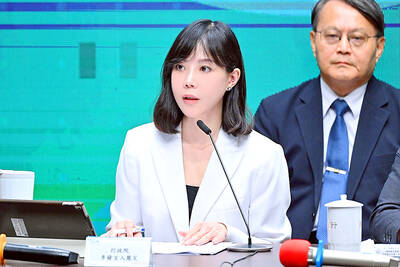
RIGHT DIRECTION: Taiwan’s efforts to prevent forced labor include a proposal to ‘fully prohibit’ employers from withholding workers’ documents, an official said Taiwan is to establish a mechanism to restrict imports of goods linked to forced labor, the Executive Yuan said yesterday, after the US proposed imposing additional tariffs on Taiwanese goods over labor concerns. “The Ministry of Labor and the Ministry of Economic Affairs are to establish an interministerial review procedure,” Executive Yuan spokesperson Michelle Lee (李慧芝) said at a news briefing in Taipei. “The government is to use the Foreign Trade Act [貿易法] as the legal basis to restrict imports of goods produced with forced labor” and bring its supply chain governance more in line with international standards on human rights, resilience


 RSS
RSS