


More than 370 million girls and women alive today, or one in every eight worldwide, experienced rape or sexual assault before the age of 18, the UN children’s agency said on Wednesday.
The number rises to 650 million, or one in five, when taking into account “non-contact” forms of sexual violence, such as online or verbal abuse, UNICEF reported, in what it called the first global survey of the problem.
While girls and women were the worst affected, 240 to 310 million boys and men, or about one in 11, have experienced rape or sexual assault during childhood, the report added.
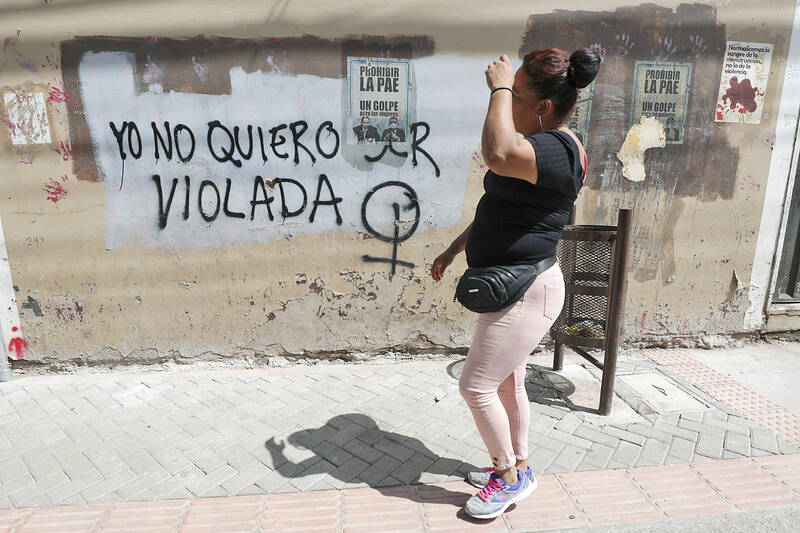
Photo: EPA-EFE
“The scale of this human rights violation is overwhelming, and it’s been hard to fully grasp because of stigma, challenges in measurement and limited investment in data collection,” UNICEF said in releasing the report.
It comes ahead of an inaugural Global Ministerial Conference on Ending Violence Against Children in Colombia next month.
UNICEF said its findings highlight the urgent need for intensified global action, including by strengthening laws and helping children recognize and report sexual violence.
Sexual violence cuts across geographical, cultural and economic boundaries, but Sub-Saharan Africa has the highest number of victims, with 79 million girls and women, or 22 percent affected, it said.
East and Southeast Asia follow with 75 million, or 8 percent, it said.
In its data for women and girls, UNICEF estimated that 73 million, or 9 percent, were affected in Central and South Asia; 68 million, or 14 percent, in Europe and North America; 45 million, or 18 percent, in Latin America and the Caribbean; and 29 million, or 15 percent, in North Africa and West Asia.
Oceania, with 6 million, had the highest number affected by percentage, at 34 percent.
Risks were higher, rising to one in four, in “fragile settings,” including those with weak institutions, UN peacekeeping forces or large numbers of refugees, the report found.
UNICEF Executive Director Catherine Russell called sexual violence against children “a stain on our moral conscience.”
“It inflicts deep and lasting trauma, often by someone the child knows and trusts, in places where they should feel safe,” she said.
Most childhood sexual violence occurs during adolescence, especially between ages 14 and 17, and those who suffer it face higher risks of sexually transmitted diseases, substance abuse and mental health issues, the agency said.
“The impact is further compounded when children delay disclosing their experiences ... or keep the abuse secret altogether,” UNICEF said.
Increased investment in data collection is needed to capture the full scale the problem, given persistent data gaps, particularly on boys’ experiences, it said.
UNICEF said it based its estimates of girls’ and women’s experiences on nationally representative surveys conducted from 2010 to 2022 in 120 countries and areas.
The agency added that estimates for boys and men were derived from a broader range of data sources and applied some indirect methods.
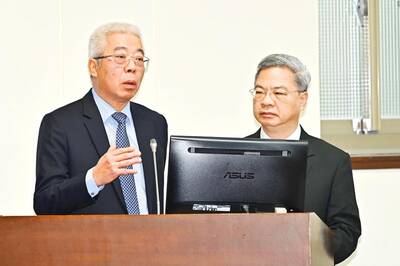
Taiwan has arranged for about 8 million barrels of crude oil, or about one-third of its monthly needs, to be shipped from the Red Sea this month to bypass the Strait of Hormuz and ease domestic supply pressures, CPC Corp, Taiwan (CPC, 台灣中油) said yesterday. The state-run oil company has worked with Middle Eastern suppliers to secure routes other than the Strait of Hormuz, through which about 20 percent of the world’s oil and liquefied natural gas typically passes, CPC chairman Fang Jeng-zen (方振仁) said at a meeting of the legislature’s Economics Committee in Taipei. Suppliers in Saudi Arabia have indicated they

South Korea has adjusted its electronic arrival card system to no longer list Taiwan as a part of China, a move that the Ministry of Foreign Affairs said would help facilitate exchanges between the two sides. South Korea previously listed “Taiwan” as “Taiwan (China)” in the drop-down menus of its online arrival card system, where people had to fill out where they came from and their next destination. The ministry had requested South Korea make a revision and said it would change South Korea’s name on Taiwan’s online immigration system from “Republic of Korea” to “Korea (South),” should the issue not be

CCP ‘PAWN’? Beijing could use the KMT chairwoman’s visit to signal to the world that many people in Taiwan support the ‘one China’ principle, an academic said Chinese Nationalist Party (KMT) Chairwoman Cheng Li-wun (鄭麗文) yesterday arrived in China for a “peace” mission and potential meeting with Chinese President Xi Jinping (習近平), while a Taiwanese minister detailed the number of Chinese warships currently deployed around the nation. Cheng is visiting at a time of increased Chinese military pressure on Taiwan, as the opposition-dominated Legislative Yuan stalls a government plan for US$40 billion in extra defense spending. Speaking to reporters before going to the airport, Cheng said she was going on a “historic journey for peace,” but added that some people felt uneasy about her trip. “If you truly love Taiwan,

Tainan, Taipei and New Taipei City recorded the highest fines nationwide for illegal accommodations in the first quarter of this year, with fines issued in the three cities each exceeding NT$7 million (US$220,639), Tourism Administration data showed. Among them, Taipei had the highest number of illegal short-term rental units, with 410. There were 3,280 legally registered hotels nationwide in the first quarter, down by 14 properties, or 0.43 percent, from a year earlier, likely indicating operators exiting the market, the agency said. However, the number of unregistered properties rose to 1,174, including 314 illegal hotels and 860 illegal short-term rental


 RSS
RSS