


The Ministry of the Interior on Friday published a preview of amendments to the Regulations to Standardize Subletting Contracts (住宅轉租定型化契約應記載及不得記載事項) that would ban subletters from forbidding tenants to apply for rental housing subsidies from the government.
The new regulations also would ban subletters from overcharging for electricity, the ministry said, adding the new rules aim to better protect tenants’ rights.
About 700,000 to 870,000 people living in rental units are expected to benefit from the new rules, the ministry said, citing data from the Directorate-General of Budget, Accounting and Statistics.
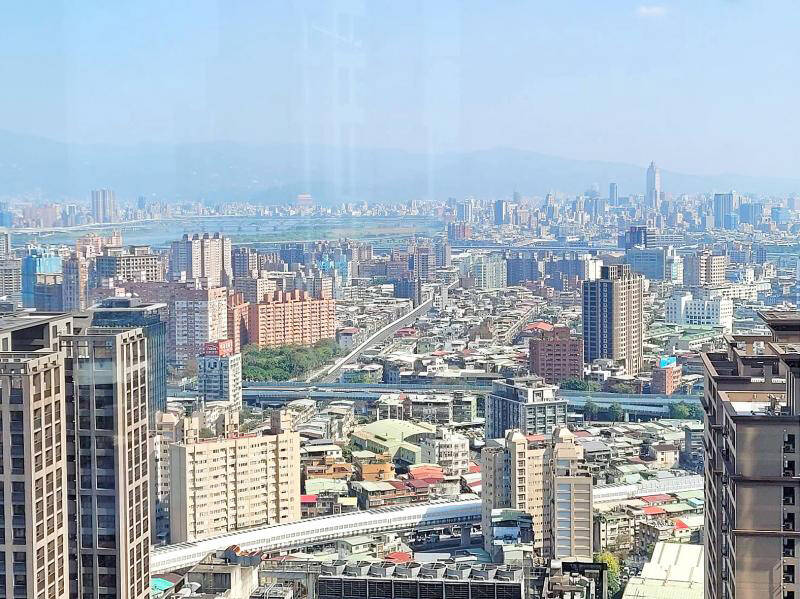
Photo: Lai Hsiao-tung, Taipei Times
The amendments target subletters, whereas amendments to the Mandatory and Prohibitory Provisions of Standard Form Contract for Housing Rental (住宅租賃定型化契約應記載及不得記載事項), which took effect on July 15, are aimed at landlords who rent directly to tenants.
The amendments to the Regulations to Standardize Subletting Contracts regulate how subletters charge for electricity.
Subletters must provide tenants with a means of monitoring power use, and subletters who are proven to have overcharged tenants can be fined up to NT$300,000, the amendments state.
If subletters wish to charge tenants for power from public facilities and all residents have agreed to share the cost, they have an obligation to understand the complex methodology of how such power fees are shared, the amendments state.
Subletters should work with other residents within the building to clarify issues, such as by setting up independent electricity meters, before they can begin charging their tenants, they say.
Tenants could file a complaint with their local government’s consumer protection or land administration unit regarding any contraventions of the rules, the ministry said.
Subletters who fail to rectify contraventions would be fined NT$30,000 to NT$300,000, it said, adding that if they fail to solve the issue a third time, they could be fined NT$50,000 to NT$500,000.
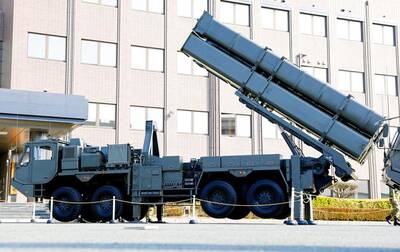
Japan has deployed long-range missiles in a southwestern region near China, the Japanese defense minister said yesterday, at a time when ties with Beijing are at their lowest in recent years. The missiles were installed in Kumamoto in the southern region of Kyushu, as Japan is attempting to shore up its military capacity as China steps up naval activity in the East China Sea. “Standoff defense capabilities enable us to counter the threat of enemy forces attempting to invade our country ... while ensuring the safety of our personnel,” Japanese Minister of Defense Shinjiro Koizumi said. “This is an extremely important initiative for
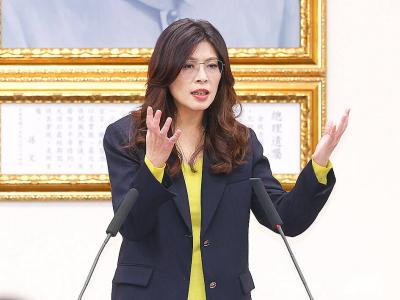
Chinese Nationalist Party (KMT) Chairwoman Cheng Li-wun (鄭麗文) today accepted an invitation from Chinese President Xi Jinping (習近平) to lead a delegation to China next month, saying she hopes to promote the peaceful development of cross-strait relations and bring stability to the Taiwan Strait. “I am grateful and happy to accept this invitation,” Cheng said in a statement from the KMT chairperson’s office. Cheng said she hopes both sides can work together to promote the peaceful development of cross-strait relations, enhance exchange and cooperation, bring stability to the Taiwan Strait and improve people’s livelihoods. At today's news conference, Cheng said any efforts to
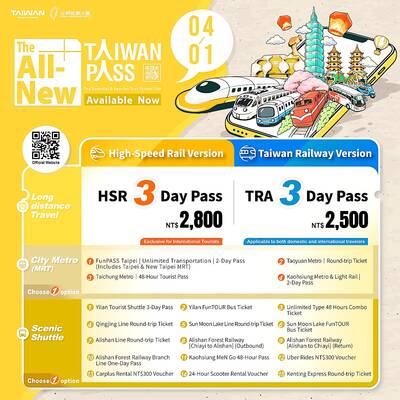
MORE POPULAR: Taiwan Pass sales increased by 59 percent during the first quarter compared with the same period last year, the Tourism Administration said The Tourism Administration yesterday said that it has streamlined the Taiwan Pass, with two versions available for purchase beginning today. The tourism agency has made the pass available to international tourists since 2024, allowing them to access the high-speed rail, Taiwan Railway Corp services, four MRT systems and four Taiwan Tourist Shuttles. Previously, five types of Taiwan Pass were available, but some tourists have said that the offerings were too complicated. The agency said only two types of Taiwan Pass would be available, starting from a three-day pass with the high-speed rail and a three-day pass with Taiwan Railway Corp. The former costs NT$2,800

The nation’s fastest supercomputer, Nano 4 (晶創26), is scheduled to be launched in the third quarter, and would be used to train large language models in finance and national defense sectors, the National Center for High-Performance Computing (NCHC) said. The supercomputer, which would operate at about 86.05 petaflops, is being tested at a new cloud computing center in the Southern Taiwan Science Park in Tainan. The exterior of the server cabinet features chip circuitry patterns overlaid with a map of Taiwan, highlighting the nation’s central position in the semiconductor industry. The center also houses Taiwania 2, Taiwania 3, Forerunner 1 and


 RSS
RSS