


Foreign manufacturers of a food import flagged for a serious safety infraction would be from tomorrow at the earliest banned from exporting to Taiwan on the first offense, the Food and Drug Administration (FDA) said on Tuesday, amid a spike in food products from China failing border inspections.
Current regulations require several stages of testing according to risk level, with a ban only implemented if conditions are not improved after warnings.
The zero-tolerance policy announced this week is the strictest import food safety standard the FDA has ever initiated.
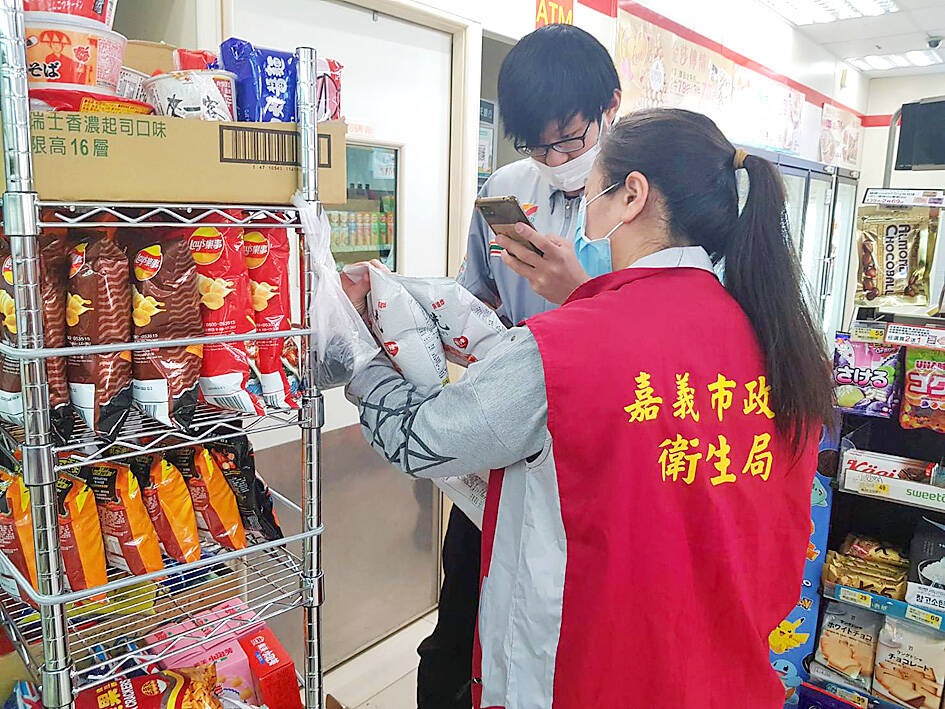
Photo courtesy of Chiayi City Public Health Bureau
It comes amid an increase in food imports flagged as having traces of seriously harmful additives, particularly from China.
Of particular concern are chili powder imports with traces of Sudan III, a red industrial dye banned from use in food processing that is classified by the International Agency for Research on Cancer as a Category 3 carcinogen.
Earlier this week, prosecutors questioned nine employees implicated in a chili powder case discovered last month, with the Yunlin District Court on Tuesday approving the detention of one employee suspected of falsifying a safety report to cover up the presence of Sudan III.
A Yunlin District Prosecutors’ Office spokesperson said the head of research and development at spice vendor Chiseng Hong Ltd (濟生), a man surnamed Kuo (郭), has been ordered to be detained, while a subordinate, a woman surnamed Kuo, has been released on NT$50,000 bail.
The two are suspected of contravening the Act Governing Food Safety and Sanitation (食品安全衛生管理法) by falsifying a report on a seasoning powder from quality testing company SGS Taiwan (SGS台灣), saying it did not contain Sudan III.
The employees allegedly falsified the report to prevent the product’s clients, including retailer PX Mart Co (全聯實業), from thinking the product was not safe.
The seasoning was sourced from New Taipei City-based raw material dealer Bao Hsin Enterprises Co (保欣企業) and supplied by Chinese company Sanhe Drug Co (三禾藥業).
The case of Sudan dyes came to light when the Chiseng product was tested by Yunlin County health authorities on Jan. 30.
The discovery led to random inspections that have so far found four batches of problematic chili powder supplied by Bao Hsin, the FDA said, adding that 21,235kg of the powder had been recalled as of Monday.
The agency’s latest announcement of flagged imports on Tuesday showed another batch of chili powder, mushroom seasoning and dried bitter melon from China with excessive pesticide levels.
Additional reporting by CNA

PROVOCATIVE: Chinese Deputy Ambassador to the UN Sun Lei accused Japan of sending military vessels to deliberately provoke tensions in the Taiwan Strait China denounced remarks by Japan and the EU about the South China Sea at a UN Security Council meeting on Monday, and accused Tokyo of provocative behavior in the Taiwan Strait and planning military expansion. Ayano Kunimitsu, a Japanese vice foreign minister, told the Council meeting on maritime security that Tokyo was seriously concerned about the situation in the East China and South China seas, and reiterated Japan’s opposition to any attempt to change the “status quo” by force, and obstruction of freedom of navigation and overflight. Stavros Lambrinidis, head of the EU delegation to the UN, also highlighted South China Sea

SILENCING CRITICS: In addition to blocking Taiwan, China aimed to prevent rights activists from speaking out against authoritarian states, a Cabinet department said The Ministry of Foreign Affairs (MOFA) yesterday condemned transnational repression by Beijing after RightsCon, a major digital human rights conference scheduled to be held in Zambia this week, was abruptly canceled due to Chinese pressure over Taiwanese participation. This year’s RightsCon, the world’s largest conference discussing issues “at the intersection of human rights and technology,” was scheduled to take place from tomorrow to Friday in Lusaka, and expected to draw 2,600 in-person attendees from 150 countries, along with 1,100 online participants. However, organizers were forced to cancel the event due to behind-the-scenes pressure from China, the ministry said, expressing its “strongest condemnation”
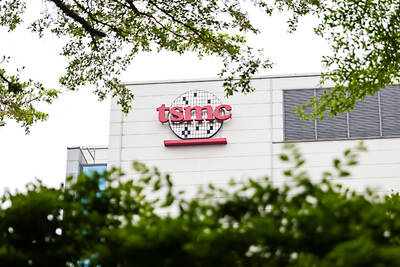
Taiwan Semiconductor Manufacturing Co (TSMC, 台積電), the world’s largest contract chipmaker, said it expects its 2-nanometer (2nm) chip capacity to grow at a compound annual rate of 70 percent from this year to 2028. The projection comes as five fabs begin volume production of 2-nanometer chips this year — two in Hsinchu and three in Kaohsiung — TSMC senior vice president and deputy cochief operating officer Cliff Hou (侯永清) said at the company’s annual technology symposium in Silicon Valley, California, last week. Output in the first year of 2-nanometer production, which began in the fourth quarter of last year, is expected to
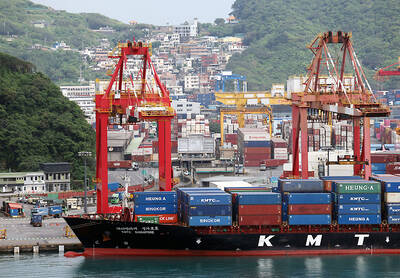
Taiwan’s economy grew far faster than expected in the first quarter, as booming demand for artificial intelligence (AI) applications drove a surge in exports, spilling over into investment and consumption, the Directorate-General of Budget, Accounting and Statistics (DGBAS) said yesterday. GDP growth was 13.69 percent year-on-year during the January-to-March period, beating the DGBAS’ February forecast by 2.23 percentage points and marking the most robust growth in nearly four decades, DGBAS senior official Chiang Hsin-yi (江心怡) told a news conference in Taipei. The result was powered by exports, which remain the backbone of Taiwan’s economy, Chiang said. Outbound shipments jumped 51.12 percent year-on-year to


 RSS
RSS