


Canada-Taiwan Parliamentary Friendship Group chairwoman Judy Sgro has invited group members to sign a letter asking the International Civil Aviation Organization (ICAO) to address Beijing’s unilateral changes to flight route M503.
China announced the changes at the end of last month, breaking its agreement with Taiwan that southbound flights on the flight route should operate 6 nautical miles (11km) southwest of the route.
It also said it would allow eastbound flights on the W122 and W123 flight paths, which the two sides had agreed not to launch before details of their implementation were confirmed.
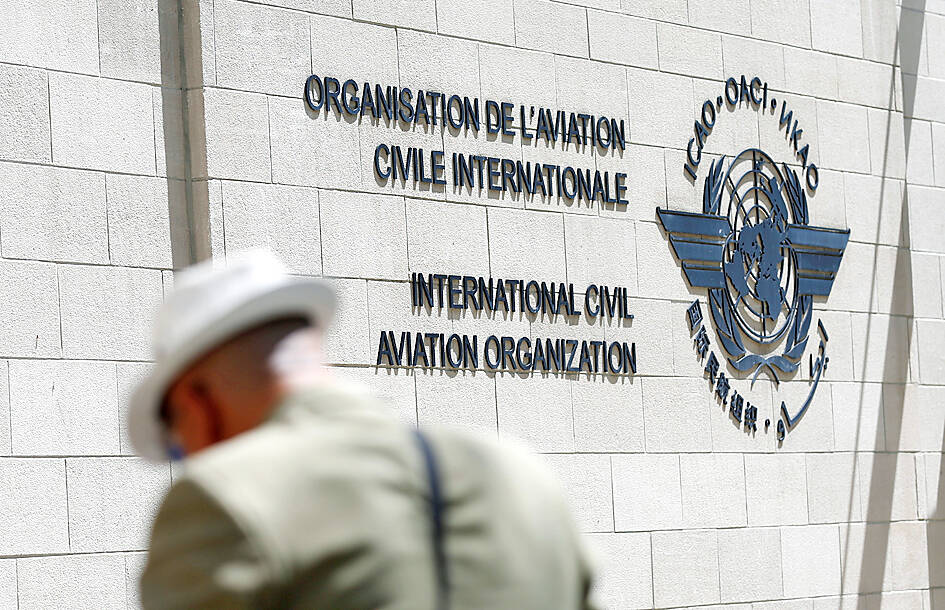
Photo: Reuters
Representative to Canada Harry Tseng (曾厚仁), on behalf of the government, sent a letter to ICAO Council president Salvatore Sciacchitano on Wednesday last week, urging the organization to address the issue and provide timely support.
He also called on Canada and international society to pay close attention to the issue at a parliamentary briefing that Sgro held on Wednesday, the Taipei Economic and Cultural Office in Canada said.
Tseng said Taiwan hoped that Canada would voice concerns about Beijing’s continued attempts to heighten tensions across the Taiwan Strait and its disregard for civil aviation safety, the office said.
Sgro said that the friendship group was collecting signatures from its members on a letter addressed to Sciacchitano to urge the organization to deal with the issue, it said.
Initiating a joint letter shortly after a single incident due to its urgency, importance and seriousness “is quite rare,” Tseng told the Central News Agency.
Although Taiwan is not a member of the ICAO and there is no precedent regarding the issue, the ICAO is likely to take some form of action, and at least discuss the incident internally, he said.
At the parliamentary briefing, Tseng also discussed the situation in Taiwan after its Jan. 13 presidential and legislative elections, the office said.
He spoke of how China claimed that the election results did not reflect public opinion, how it lured away Taiwan’s diplomatic ally Nauru, prevented Taiwan from hosting the Asian Men’s U20 Volleyball Championship this year and is considering suspending tariff concessions on more Taiwanese products, the office said.
Many Canadian lawmakers attending the briefing were very concerned about China’s interference and disinformation campaign during Taiwan’s elections, fearing that Beijing might do the same during Canada’s election, it said.
Tseng said that the scale and intensity of Chinese interference leading up to last month’s elections were greater than ever, including the use of artificial intelligence to spread rumors and vilify candidates on social media platforms, the office said.
Taiwan was able to deal with the issue, because of its vast experience in countering such disinformation, Tseng said, adding that its robust civil society also helped to verify suspicious information promptly.
The nation is willing to share its experiences with Canada and provide suggestions, he added.
Taiwan Semiconductor Manufacturing Co (TSMC, 台積電), the world’s largest foundry service provider, yesterday said that global semiconductor revenue is projected to hit US$1.5 trillion in 2030, after the figure exceeds US$1 trillion this year, as artificial intelligence (AI) demand boosts consumption of token and compute power. “We are still at the beginning of the AI revolution, but we already see a significant impact across the whole semiconductor ecosystem,” TSMC deputy cochief operating officer Kevin Zhang (張曉強) said at the company’s annual technology symposium in Hsinchu City. “It is fair to say that in the past decade, smartphones and other mobile devices were
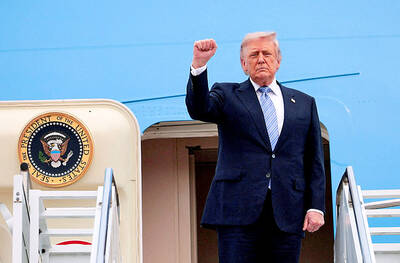
US-CHINA SUMMIT: MOFA welcomed US reassurance of no change in its Taiwan policy; Trump said he did not comment when Xi talked of opposing independence US President Donald Trump yesterday said he has not made a decision on whether to move forward with a major arms package for Taiwan after hearing concerns about it from Chinese President Xi Jinping (習近平). Trump’s comments on Taiwan came as he flew back to Washington after wrapping up critical talks in which both leaders said important progress was made in stabilizing US-China relations even as deep differences persist between the world’s two biggest powers on Iran and Taiwan. “I will make a determination,” Trump said, adding: “I’ll be making decisions. But, you know, I think the last thing we need right
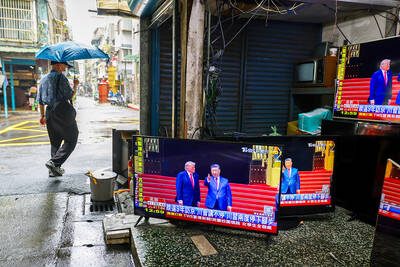
TAIWAN ISSUE: US treasury secretary Scott Bessent said on the first day of meetings that ‘it wouldn’t be a US-China summit without the Taiwan issue coming up’ There were no surprises on the first day of the summit between US President Donald Trump and Chinese President Xi Jinping (習近平), the Mainland Affairs Council (MAC) said yesterday, as the government reiterated that cross-strait stability is crucial to the Asia-Pacific region, as well as the world. As the two presidents met for a highly anticipated summit yesterday, Chinese state media reported that Xi warned Trump that missteps regarding Taiwan could push their two countries into “conflict.” Trump arrived in China with accolades for his host, calling Xi a “great leader” and “friend,” and extending an invitation to visit the White House
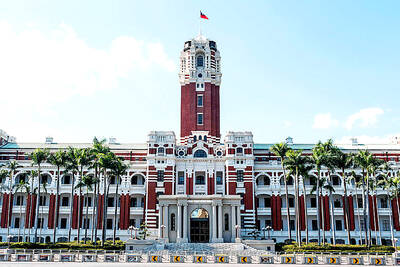
SECURITY: Taipei presses the US for arms supplies, saying the arms sales are not only a reflection of the US security commitment to Taiwan but also serve as a mutual deterrent against regional threats Taiwan is committed to preserving the cross-strait “status quo” and contributing to regional peace and stability, the Presidential Office said yesterday. “It is an undeniable fact that the Republic of China is a sovereign and independent democratic nation,” Presidential Office spokeswoman Karen Kuo (郭雅慧) reiterated, adding that Beijing has no right to claim sovereignty over Taiwan. The statements came after US President Donald Trump warned against Taiwanese independence. Trump wrapped up a state visit to Beijing on Friday, during which Chinese President Xi Jinping (習近平) had pressed him not to support Taiwan. Taiwan depends heavily on US security backing to deter China from carrying


 RSS
RSS