


Political disinformation is expected to increase significantly seven to three days before the Jan. 13 elections, so monitoring and investigations would be conducted 24 hours a day, prosecutors said yesterday.
The monitoring and investigations would be conducted by the Ministry of Justice’s Investigation Bureau and the National Police Agency’s Criminal Investigation Bureau, they said, adding that those involved in election interference would be promptly dealt with according to the Anti-Infiltration Act (反滲透法).
Prosecutors said political disinformation can easily mislead people, and if false information is being spread ahead of the vote, it would seriously affect the fairness of the elections.
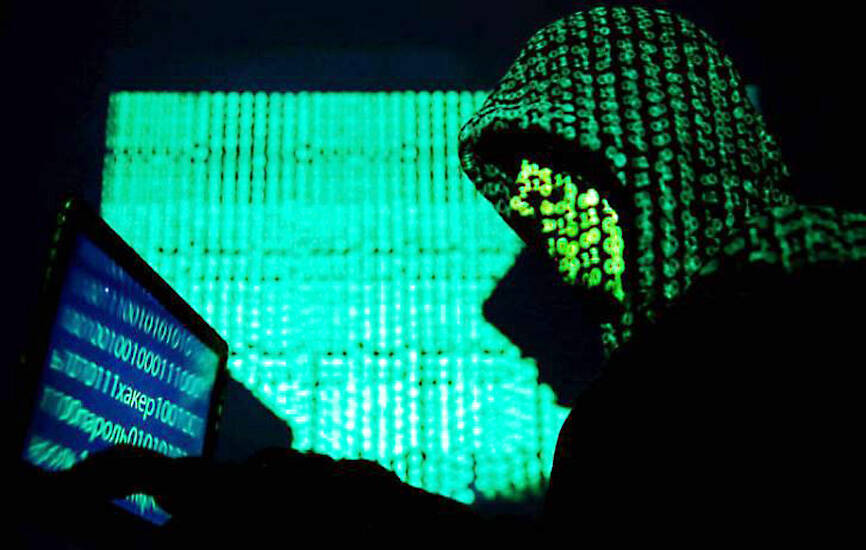
Photo: Reuters
Some of the disinformation spreading at the moment was circulating a few years ago, but has been re-edited and shared again on social media, prosecutors said, adding that it could have been posted by hostile foreign forces to “test the waters” and see how law enforcement authorities react.
To prevent hostile foreign forces from spreading disinformation that would interfere in the elections, the Investigation Bureau and the Criminal Investigation Bureau plan to launch an around-the-clock monitoring mechanism to detect election-related disinformation online in the last few days before the elections, they said.
If election-related disinformation is detected, it would immediately be investigated and reported to the prosecutors’ office. Cases related to the legislative elections would be handled by local prosecutors’ offices, while those related to the presidential election would be handled by the Taipei District Prosecutors’ Office, they said.
The Taipei District Prosecutors’ Office is investigating two cases at the moment: one involves a list of names posted on social media claiming that thousands of Taiwanese have been wiretapped by intelligence agencies.
The other case involves an audio file that claimed to be a recording of Taiwan People’s Party (TPP) Chairman and presidential candidate Ko Wen-je (柯文哲) revealing secrets about Democratic Progressive Party (DPP) presidential candidate Vice President William Lai’s (賴清德) last visit to the US, prosecutors said.
The two cases used different methods to present the false information, but are both aimed at creating confusion by passing off the false information as genuine, they said.
Regarding the wiretapping claim, a prosecutor said their investigation suggests it came from a foreign source using a virtual private network to hide their location.
The Investigation Bureau’s Anti-Money Laundering Division and the Criminal Investigation Bureau’s Technological Crime Prevention Center are looking into cryptocurrency and other suspicious money flows to clarify whether there are local collaborators assisting those involved, they added.
As for the “Ko” case, some local media outlets on Aug. 16 received an e-mail with an audio file, claiming to be from an internal meeting. In the recording a man who sounded like Ko said that people were offered NT$800 (US$25.50) to attend events during Lai’s visit to the US, as well as other false information.
Ko’s campaign office reported it to the Investigation Bureau’s Taipei City Field Office.
The office used Reality Defender’s platform to examine the audio file and found that it was generated using artificial intelligence (AI), the prosecutor said.
The source is still being tracked, and the possibility of it being from an “external force” has not been ruled out, they said.
Taipei District Chief Prosecutor Cheng Ming-chien (鄭銘謙) said that the elections are facing serious challenges due to rapidly spreading disinformation and foreign interference, and as identifying disinformation is becoming more difficult due to AI, people should not casually share controversial messages.
The Supreme Prosecutors’ Office urged people to report suspected election interference, adding that the highest reward can be up to NT$20 million.


RESILIENCE: Taiwan plays a key role in semiconductors, energy, information infrastructure and advanced manufacturing, AIT Director Raymond Greene said Taiwan’s continued investment in deterrence and resilience remains vital, especially in uncrewed systems and other emerging technologies, American Institute in Taiwan (AIT) Director Raymond Greene said yesterday. Greene made the remarks at the annual National Strategic Summit on Supply Chain Resilience held by the Research Institute for Democracy, Society and Emerging Technology (DSET), a government-backed think tank. As Taiwan last year became the US’ fourth-largest trading partner and supply chain security is becoming more important, cooperation in emerging technologies continues to deepen between the two countries, he said. The US is committed to accelerating innovation, building key infrastructure, strengthening cooperation

The National Chungshan Institute of Science and Technology yesterday showcased its locally developed variants of the Vision 60 robotic patrol dog, which it plans to deploy on the nation’s outlying territories in the South China Sea. The variants were produced under the Joint Lab project — created by the institute and domestic companies — and assembled with domestically produced motors, lenses and artificial intelligence (AI) systems alongside licensed tech from the US, Missile and Rocket Systems Research Division deputy director Jen Kuo-kang (任國光) told the media event at a military base in Taipei’s Dazhi (大直) area. Taiwan has built up its strengths

RIGHT DIRECTION: Taiwan’s efforts to prevent forced labor include a proposal to ‘fully prohibit’ employers from withholding workers’ documents, an official said Taiwan is to establish a mechanism to restrict imports of goods linked to forced labor, the Executive Yuan said yesterday, after the US proposed imposing additional tariffs on Taiwanese goods over labor concerns. “The Ministry of Labor and the Ministry of Economic Affairs are to establish an interministerial review procedure,” Executive Yuan spokesperson Michelle Lee (李慧芝) said at a news briefing in Taipei. “The government is to use the Foreign Trade Act [貿易法] as the legal basis to restrict imports of goods produced with forced labor” and bring its supply chain governance more in line with international standards on human rights, resilience

NOT IMMEDIATE: Taiwan has a chance to appeal the proposed 10 percent tariff before it starts, while other countries face a 12.5 percent tariff from the trade office Taiwan is among 60 economies determined by the US to have failed to impose or enforce a ban on the importation of goods produced with forced labor, according to a notice released on Tuesday by the Office of the US Trade Representative (USTR), which proposed imposing an additional 10 percent or more tariff on them. The USTR in a statement said that following an investigation, it had determined under Section 301 of the Trade Act of 1974 that the failure of the 60 economies to impose and effectively enforce a prohibition on the importation of goods produced with forced labor is


 RSS
RSS