


Australian Prime Minister Anthony Albanese, starting the first visit to China by a leader of his country in seven years, said yesterday it was “in all our interests” to have a bilateral relationship with dialogue and cooperation.
Australia will continue to work constructively with China, he said in a short speech to the annual China International Import Expo in Shanghai, which was opened by Chinese Premier Li Qiang (李強).
Albanese is the first Australian leader to visit China since 2016, part of an effort to patch up relations that had deteriorated over several years due to disputes over Chinese telecoms firm Huawei Technologies Co (華為), espionage and COVID-19.
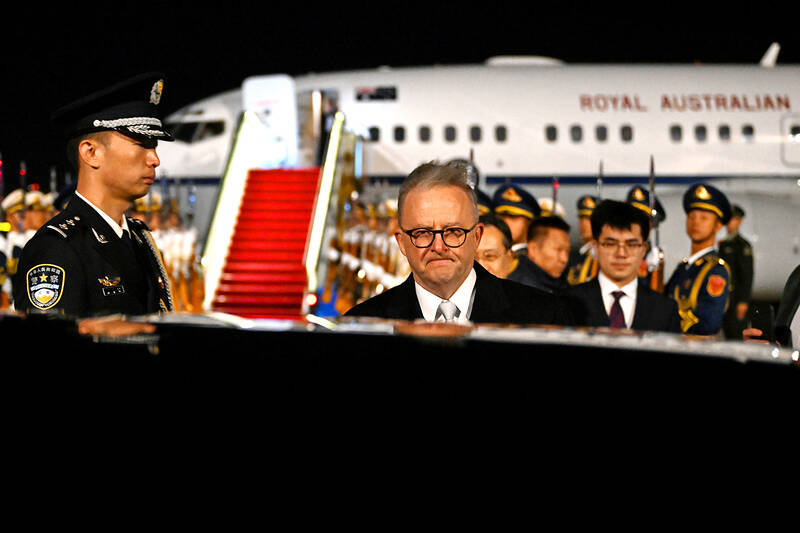
Photo: EPA-EFE
After the speech, addressing media alongside Australian Trade Minister Don Farrell, Albanese said he welcomed Li’s comments at the Expo and described them as “very positive.”
Li said China will further expand market access and imports.
Farrell said after meeting with his Chinese counterpart on Saturday he expected impediments on Australian seafood and red meat products to be removed “in a very short space of time.”
Albanese, in his speech, described the relationship between the two countries as “mature” and said it was “energized by the complementary nature of our economies.”
“Along with the other economies in our region, Australia and China have prospered thanks to the certainty and stability that is made possible by rules-based trade,” Albanese said, according to an official transcript.
Albanese’s government has worked to stabilize ties with China since taking office last year, and China has lifted most trade blocks imposed in a 2020 diplomatic dispute that cost A$20 billion (US$13 billion) in commodity and food exports.
“We continue to highly value the World Trade Organisation, whose role as an independent and respected umpire benefits us all,” Albanese said.
Albanese is to meet Chinese President Xi Jinping (習近平) today, where the prime minister has said he would raise concerns over rising tensions in the South China Sea.
On arriving in Shanghai late on Saturday, Albanese said it was in Australia’s interests to have a positive and constructive dialogue with its major trading partner.
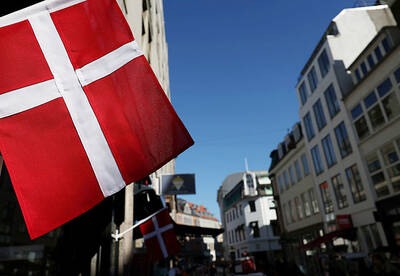
‘UNFRIENDLY’: Changing the nationality listing of Taiwanese residents to ‘China’ goes against EU foreign policy as well as democratic and human rights principles, MOFA said Taiwan yesterday called on Denmark to correct its designation of the nationality of Taiwanese residents as “China” or face retaliatory measures. The Danish government in 2024 changed the nationality of Taiwanese citizens on their residence permits from “Taiwan” to “China.” The decision goes against EU foreign policy and contravenes democratic and human rights principles, Ministry of Foreign Affairs (MOFA) spokesman Hsiao Kuang-wei (蕭光偉) said. Denmark should present a solution acceptable to Taiwan as soon as possible and correct the erroneous designation to preserve the longstanding friendship between the two nations, Hsiao said. The issue could damage Denmark’s image and business reputation in Taiwan,
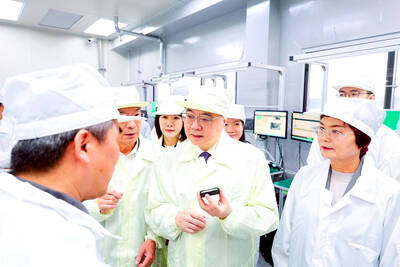
KEY INDUSTRY: The vice premier discussed a plan to create a non-red drone supply chain by next year, which has been allocated a budget of more than NT$7.2 billion The government has budgeted NT$44.2 billion (US$1.38 billion) to cultivate Taiwan’s uncrewed aerial vehicle (UAV) industry over the next five years, which would make the nation a major player in the industry’s democratic supply chain in the Asia-Pacific region, Premier Cho Jung-tai (卓榮泰) said yesterday. Cho made the remarks during a visit to the facilities of Cub Elecparts Inc (為升電裝). Democratic Progressive Party (DPP) Legislator Chen Su-yueh (陳素月) and Chinese Nationalist Party (KMT) Legislator Hsieh Yi-fong (謝依鳳) also participated in the trip. Cub Elecparts has transitioned from the automotive industry to the defense industry, which is the top priority among the nation’s
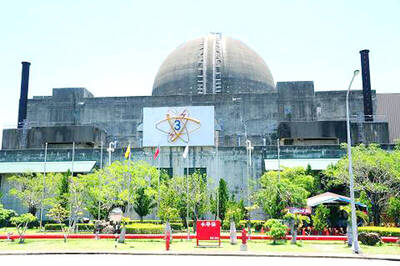
SUFFICIENT: The president said Taiwan has enough oil for next month, with reserves covering more than 100 days and natural gas enough for 12 to 14 days A restart plan for the Guosheng Nuclear Power Plant in New Taipei City’s Wanli District (萬里) and the Ma-anshan Nuclear Power Plant in Pingtung County’s Hengchun Township (恆春) would be submitted to the Nuclear Safety Commission by the end of the month, President William Lai (賴清德) said yesterday, reversing the government’s policy to abolish nuclear energy. On May 17 last year, Taiwan shut down its last nuclear reactor and became the first non-nuclear nation in East Asia, fulfilling the Democratic Progressive Party (DPP) government’s pledge of a “nuclear-free homeland.” Even without nuclear power, Taiwan can maintain a stable electricity supply until 2032,
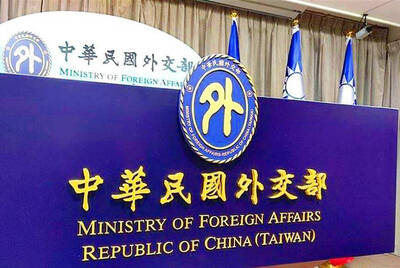
DEROGATORY: WTO host Cameroon’s designation of Taiwan as a ‘province of China’ seriously undermines the nation’s status and rights as a WTO member, MOFA said The Ministry of Foreign Affairs (MOFA) yesterday condemned Cameroon for listing Taiwan as “Taiwan, Province of China” in visa documents for an upcoming WTO ministerial conference, a move that led to Taiwan’s withdrawal from the event. The designation “seriously undermined” Taiwan’s status and rights as a WTO member, the ministry said in a statement. It is the first time since 2001 that Taiwan has declined to attend a WTO Ministerial Conference. The conference is scheduled to take place from Thursday to Sunday next week in Yaounde, the capital of Cameroon. Taiwan had planned to send a delegation led by Minister Without Portfolio


 RSS
RSS