


China yesterday announced it has extended an investigation into import restrictions imposed by Taiwan on more than 2,400 Chinese products to Jan. 12 next year, the day before Taiwan’s presidential and legislative elections.
The Chinese Ministry of Commerce announcement adds to tensions across the Taiwan Strait that have been ratcheted up by frequent Chinese military incursions into Taiwan’s air defense identification zone and territorial waters ahead of next year’s elections.
Beijing’s probe, first announced on April 12 and which was supposed to be concluded by Thursday, is looking at import restrictions that Taiwan has imposed on 2,455 types of products from the agricultural, textile and mineral sectors in China.
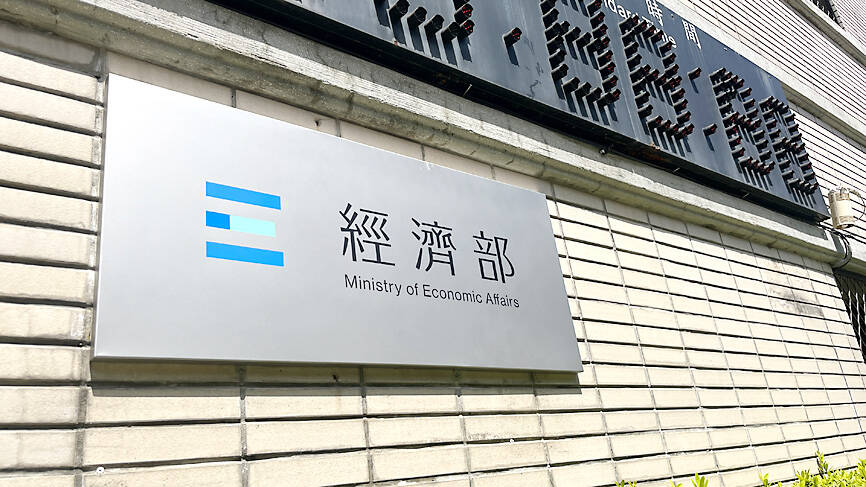
Photo: Liao Chia-ning, Taipei Times
“In view of the complexity of this case,” the Chinese ministry extended the probe by three months, a statement posted on its Web site said.
In Taipei, the Ministry of Economic Affairs said in a statement that “Taiwan has always maintained an open attitude regarding trade issues, and is willing to negotiate and deal with China under the WTO framework.”
Taiwan firmly backs local industries and would work with businesses in responding to the potential challenges posed by the investigation, the ministry said.
Chang Wu-yue (張五岳), a professor at Tamkang University’s Institute of Mainland China Studies, said that Beijing’s extension of the probe until one day before polls open in Taiwan shows that China is attempting to affect the outcomes of the presidential and legislative elections.
“The restrictions that Taiwan imposes on China-made products have existed since Taiwan joined the WTO in 2002. However, China had never talked about investigating trade barriers in the past 21 years, not even in its negotiations over the economic cooperation framework agreement with Taiwan. This shows that having trade barriers is not a main cross-strait trade issue,” the Chinese-language United Daily News quoted Chang as saying.
“The purpose of Beijing launching a trade-barrier investigation at this moment is to influence the presidential and legislative elections... It wants to highlight that it dominates cross-strait relations. Meanwhile, it wants Taiwanese to sense that cross-strait trade is facing a crisis ahead of the presidential and legislative elections in January. Such unprecedented pressure has never appeared in previous elections,” he said.
Cross-strait affairs experts are not surprised that the Chinese commerce ministry would extend the trade investigations into January next year, given that none of the presidential candidates has a decisive lead in the race, Chang said.
“We also expect that China would conclude that cross-trade trade barriers do exist, and they are likely to announce the results of their investigations as well as retaliatory measures against Taiwan on or before Jan. 12,” he said.
The Mainland Affairs Council yesterday urged Beijing to stop politicizing cross-strait trade.
“Both Taiwan and China are WTO members, and we have been expressing a wish to negotiate with China in accordance with WTO regulations. All trade issues can be effectively addressed through mechanisms and regulations set by the WTO,” the council said.
Additional reporting by Chen Yu-fu
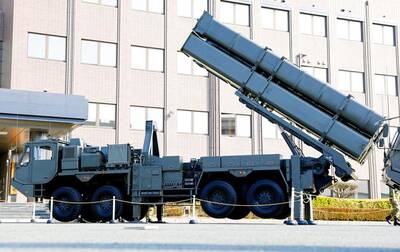
Japan has deployed long-range missiles in a southwestern region near China, the Japanese defense minister said yesterday, at a time when ties with Beijing are at their lowest in recent years. The missiles were installed in Kumamoto in the southern region of Kyushu, as Japan is attempting to shore up its military capacity as China steps up naval activity in the East China Sea. “Standoff defense capabilities enable us to counter the threat of enemy forces attempting to invade our country ... while ensuring the safety of our personnel,” Japanese Minister of Defense Shinjiro Koizumi said. “This is an extremely important initiative for
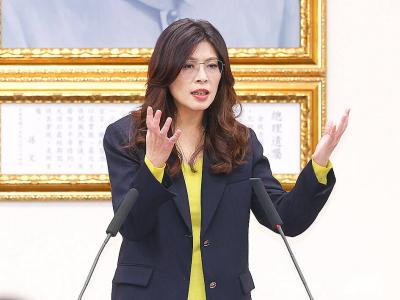
Chinese Nationalist Party (KMT) Chairwoman Cheng Li-wun (鄭麗文) today accepted an invitation from Chinese President Xi Jinping (習近平) to lead a delegation to China next month, saying she hopes to promote the peaceful development of cross-strait relations and bring stability to the Taiwan Strait. “I am grateful and happy to accept this invitation,” Cheng said in a statement from the KMT chairperson’s office. Cheng said she hopes both sides can work together to promote the peaceful development of cross-strait relations, enhance exchange and cooperation, bring stability to the Taiwan Strait and improve people’s livelihoods. At today's news conference, Cheng said any efforts to
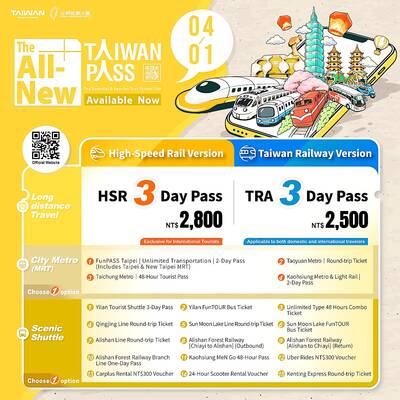
MORE POPULAR: Taiwan Pass sales increased by 59 percent during the first quarter compared with the same period last year, the Tourism Administration said The Tourism Administration yesterday said that it has streamlined the Taiwan Pass, with two versions available for purchase beginning today. The tourism agency has made the pass available to international tourists since 2024, allowing them to access the high-speed rail, Taiwan Railway Corp services, four MRT systems and four Taiwan Tourist Shuttles. Previously, five types of Taiwan Pass were available, but some tourists have said that the offerings were too complicated. The agency said only two types of Taiwan Pass would be available, starting from a three-day pass with the high-speed rail and a three-day pass with Taiwan Railway Corp. The former costs NT$2,800

The nation’s fastest supercomputer, Nano 4 (晶創26), is scheduled to be launched in the third quarter, and would be used to train large language models in finance and national defense sectors, the National Center for High-Performance Computing (NCHC) said. The supercomputer, which would operate at about 86.05 petaflops, is being tested at a new cloud computing center in the Southern Taiwan Science Park in Tainan. The exterior of the server cabinet features chip circuitry patterns overlaid with a map of Taiwan, highlighting the nation’s central position in the semiconductor industry. The center also houses Taiwania 2, Taiwania 3, Forerunner 1 and


 RSS
RSS