


Typhoon Saola at 2am yesterday intensified into a super typhoon and Taiwan is likely to issue a sea warning for it as early as tonight, followed by a possible land warning the next day, the Central Weather Bureau (CWB) said.
As of 8am yesterday, Saola was about 630km south-southeast of Oluanpi (鵝鑾鼻), Taiwan’s southernmost tip, and was moving southwest at 9kph to 10kph, with sustained winds of 184kph and gusts of up to 227kph, CWB forecaster Lin Ting-yi (林定宜) said.
The typhoon was moving in a counter-clockwise loop east of the Philippines, and was expected to turn toward the north-northwest yesterday and today, before approaching the Bashi Channel to the south of Taiwan.
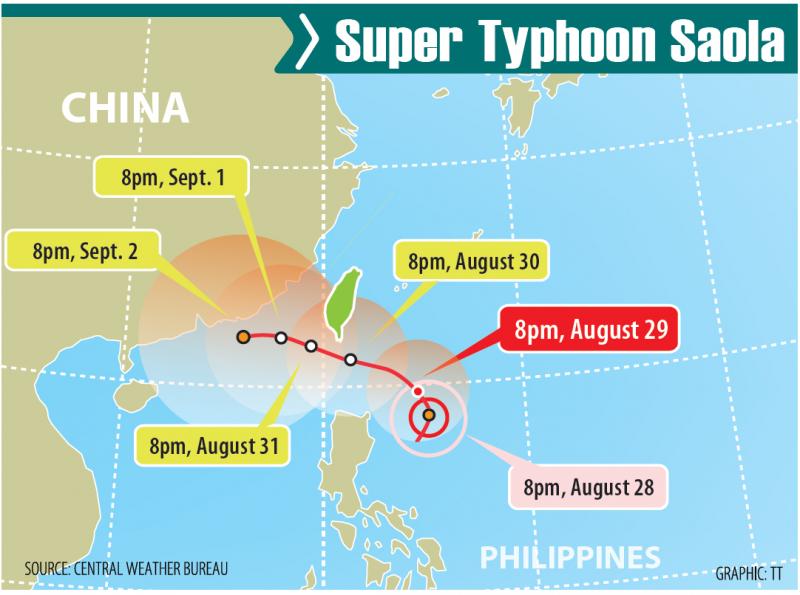
With Saola approaching, a sea warning is likely to be issued sometime between tonight and early tomorrow morning, Lin said, adding that people on ships or boats near Taiwan’s southeast coast should watch for ocean swells in the next few days.
A land warning might also be issued on tomorrow afternoon or later that day, Lin said, adding that Saola would have its biggest effect on Taiwan from Wednesday to Thursday, dumping heavy rain on the eastern half of the country.
Saola is expected to strengthen in the next three days, before losing power when it brushes Taiwan, Lin said.
The typhoon’s center might pass through southern Taiwan, but its path could still change, Lin added.
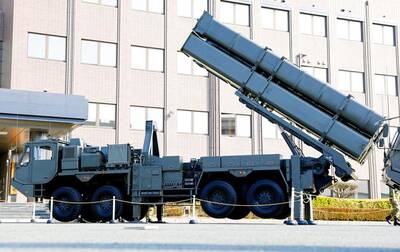
Japan has deployed long-range missiles in a southwestern region near China, the Japanese defense minister said yesterday, at a time when ties with Beijing are at their lowest in recent years. The missiles were installed in Kumamoto in the southern region of Kyushu, as Japan is attempting to shore up its military capacity as China steps up naval activity in the East China Sea. “Standoff defense capabilities enable us to counter the threat of enemy forces attempting to invade our country ... while ensuring the safety of our personnel,” Japanese Minister of Defense Shinjiro Koizumi said. “This is an extremely important initiative for
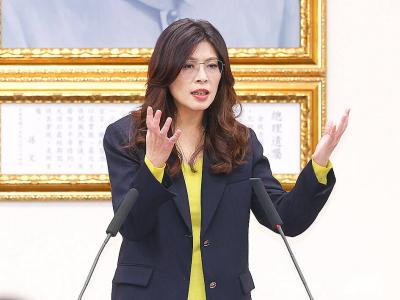
Chinese Nationalist Party (KMT) Chairwoman Cheng Li-wun (鄭麗文) today accepted an invitation from Chinese President Xi Jinping (習近平) to lead a delegation to China next month, saying she hopes to promote the peaceful development of cross-strait relations and bring stability to the Taiwan Strait. “I am grateful and happy to accept this invitation,” Cheng said in a statement from the KMT chairperson’s office. Cheng said she hopes both sides can work together to promote the peaceful development of cross-strait relations, enhance exchange and cooperation, bring stability to the Taiwan Strait and improve people’s livelihoods. At today's news conference, Cheng said any efforts to
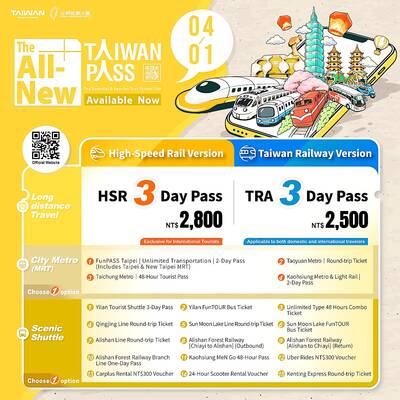
MORE POPULAR: Taiwan Pass sales increased by 59 percent during the first quarter compared with the same period last year, the Tourism Administration said The Tourism Administration yesterday said that it has streamlined the Taiwan Pass, with two versions available for purchase beginning today. The tourism agency has made the pass available to international tourists since 2024, allowing them to access the high-speed rail, Taiwan Railway Corp services, four MRT systems and four Taiwan Tourist Shuttles. Previously, five types of Taiwan Pass were available, but some tourists have said that the offerings were too complicated. The agency said only two types of Taiwan Pass would be available, starting from a three-day pass with the high-speed rail and a three-day pass with Taiwan Railway Corp. The former costs NT$2,800

The nation’s fastest supercomputer, Nano 4 (晶創26), is scheduled to be launched in the third quarter, and would be used to train large language models in finance and national defense sectors, the National Center for High-Performance Computing (NCHC) said. The supercomputer, which would operate at about 86.05 petaflops, is being tested at a new cloud computing center in the Southern Taiwan Science Park in Tainan. The exterior of the server cabinet features chip circuitry patterns overlaid with a map of Taiwan, highlighting the nation’s central position in the semiconductor industry. The center also houses Taiwania 2, Taiwania 3, Forerunner 1 and


 RSS
RSS