


The tsunami-wrecked Fukushima Dai-ichi nuclear power plant yesterday began releasing its first batch of treated radioactive water into the Pacific Ocean, prompting China to ban seafood from Japan, while Taipei was not perturbed.
People inside and outside the country protested the wastewater release, with Japanese fishing groups fearing it would further damage the reputation of their seafood.
In response to the wastewater release, Chinese customs authorities banned seafood from Japan, customs authorities announced.
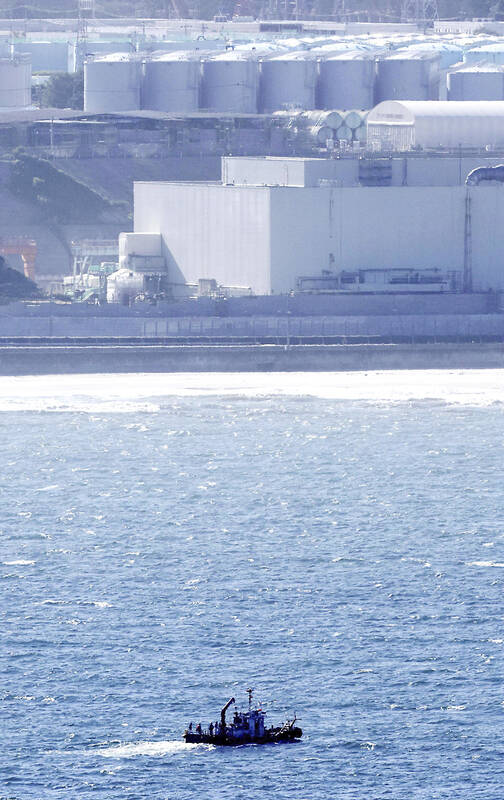
Photo: Kyodo / Reuters
The ban started immediately and affects all imports of “aquatic products,” including seafood, the notice said.
Chinese authorities said they would “dynamically adjust relevant regulatory measures as appropriate to prevent the risks of nuclear-contaminated water discharge to the health and food safety of our country.”
Japanese Prime Minister Fumio Kishida said later that his government had demanded China “immediately eliminate” its import ban on seafood from Japan.
“We lodged a complaint through diplomatic channels to China, urging them to immediately eliminate” the ban, Kishida said.
The Japanese government and TEPCO say the water must be released to make room for the plant’s decommissioning and to prevent accidental leaks.
They say the treatment and dilution makes the wastewater safer than international standards.
In Taipei, Executive Yuan spokesman Lin Tzu-lun (林子倫) said that irradiation of Taiwanese waters as a result of the wastewater release would be negligible.
Analyses show that wastewater would reach Taiwan within one to two years after discharge, with the greatest concentration of leftover irradiated materials expected to peak after four years, Lin said.
Additional reporting by CNA and AFP
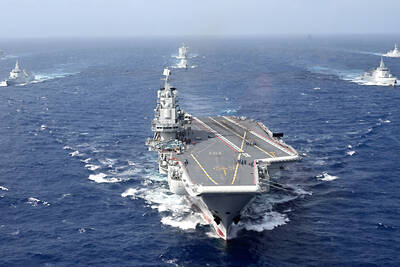
PROVOCATIVE: Chinese Deputy Ambassador to the UN Sun Lei accused Japan of sending military vessels to deliberately provoke tensions in the Taiwan Strait China denounced remarks by Japan and the EU about the South China Sea at a UN Security Council meeting on Monday, and accused Tokyo of provocative behavior in the Taiwan Strait and planning military expansion. Ayano Kunimitsu, a Japanese vice foreign minister, told the Council meeting on maritime security that Tokyo was seriously concerned about the situation in the East China and South China seas, and reiterated Japan’s opposition to any attempt to change the “status quo” by force, and obstruction of freedom of navigation and overflight. Stavros Lambrinidis, head of the EU delegation to the UN, also highlighted South China Sea
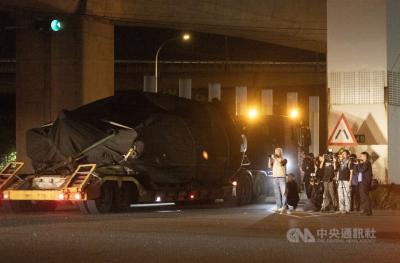
The final batch of 28 M1A2T Abrams tanks purchased from the US arrived at Taipei Port last night and were transported to the Armor Training Command in Hsinchu County’s Hukou Township (湖口), completing the military’s multi-year procurement of 108 of the tanks. Starting at 12:10am today, reporters observed more than a dozen civilian flatbed trailers departing from Taipei Port, each carrying an M1A2T tank covered with black waterproof tarps. Escorted by military vehicles, the convoy traveled via the West Coast Expressway to the Armor Training Command, with police implementing traffic control. The army operates about 1,000 tanks, including CM-11 Brave Tiger
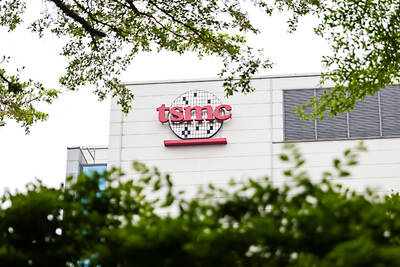
Taiwan Semiconductor Manufacturing Co (TSMC, 台積電), the world’s largest contract chipmaker, said it expects its 2-nanometer (2nm) chip capacity to grow at a compound annual rate of 70 percent from this year to 2028. The projection comes as five fabs begin volume production of 2-nanometer chips this year — two in Hsinchu and three in Kaohsiung — TSMC senior vice president and deputy cochief operating officer Cliff Hou (侯永清) said at the company’s annual technology symposium in Silicon Valley, California, last week. Output in the first year of 2-nanometer production, which began in the fourth quarter of last year, is expected to
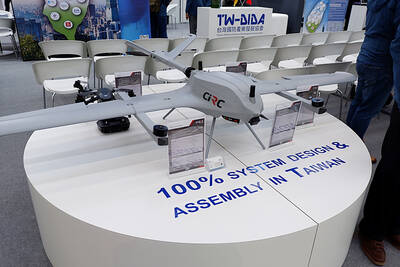
Taiwan’s drone exports surged past US$100 million in the first quarter, exceeding last year’s full-year total, with the Czech Republic emerging as the largest buyer, the Ministry of Economic Affairs said. Exports of complete drones reached US$115.85 million in the period, about 1.2 times the total recorded for all of last year, the ministry said in a report. Exports to the Czech Republic accounted for about US$100 million, far outpacing other markets. Poland, last year’s top destination, recorded about US$11.75 million in the first quarter. Taiwan’s drone exports have expanded rapidly in the past few years, with last year’s total


 RSS
RSS