


The Ministry of National Defense has allocated NT$3.2 billion (US$104.04 million) to upgrade the radio equipment of more than 100 coast guard ships and boats from this year through 2026, a source familiar with the matter said, speaking on condition of anonymity.
The allocation is part of a special budget of the Sea-Air Combat Power Improvement Plan, which allows the government to spend more than NT$240 billion on military programs.
The Chunghsan Institute of Science and Technology — which is responsible for obtaining radios for coast guard vessels — has called three conferences with potential contractors, the source said yesterday, adding that it expects to award the project in August.
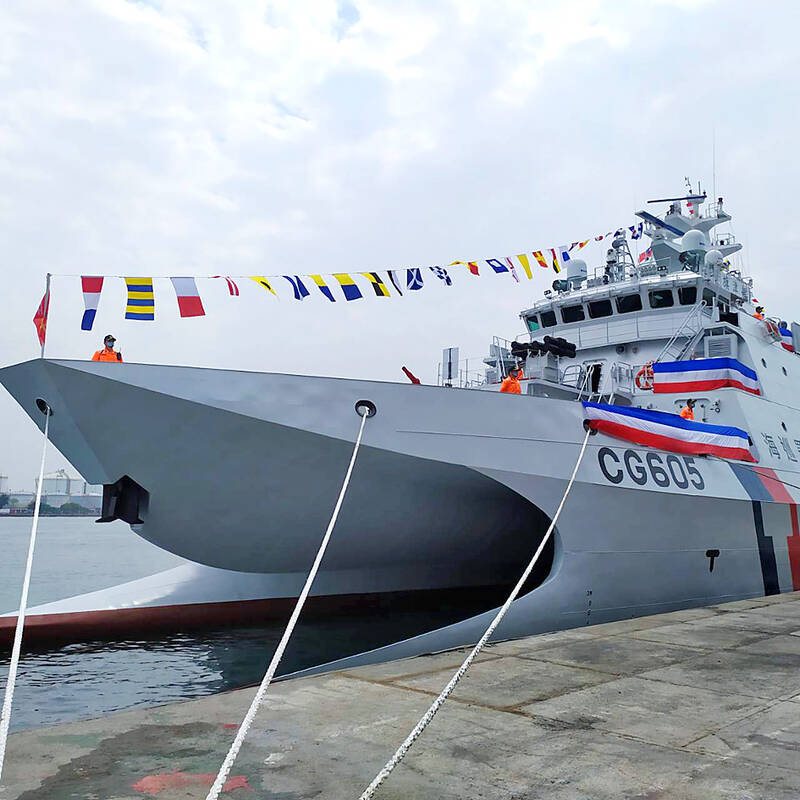
Photo: Hung Ting-hung, Taipei Times.
The institute’s solicitation included 124 self-designed CS/PRC-37C manpack radios, 130 shipborne mobile radio base stations, equipment for two network operations centers, 10 repeaters and six dispatch counsels, they said, citing information disclosed to the private sector.
Although local media previously reported that the budget would only cover 12 Anping-class offshore patrol vessels, all 35-tonne-class boats and larger vessels would receive the upgrades, the source said.
More than 100 of the coast guard’s 185 ships would receive them, they said.
The Hai Wei Project is under the sole control of the defense ministry under Article 4 of the National Defense Act (國防法), which gives it the authority to manage and direct the Coast Guard Administration (CGA) if it is mobilized for national defense, they said.
The Anping-class vessels are the coast guard’s version of the navy’s 600-tonne Tuo Chiang-class corvettes, which can be refitted with Hsiung Feng II and Hsiung Feng III cruise missiles, they said.
If war breaks out, the coast guard would be incorporated into the navy’s Task Force 62 under the armed forces’ regulations governing the defense of Taiwan proper and Penghu County, the source said.
A separate source said that a Taiwan-US coast guard partnership continues to emphasize disaster response and maritime law enforcement, despite Taipei’s ambitions to transform its coast guard into a second navy.
Meanwhile, Institute for National Defense and Security Research analyst Shu Hsiao-huang (舒孝煌) said the CGA should lobby to be invited to the US-led Rim of the Pacific exercises, as it would allow the coast guard to broaden its participation in Indo-Pacific security matters through its relationship with the US Coast Guard, which regularly plays a significant part in the drills.
Additional reporting by Wu Su-wei
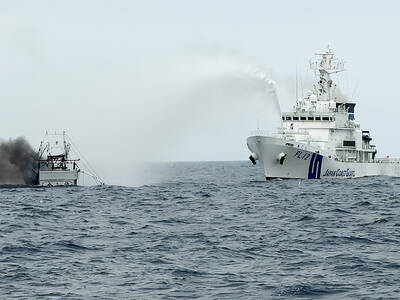
CREDIT-GRABBER: China said its coast guard rescued the crew of a fishing vessel that caught fire, who were actually rescued by a nearby Taiwanese boat and the CGA Maritime search and rescue operations do not have borders, and China should not use a shipwreck to infringe upon Taiwanese sovereignty, the Coast Guard Administration (CGA) said yesterday. The coast guard made the statement in response to the China Coast Guard (CCG) saying it saved a Taiwanese fishing boat. The Chuan Yu No. 6 (全漁6號), a fishing vessel registered in Keelung, on Thursday caught fire and sank in waters northeast of Diaoyutai Islands (釣魚台). The vessel left Keelung’s Badouzih Fishing Harbor (八斗子漁港) at 3:35pm on Sunday last week, with seven people on board — a 62-year-old Taiwanese captain surnamed Chang (張) and six
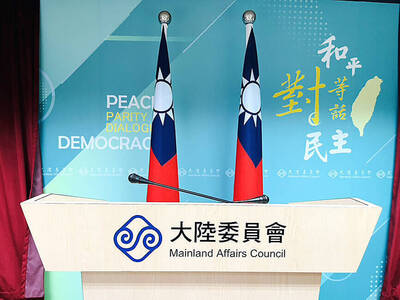
RISKY BUSINESS: The ‘incentives’ include initiatives that get suspended for no reason, creating uncertainty and resulting in considerable losses for Taiwanese, the MAC said China’s “incentives” failed to sway sentiment in Taiwan, as willingness to work in China hit a record low of 1.6 percent, a Ministry of Labor survey showed. The Directorate-General of Budget, Accounting and Statistics (DGBAS) also reported that the number of Taiwanese workers in China has nearly halved from a peak of 430,000 in 2012 to an estimated 231,000 in 2024. That marked a new low in the proportion of Taiwanese going abroad to work. The ministry’s annual survey on “Labor Life and Employment Status” includes questions respondents’ willingness to seek employment overseas. Willingness to work in China has steadily declined from

The Legislative Yuan’s Finance Committee yesterday approved proposed amendments to the Amusement Tax Act (娛樂稅法) that would abolish taxes on films, cultural activities and competitive sporting events, retaining the fee only for dance halls and golf courses. The proposed changes would set the maximum tax rate for dance halls and golf courses at 50 and 20 percent respectively, with local governments authorized to suspend the levies. Article 2 of the act says that “amusement tax shall be levied on tickets sold or fees charged by amusement places, facilities or activities” in six categories: “Cinema; professional singing, story-telling, dancing, circus, magic show, acrobatics
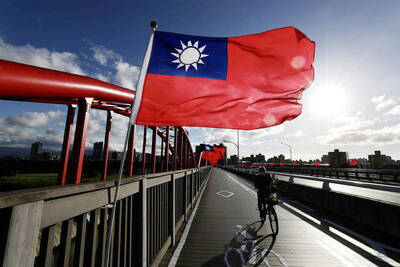
INFLATION UP? The IMF said CPI would increase to 1.5 percent this year, while the DGBAS projected it would rise to 1.68 percent, with GDP per capita of US$44,181 The IMF projected Taiwan’s real GDP would grow 5.2 percent this year, up from its 2.1 percent outlook in January, despite fears of global economic disruptions sparked by the US-Iran conflict. Taiwan’s consumer price index (CPI) is projected to increase to 1.5 percent, while unemployment would be 3.4 percent, roughly in line with estimates for Asia as a whole, the international body wrote in its Global Economic Outlook Report published in the US on Monday. The figures are comparatively better than the IMF outlook for the rest of the world, which pegged real GDP growth at 3.1 percent, down from 3.3 percent


 RSS
RSS