


The Industrial Technology Research Institute (ITRI) aims to lead Taiwanese manufacturers in forming a well-rounded link in the satellite ground station supply chain, it said.
According to a report of South China Morning Post published on Friday, China plans to launch project "GW" , which aims to launch nearly 13000 satellites, to build a large satellite network in low Earth orbit to provide Internet to users around the world.
The project, according to a team led by associate professor Xu Can with the People’s Liberation Army’s Space Engineering University in Beijing, might deploy satellites quickly to compete with Elon Musk’s Starlink, which has more than 3,000 satellites in orbit and is expected to grow to more than 40,000 satellites, it reported.
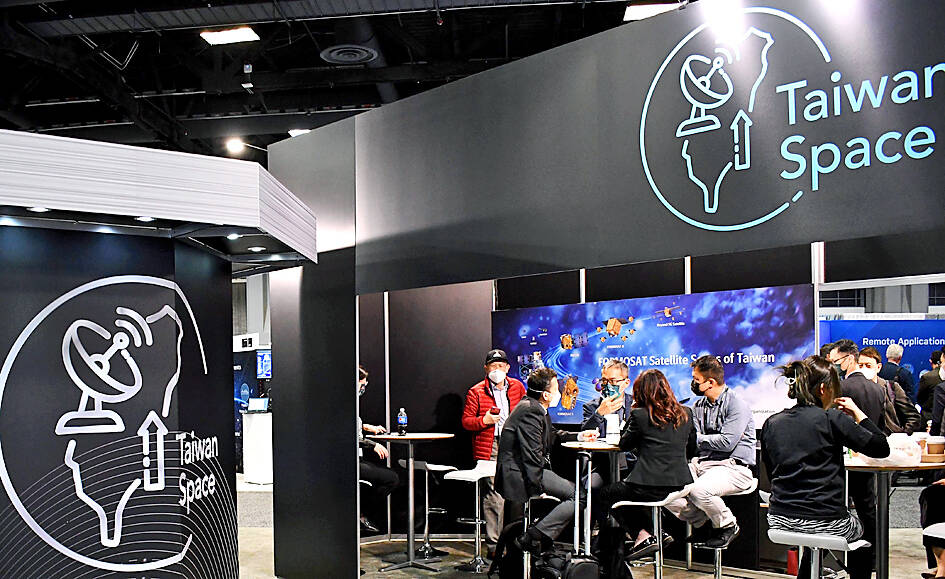
Photo courtesy of the Industrial Technology Research Institute
In Taipei, the National Science and Technology Council on Saturday said that the B5G project was on track to launch Taiwan’s first low Earth orbit communications satellite as soon as the middle of 2025.
The ITRI is responsible for technologies related to building ground stations to communicate with the B5G satellites.
In the early stage of Taiwan’s satellite supply chain, satellite TV and navigation equipment were a main focus, said Kao Jung-yang (高榮揚), head of the video processing and telecommunication group at ITRI’s Information and Communications Research Laboratories.
The research and development of low Earth orbit communications satellites is an opportunity for Taiwan to join related supply chains, he said.
The production value of the global space industry in 2021 was US$386 billion, of which ground equipment accounted for 51 percent, he said, citing information from the Satellite Industry Association.
The ITRI is to develop advanced technologies related to satellite ground stations including technologies to transmit and receive baseband signals and phased-array technologies, Kao said.
It has completed equipment for ground stations, which is ready to be tested by domestic and foreign manufacturers, he said.
Taiwanese industries can join the supply chain for ground stations as the commercial technologies of low Earth orbit communications satellites only need four to five years to develop, said Evin Liao (廖榮皇), who works at the ITRI’s Industry Service Center.
The ITRI can help manufacturers in semiconductors, information and communication, precision machining and optoelectronics improve technologies and match them with buyers through the international supply chain, he said.
For example, the ITRI led businesses to the SATELLITE Conference and Exhibition in the US in March last year and helped match nine manufacturers with customers, he said.
It also provides low-interest loans and promotes cooperation between industries and research institutes in the hopes of nurturing higher value-added industries, he added.

PROVOCATIVE: Chinese Deputy Ambassador to the UN Sun Lei accused Japan of sending military vessels to deliberately provoke tensions in the Taiwan Strait China denounced remarks by Japan and the EU about the South China Sea at a UN Security Council meeting on Monday, and accused Tokyo of provocative behavior in the Taiwan Strait and planning military expansion. Ayano Kunimitsu, a Japanese vice foreign minister, told the Council meeting on maritime security that Tokyo was seriously concerned about the situation in the East China and South China seas, and reiterated Japan’s opposition to any attempt to change the “status quo” by force, and obstruction of freedom of navigation and overflight. Stavros Lambrinidis, head of the EU delegation to the UN, also highlighted South China Sea
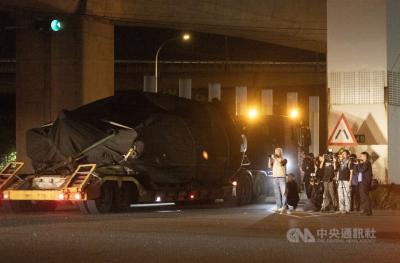
The final batch of 28 M1A2T Abrams tanks purchased from the US arrived at Taipei Port last night and were transported to the Armor Training Command in Hsinchu County’s Hukou Township (湖口), completing the military’s multi-year procurement of 108 of the tanks. Starting at 12:10am today, reporters observed more than a dozen civilian flatbed trailers departing from Taipei Port, each carrying an M1A2T tank covered with black waterproof tarps. Escorted by military vehicles, the convoy traveled via the West Coast Expressway to the Armor Training Command, with police implementing traffic control. The army operates about 1,000 tanks, including CM-11 Brave Tiger
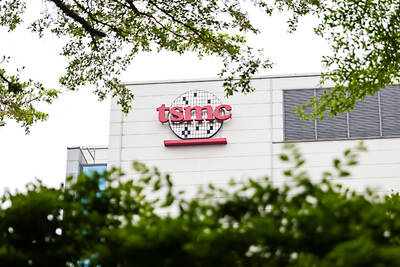
Taiwan Semiconductor Manufacturing Co (TSMC, 台積電), the world’s largest contract chipmaker, said it expects its 2-nanometer (2nm) chip capacity to grow at a compound annual rate of 70 percent from this year to 2028. The projection comes as five fabs begin volume production of 2-nanometer chips this year — two in Hsinchu and three in Kaohsiung — TSMC senior vice president and deputy cochief operating officer Cliff Hou (侯永清) said at the company’s annual technology symposium in Silicon Valley, California, last week. Output in the first year of 2-nanometer production, which began in the fourth quarter of last year, is expected to
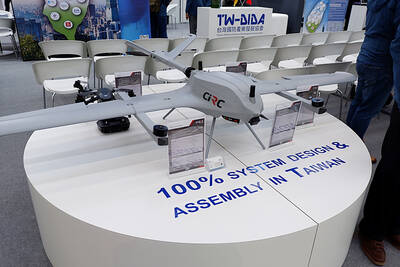
Taiwan’s drone exports surged past US$100 million in the first quarter, exceeding last year’s full-year total, with the Czech Republic emerging as the largest buyer, the Ministry of Economic Affairs said. Exports of complete drones reached US$115.85 million in the period, about 1.2 times the total recorded for all of last year, the ministry said in a report. Exports to the Czech Republic accounted for about US$100 million, far outpacing other markets. Poland, last year’s top destination, recorded about US$11.75 million in the first quarter. Taiwan’s drone exports have expanded rapidly in the past few years, with last year’s total


 RSS
RSS