


Polish-Taiwanese Parliamentary Group chairman Waldemar Andzel yesterday told President Tsai Ing-wen (蔡英文) in a meeting in Taipei that Poland welcomes Taiwan’s semiconductor manufacturers to establish factories there, adding that a direct flight service could be established between Warsaw and Taipei.
Andzel and his delegation arrived in Taiwan on Monday for a five-day visit as part of the 30th anniversary of friendship between the two nations.
The visit also occurs as Taiwan Semiconductor Manufacturing Co (台積電) is looking for sites to build new fabs in Europe.
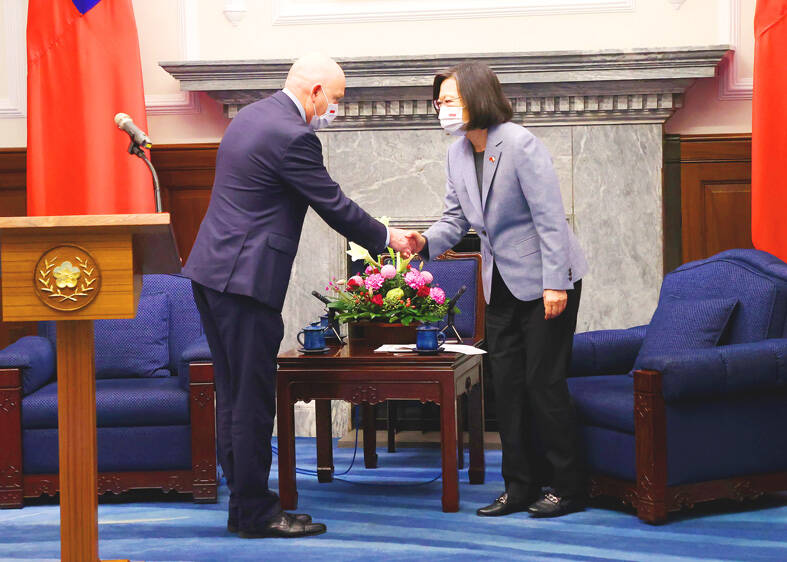
Photo: CNA
Poland has been supporting Taiwan as the two nations share similar histories, and both face threats from a hostile neighbor, Andzel said.
“We thank Taiwan for your donation of masks and other medical supplies when the world was severely affected by the COVID-19 pandemic. In return, we also tried to help Taiwan by donating 400,000 doses of AstraZeneca COVID-19 vaccines,” he said.
Since Russia invaded Ukraine in February, Taiwanese have donated more than US$11 million to Ukraine, he said.
Taiwan and Poland also signed an agreement in 2016 to avoid double taxation and prevent tax evasion, removing trade barriers between the nations, he added.
“We hope that both countries can forge a closer economic partnership. We welcome Taiwanese companies to build new plants in Poland, such as semiconductor manufacturing firms,” Andzel said.
Noting that this was his third visit to Taiwan, Andzel said that he hoped there would be a direct flight service between Warsaw and Taipei to facilitate growing cultural exchanges between the two nations.
Tsai thanked the members of the Polish Senate Foreign and European Affairs Committee and the Health Committee for unanimously supporting Taiwan’s participation in activities organized by the WHO in July.
“I also admire you for sheltering more than 3 million Ukrainian refugees. This has demonstrated a humanitarian spirit and solidarity among the democratic countries,” Tsai said.
Poland holds the rotating presidency of the Organization for Security and Co-operation in Europe this year and is leading nations implementing sanctions against Russia and providing humanitarian aid to Ukrainians, she said.
“Taiwan, Poland and Ukraine are at the front lines against the aggression from authoritarian regimes. All Taiwanese feel for the Ukrainians for defending their democracy and freedom. We hope to join other like-minded countries in helping Ukrainians rebuild their homeland when the war is over,” Tsai said.
The Polish delegation also met with Legislative Yuan President You Si-kun (游錫?) when they visited the legislature in Taipei.
“We are far apart geographically, but democracy and freedom are our common languages. Although we are in different continents and each facing unprecedented challenges, we need to cooperate more closely to jointly defend universal values of liberty, democracy and human rights, and ensure peaceful and stable development around the globe,” You said.
A series of protests against COVID-19 lockdowns in Shanghai, Beijing and other cities in China, also known as the “Blank Paper Revolution,” showed the Chinese people’s desire for freedom under Beijing’s draconian “zero COVID-19” policy, he said.
“It is outrageous that China still controls what people think about the policy by trying to cover up the protests on the Internet,” You said.
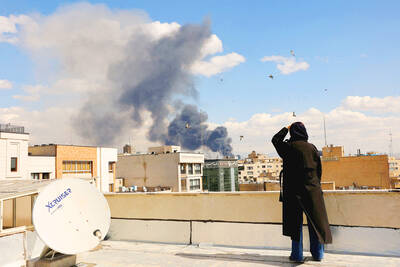
CHAOS: Iranians took to the streets playing celebratory music after reports of Khamenei’s death on Saturday, while mourners also gathered in Tehran yesterday Iranian Supreme Leader Ayatollah Ali Khamenei was killed in a major attack on Iran launched by Israel and the US, throwing the future of the Islamic republic into doubt and raising the risk of regional instability. Iranian state television and the state-run IRNA news agency announced the 86-year-old’s death early yesterday. US President Donald Trump said it gave Iranians their “greatest chance” to “take back” their country. The announcements came after a joint US and Israeli aerial bombardment that targeted Iranian military and governmental sites. Trump said the “heavy and pinpoint bombing” would continue through the week or as long
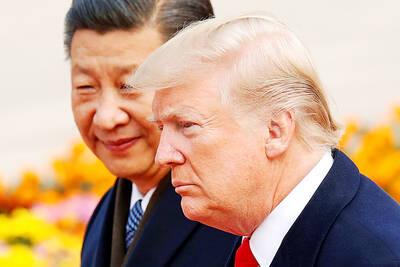
TRUST: The KMT said it respected the US’ timing and considerations, and hoped it would continue to honor its commitments to helping Taiwan bolster its defenses and deterrence US President Donald Trump is delaying a multibillion-dollar arms sale to Taiwan to ensure his visit to Beijing is successful, a New York Times report said. The weapons sales package has stalled in the US Department of State, the report said, citing US officials it did not identify. The White House has told agencies not to push forward ahead of Trump’s meeting with Chinese President Xi Jinping (習近平), it said. The two last month held a phone call to discuss trade and geopolitical flashpoints ahead of the summit. Xi raised the Taiwan issue and urged the US to handle arms sales to
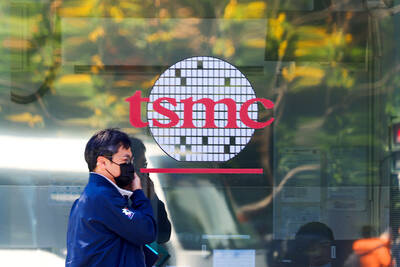
BIG SPENDERS: Foreign investors bought the most Taiwan equities since 2005, signaling confidence that an AI boom would continue to benefit chipmakers Taiwan Semiconductor Manufacturing Co’s (TSMC, 台積電) market capitalization swelled to US$2 trillion for the first time following a 4.25 percent rally in its American depositary receipts (ADR) overnight, putting the world’s biggest contract chipmaker sixth on the list of the world’s biggest companies by market capitalization, just behind Amazon.com Inc. The site CompaniesMarketcap.com ranked TSMC ahead of Saudi Aramco and Meta Platforms Inc. The Taiwanese company’s ADRs on Tuesday surged to US$385.75 on the New York Stock Exchange, as strong demand for artificial intelligence (AI) applications led to chip supply constraints and boost revenue growth to record-breaking levels. Each TSMC ADR represents

State-run CPC Corp, Taiwan (CPC, 台灣中油) yesterday said that it had confirmed on Saturday night with its liquefied natural gas (LNG) and crude oil suppliers that shipments are proceeding as scheduled and that domestic supplies remain unaffected. The CPC yesterday announced the gasoline and diesel prices will rise by NT$0.2 and NT$0.4 per liter, respectively, starting Monday, citing Middle East tensions and blizzards in the eastern United States. CPC also iterated it has been reducing the proportion of crude oil imports from the Middle East and diversifying its supply sources in the past few years in response to geopolitical risks, expanding


 RSS
RSS