


A US draft act seeking to increase the amount of domestically made semiconductors moved one step closer to being signed into law on Thursday after it was passed by the US House of Representatives, but it is unlikely to challenge Taiwan’s critical role as a major global chip supplier, the Ministry of Economic Affairs said.
Instead, it could help Taiwanese chipmakers by financing manufacturing projects in the US, the ministry said in a statement on Friday.
Taiwan serves as a global semiconductor manufacturing hub and local manufacturers continue to invest in advanced processes to upgrade technologies, which has made the Taiwanese semiconductor industry resilient and competitive in the global market, it said.

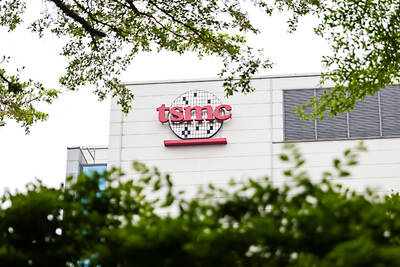
Photo: Reuters
The statement came after the House passed the “creating helpful incentives to produce semiconductors (CHIPS) and science act” to authorize the US government to provide US$52 billion in subsidies to prop up domestic semiconductor production, as well as more than US$100 billion over five years for research and development.
The bill, passed by a rare bipartisan vote of 64 to 33, has paved the way for US President Joe Biden to sign the legislation into law. The legislation seeks to ensure that the US can domestically manufacture a larger share of the semiconductors it needs to produce a wide variety of goods, including computers and vehicles, and reduce the country’s reliance on imported chips.
The ministry’s statement said that Taiwan would continue to be a major exporter of chips, despite an expected increase in US manufacturing.
“After 50 years of efforts in developing its semiconductor industry through investment and talent cultivation, Taiwan has been on the top of the industry in terms of production efficiency, establishment of a comprehensive supply chain and innovations,” the ministry said. “Taiwan’s status as a critical player in the global semiconductor sector will not be affected.”
Taiwan has taken the lead in global semiconductor production. Local firms Taiwan Semiconductor Manufacturing Co (TSMC, 台積電), a pure-play wafer foundry operator, and ASE Technology Holding Co (日月光投控), an IC packaging and testing services provider, are the largest in the world in their respective sectors.
The CHIPS act’s subsidies are expected to be made available to not only US manufacturers, such as Intel Corp, but also foreign companies such as TSMC, which operates foundries in the US and has been investing in capacity expansions in the country.
Trusted foreign firms are widely regarded as key to ensuring steady and uninterrupted chip supply to US consumers, but also to creating jobs in the US.
The ministry said the US is one of Taiwan’s most important trading partners and the largest buyer of Taiwan-made chips.
The ministry would be glad to see Taiwanese semiconductor firms secure financial resources when they extend their reach to the US markets through investments, it added.
Taiwan is seeking to forge closer partnerships with US information technology suppliers focused on communications equipment, it said.
Arisa Liu (劉佩真), a researcher at the Taiwan Institute of Economic Research-affiliated Taiwan Industry Economics Database, said the CHIPS act would lower the financial burden on Taiwanese semiconductor firms that are investing or planning to invest in the US.
They had been strongly nudged by the US to do so, starting under the administration of former US president Donald Trump, Liu said.
TSMC is investing US$12 billion to build a 12-inch fab in Arizona using its sophisticated 5-nanometer process.
Earlier this week, TSMC wrote on LinkedIn that the Arizona plant had recently held a “topping out” ceremony when the new facility’s last beam was placed.
The new plant would start production in 2024, as scheduled, it said.
Hsinchu-based GlobalWafers Co (環球晶圓), the world’s third-largest supplier of silicon wafers, last month announced that it is planning to invest US$5 billion to build a wafer plant in Sherman, Texas.
GlobalWafers said it expects the construction of the new plant to begin in November, given that it secures expected subsidies under the CHIPS act before the US Congress goes into recess next month.
After the passage of the CHIPS act, the White House issued a statement saying that the legislation would make vehicles, appliances and computers cheaper, and lower the costs of everyday goods.
However, it was unclear whether Taiwanese and other foreign manufacturers setting up fabs in the US would be able to offset the greater cost of producing in the US, including higher wages, and whether the higher costs would be passed on to consumers.
Taiwanese chips’ competitiveness in part stems from relatively low cost of hiring engineers in the nation.
The ministry said that Taiwan has been a good partner in the global economy and Taiwanese semiconductor manufacturers are willing to help their clients assuage the effects of supply shortages, including chips used in automotive electronics.
The ministry said that international tech giants such as Apple Inc, Intel, Nvidia Corp and Advanced Micro Devices Inc are major clients of the Taiwanese semiconductor industry, which is able to provide highly efficient goods with a high quality-to-price ratio.
“Made in Taiwan has become the most efficient production model in the global semiconductor industry,” the ministry said.

PROVOCATIVE: Chinese Deputy Ambassador to the UN Sun Lei accused Japan of sending military vessels to deliberately provoke tensions in the Taiwan Strait China denounced remarks by Japan and the EU about the South China Sea at a UN Security Council meeting on Monday, and accused Tokyo of provocative behavior in the Taiwan Strait and planning military expansion. Ayano Kunimitsu, a Japanese vice foreign minister, told the Council meeting on maritime security that Tokyo was seriously concerned about the situation in the East China and South China seas, and reiterated Japan’s opposition to any attempt to change the “status quo” by force, and obstruction of freedom of navigation and overflight. Stavros Lambrinidis, head of the EU delegation to the UN, also highlighted South China Sea

SILENCING CRITICS: In addition to blocking Taiwan, China aimed to prevent rights activists from speaking out against authoritarian states, a Cabinet department said The Ministry of Foreign Affairs (MOFA) yesterday condemned transnational repression by Beijing after RightsCon, a major digital human rights conference scheduled to be held in Zambia this week, was abruptly canceled due to Chinese pressure over Taiwanese participation. This year’s RightsCon, the world’s largest conference discussing issues “at the intersection of human rights and technology,” was scheduled to take place from tomorrow to Friday in Lusaka, and expected to draw 2,600 in-person attendees from 150 countries, along with 1,100 online participants. However, organizers were forced to cancel the event due to behind-the-scenes pressure from China, the ministry said, expressing its “strongest condemnation”
Taiwan Semiconductor Manufacturing Co (TSMC, 台積電), the world’s largest contract chipmaker, said it expects its 2-nanometer (2nm) chip capacity to grow at a compound annual rate of 70 percent from this year to 2028. The projection comes as five fabs begin volume production of 2-nanometer chips this year — two in Hsinchu and three in Kaohsiung — TSMC senior vice president and deputy cochief operating officer Cliff Hou (侯永清) said at the company’s annual technology symposium in Silicon Valley, California, last week. Output in the first year of 2-nanometer production, which began in the fourth quarter of last year, is expected to
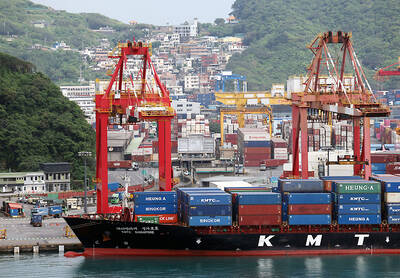
Taiwan’s economy grew far faster than expected in the first quarter, as booming demand for artificial intelligence (AI) applications drove a surge in exports, spilling over into investment and consumption, the Directorate-General of Budget, Accounting and Statistics (DGBAS) said yesterday. GDP growth was 13.69 percent year-on-year during the January-to-March period, beating the DGBAS’ February forecast by 2.23 percentage points and marking the most robust growth in nearly four decades, DGBAS senior official Chiang Hsin-yi (江心怡) told a news conference in Taipei. The result was powered by exports, which remain the backbone of Taiwan’s economy, Chiang said. Outbound shipments jumped 51.12 percent year-on-year to


 RSS
RSS