


Chinese President Xi Jinping (習近平) visited Xinjiang this week, making his first trip in eight years to the once-restive northwestern frontier region where the US has accused China of genocide against the mostly Muslim Uighur minority.
From Tuesday to yesterday, Xi visited sites in Xinjiang, including a cotton plantation, a trade zone and a museum, state broadcaster China Central Television (CCTV) reported in a 34-minute evening newscast after Xi had left Xinjiang.
The US bans cotton imports from Xinjiang over concerns about the use of forced labor. China has repeatedly denied any mistreatment of Uighurs.
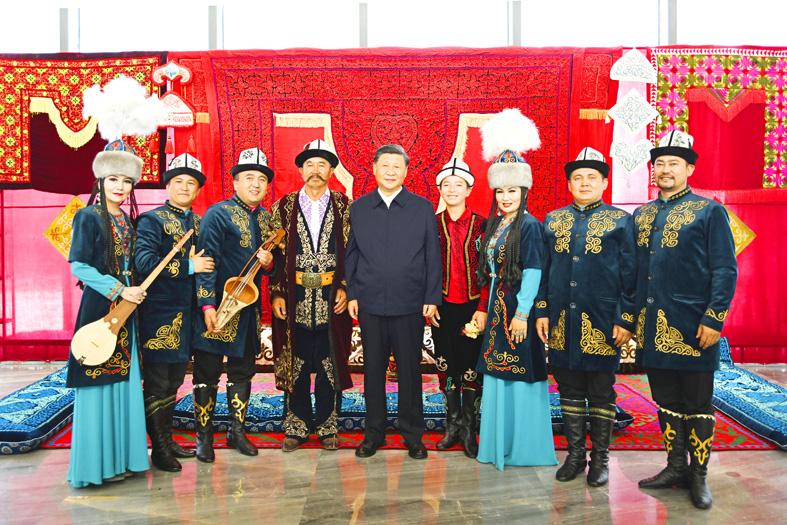
Photo: AP
A photograph by Xinhua news agency showed a maskless Xi surrounded by smiling and clapping residents, many of them appearing to be Uighurs wearing ethnic costumes and Muslim prayer caps.
Xi urged Xinjiang officials to listen to the people so as to win their hearts and keep them united.
He also stressed that security measures aimed at maintaining social stability should become regular.
CCTV also cited Xi as saying that Islamic practices must conform to Chinese sensibilities and that Xinjiang must groom a team of “politically reliable” religious representatives.
Xinjiang had been the scene of sporadic anti-government and anti-Han Chinese violence before a crackdown that the UN in 2018 said had put 1 million Uighurs into “massive internment camps” set up for political indoctrination.
China initially denied the existence of any camps, but later said it had set up “vocational training centers” with dormitories where people can “voluntarily” check themselves in to learn about law, the Chinese language and vocational skills.
It said that in 2019 all trainees had “graduated.”
Xinjiang has not reported any violent attacks since the establishment of the centers.
“The point of Xi’s Xinjiang trip is to see the results of the policies he has put in place in recent years to stabilize Xinjiang, and to conclude that his approach and strategy for Xinjiang had been successful,” said Li Mingjiang (李明江), an associate professor at S. Rajaratnam School of International Studies in Singapore.
The trip marks Xi’s first public appearance since he visited Hong Kong for the July 1 anniversary marking 25 years of Chinese rule over the former British colony, another territory where Beijing has dramatically tightened its control following sometimes violent pro-democracy protests in 2019.
Xi’s last reported visit to Xinjiang was in 2014, when he called for an all-out “struggle against terrorism, infiltration and separatism,” leaked papers reported by the New York Times showed.
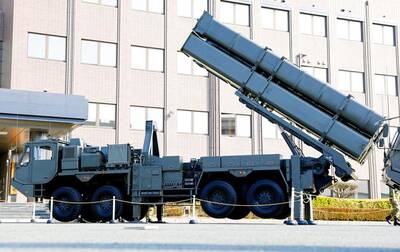
Japan has deployed long-range missiles in a southwestern region near China, the Japanese defense minister said yesterday, at a time when ties with Beijing are at their lowest in recent years. The missiles were installed in Kumamoto in the southern region of Kyushu, as Japan is attempting to shore up its military capacity as China steps up naval activity in the East China Sea. “Standoff defense capabilities enable us to counter the threat of enemy forces attempting to invade our country ... while ensuring the safety of our personnel,” Japanese Minister of Defense Shinjiro Koizumi said. “This is an extremely important initiative for
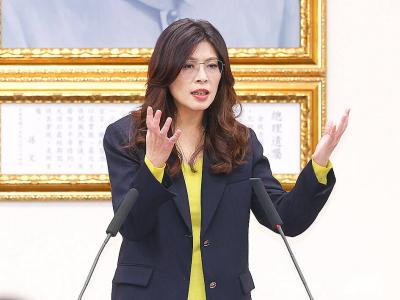
Chinese Nationalist Party (KMT) Chairwoman Cheng Li-wun (鄭麗文) today accepted an invitation from Chinese President Xi Jinping (習近平) to lead a delegation to China next month, saying she hopes to promote the peaceful development of cross-strait relations and bring stability to the Taiwan Strait. “I am grateful and happy to accept this invitation,” Cheng said in a statement from the KMT chairperson’s office. Cheng said she hopes both sides can work together to promote the peaceful development of cross-strait relations, enhance exchange and cooperation, bring stability to the Taiwan Strait and improve people’s livelihoods. At today's news conference, Cheng said any efforts to
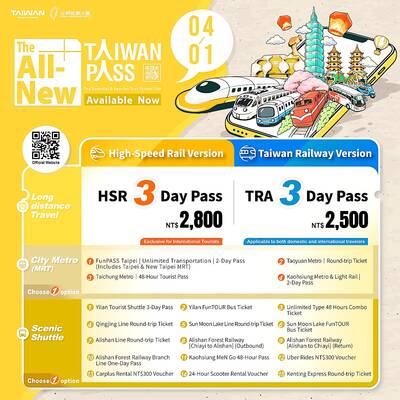
MORE POPULAR: Taiwan Pass sales increased by 59 percent during the first quarter compared with the same period last year, the Tourism Administration said The Tourism Administration yesterday said that it has streamlined the Taiwan Pass, with two versions available for purchase beginning today. The tourism agency has made the pass available to international tourists since 2024, allowing them to access the high-speed rail, Taiwan Railway Corp services, four MRT systems and four Taiwan Tourist Shuttles. Previously, five types of Taiwan Pass were available, but some tourists have said that the offerings were too complicated. The agency said only two types of Taiwan Pass would be available, starting from a three-day pass with the high-speed rail and a three-day pass with Taiwan Railway Corp. The former costs NT$2,800

The nation’s fastest supercomputer, Nano 4 (晶創26), is scheduled to be launched in the third quarter, and would be used to train large language models in finance and national defense sectors, the National Center for High-Performance Computing (NCHC) said. The supercomputer, which would operate at about 86.05 petaflops, is being tested at a new cloud computing center in the Southern Taiwan Science Park in Tainan. The exterior of the server cabinet features chip circuitry patterns overlaid with a map of Taiwan, highlighting the nation’s central position in the semiconductor industry. The center also houses Taiwania 2, Taiwania 3, Forerunner 1 and


 RSS
RSS