


US President Joe Biden yesterday arrived in Japan to launch a plan for greater US economic engagement with the Indo-Pacific region, facing criticism even before the program is announced that it would offer scant benefit to countries in the region.
On the second leg of his first Asia trip as president, Biden is to meet with leaders of Japan, India and Australia, the Quadrilateral Security Dialogue (Quad), another cornerstone of his strategy to push back against China’s expanding influence.
At their previous summit in March, Quad leaders agreed that what has happened to Ukraine should not be allowed to happen in the Indo-Pacific — a reference to the threat posed to Taiwan by China, although Beijing was not mentioned by name.
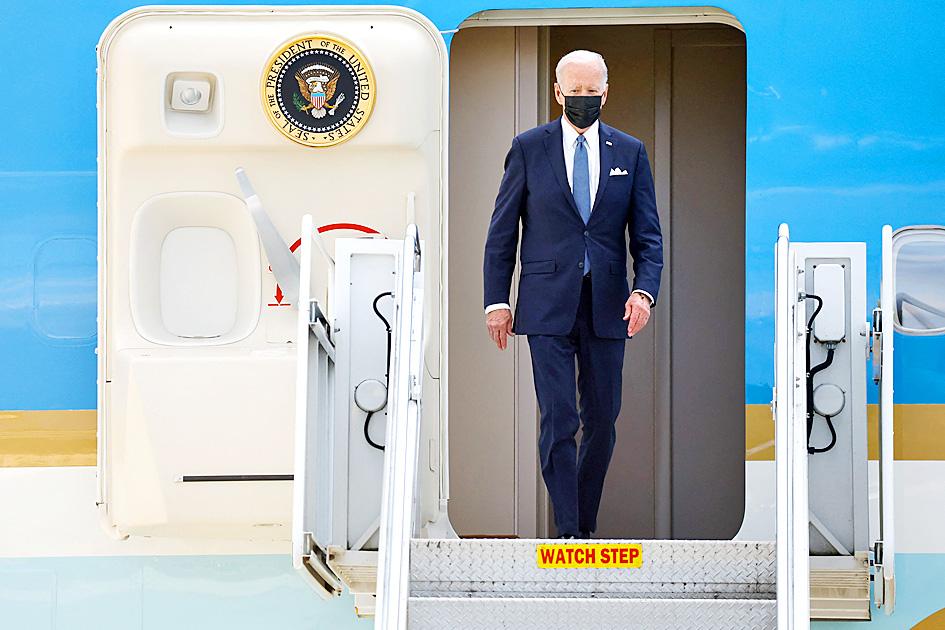
Photo: Reuters
Biden was yesterday to meet with Japanese business leaders, including the president of Toyota Motor Corp, at the ambassador’s residence in Tokyo shortly after arriving, said a person familiar with the matter.
Today, he is to call on Emperor Naruhito before talks with Japanese Prime Minister Fumio Kishida. He and Kishida are expected to discuss Japan’s plans to expand its military capabilities and reach in response to China’s growing might.
Biden plans to roll out the Indo-Pacific Economic Framework (IPEF), a program to bind regional countries more closely through common standards in areas including supply chain resilience, clean energy, infrastructure and digital trade.
Washington has lacked an economic pillar to its Indo-Pacific engagement since former US president Donald Trump quit a multinational trans-Pacific trade agreement, leaving the field open to China to expand its influence.
However, the IPEF is unlikely to include binding commitments, and Asian countries and trade experts have given a decidedly lukewarm response to a program limited by Biden’s reluctance to risk US jobs by offering the increased market access the region craves.
The White House had wanted the IPEF announcement to represent a formal start of negotiations with a core group of like-minded countries, but Japan wanted to ensure broader participation to include as many Southeast Asian countries as possible, trade and diplomatic sources said.
Given this, today’s ceremony would likely signal an agreement to start discussions on the IPEF rather than actual negotiations, the sources said.
Beijing appeared to take a dim view of the planned IPEF.
China welcomes initiatives conducive to strengthening regional cooperation, but “opposes attempts to create division and confrontation,” Chinese Minister of Foreign Affairs Wang Yi (王毅) said in a statement.
“The Asia-Pacific should become a high ground for peaceful development, not a geopolitical gladiatorial arena,” he said.
Wang said the “so-called ‘Indo-Pacific strategy’ is essentially a strategy to create division, a strategy to incite confrontation and a strategy to undermine peace.”
Some members ASEAN could join the IPEF launch ceremony, an Asian diplomat said, but a Japanese Ministry of Finance official said many in the region were reluctant because of the lack of practical incentives like tariff reductions.
Tomorrow in Tokyo, Biden is to join the second in-person Quad summit.
The four countries share concerns about China, but the Quad as a group has avoided an overtly anti-China agenda, largely due to Indian sensibilities.

NATIONAL SECURITY THREAT: An official said that Guan Guan’s comments had gone beyond the threshold of free speech, as she advocated for the destruction of the ROC China-born media influencer Guan Guan’s (關關) residency permit has been revoked for repeatedly posting pro-China content that threatens national security, the National Immigration Agency said yesterday. Guan Guan has said many controversial things in her videos posted to Douyin (抖音), including “the red flag will soon be painted all over Taiwan” and “Taiwan is an inseparable part of China,” while expressing hope for expedited “reunification.” The agency received multiple reports alleging that Guan Guan had advocated for armed reunification last year. After investigating, the agency last month issued a notice requiring her to appear and account for her actions. Guan Guan appeared as required,

Japan and the Philippines yesterday signed a defense pact that would allow the tax-free provision of ammunition, fuel, food and other necessities when their forces stage joint training to boost deterrence against China’s growing aggression in the region and to bolster their preparation for natural disasters. Japan has faced increasing political, trade and security tensions with China, which was angered by Japanese Prime Minister Sanae Takaichi’s remark that a Chinese attack on Taiwan would be a survival-threatening situation for Japan, triggering a military response. Japan and the Philippines have also had separate territorial conflicts with Beijing in the East and South China
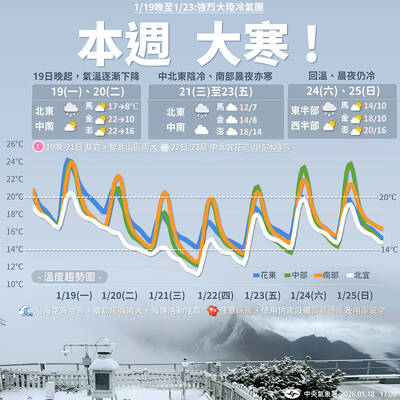
A strong cold air mass is expected to arrive tonight, bringing a change in weather and a drop in temperature, the Central Weather Administration (CWA) said. The coldest time would be early on Thursday morning, with temperatures in some areas dipping as low as 8°C, it said. Daytime highs yesterday were 22°C to 24°C in northern and eastern Taiwan, and about 25°C to 28°C in the central and southern regions, it said. However, nighttime lows would dip to about 15°C to 16°C in central and northern Taiwan as well as the northeast, and 17°C to 19°C elsewhere, it said. Tropical Storm Nokaen, currently
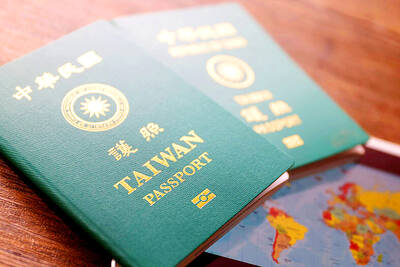
PAPERS, PLEASE: The gang exploited the high value of the passports, selling them at inflated prices to Chinese buyers, who would treat them as ‘invisibility cloaks’ The Yilan District Court has handed four members of a syndicate prison terms ranging from one year and two months to two years and two months for their involvement in a scheme to purchase Taiwanese passports and resell them abroad at a massive markup. A Chinese human smuggling syndicate purchased Taiwanese passports through local criminal networks, exploiting the passports’ visa-free travel privileges to turn a profit of more than 20 times the original price, the court said. Such criminal organizations enable people to impersonate Taiwanese when entering and exiting Taiwan and other countries, undermining social order and the credibility of the nation’s


 RSS
RSS