


The Central Epidemic Command Center (CECC) has designed a standardized zero-contact protocol for delivering packages to people in home isolation for COVID-19, Minister of Health and Welfare Chen Shih-chung (陳時中) said yesterday, as the center reported 11,974 new domestic COVID-19 cases.
Health officials and delivery worker unions created the protocol to minimize infection risks across the industry, after discussing the issues in a meeting earlier that day, Chen told the center’s daily news conference.
The protocol would enable delivery workers to do their jobs without directly interacting with confirmed cases, he said.
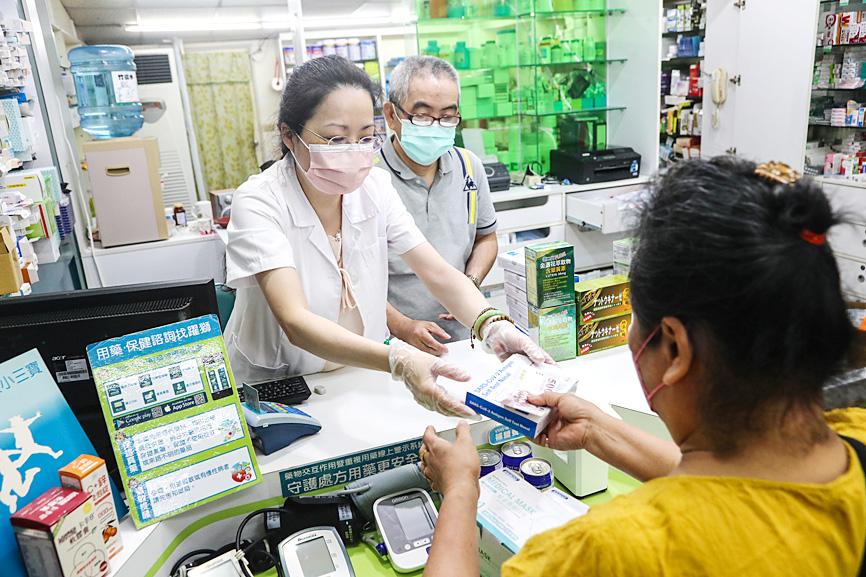
Photo: CNA
Deliveries to hospitals and other medical facilities would be banned, he said, adding that packages must be left at a location with good ventilation.
Payments are to be made electronically while officials consider other payment options, he said.
The Food and Drug Administration yesterday approved the first at-home saliva rapid COVID-19 test kit, after businesses applied to acquire up to 30 million of the South Korea-made products.
The agency has so far approved 21 at-home rapid test kits, most of which use throat swabs or nose swabs to detect the virus, while the five saliva rapid test kits used in Taiwan must all be administrated by a healthcare worker.
Chen said that 260,514 rapid test kits were sold by pharmacies as of noon yesterday out of 411,000 tests supplied by the government for the day.
He urged the public not to rush to stockpile rapid tests, as there is ample supply and kits are being supplied to retailers every day.
Pharmacies are allocated enough rapid tests to serve 78 people per day, and deliveries would continue throughout today to ensure supply, he said.
However, the CECC was advising pharmacies to prepare to accept deliveries at about noon to prevent possible delays, he said, adding that the center would also deliver kits to drug stores that are open on Sundays.
The CECC still requires that a COVID-19 case is confirmed using a polymerase chain reaction test, as 10 percent of positive tests shown in rapid test kit results are false positives, Chen said.
Erroneously confirming a person to have COVID-19 would result in them and their contacts facing unnecessary restrictions, he said.
The announcements came as the CECC reported 11,974 new domestic COVID-19 cases and two deaths.
The fatalities — men in their 80s and 50s — passed away on Saturday last week and Sunday respectively, the CECC said.
One of them had received three shots of a COVID-19 vaccine, and the other had received two, the center said, adding that the men had tested positive on Monday last week and Thursday last week respectively.
The CECC also reported that 29 people had moderate cases of COVID-19, and one developed severe symptoms.
Centers for Disease Control Deputy Director-General Philip Lo (羅一鈞), deputy head of the CECC’s medical response division, said the new severe case is that of a woman in her 80s, who has a chronic neurological disease.
The woman, who received three doses of a COVID-19 vaccine, developed pneumonia and respiratory complications after she contracted the disease, Lo said.
She is being treated with the antiviral drug remdesivir and is receiving oxygen therapy, he said.
The 29 moderate cases are people aged 10 to 100, including 15 who are not vaccinated, the CECC said.
One of the 15 unvaccinated cases is a teenager who has a history of heart and neurological diseases, Lo said.
Additional reporting by Wu Liang-yi
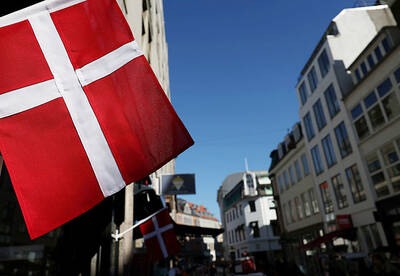
‘UNFRIENDLY’: Changing the nationality listing of Taiwanese residents to ‘China’ goes against EU foreign policy as well as democratic and human rights principles, MOFA said Taiwan yesterday called on Denmark to correct its designation of the nationality of Taiwanese residents as “China” or face retaliatory measures. The Danish government in 2024 changed the nationality of Taiwanese citizens on their residence permits from “Taiwan” to “China.” The decision goes against EU foreign policy and contravenes democratic and human rights principles, Ministry of Foreign Affairs (MOFA) spokesman Hsiao Kuang-wei (蕭光偉) said. Denmark should present a solution acceptable to Taiwan as soon as possible and correct the erroneous designation to preserve the longstanding friendship between the two nations, Hsiao said. The issue could damage Denmark’s image and business reputation in Taiwan,
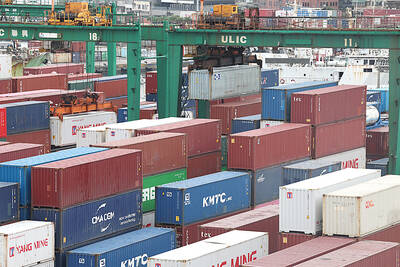
Taiwan climbed to its highest position in global export rankings in more than three decades last year, buoyed by demand linked to artificial intelligence (AI) that lifted shipments of semiconductors and technology products, Ministry of Finance data released yesterday showed. Taiwan accounted for 2.4 percent of global exports last year, or about US$640 billion, ranking 12th worldwide, the data showed. That was up four places from a year earlier and marked the nation’s best ranking since 1994, the ministry said. Taiwan’s share of global exports rose by 0.5 percentage points from the previous year, the largest increase among major economies, reflecting the nation’s
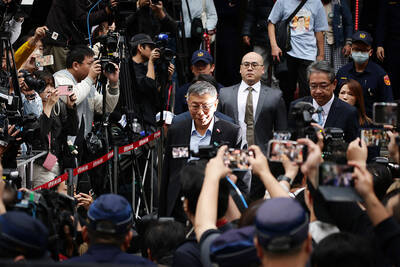
FIRST TRIAL: Ko’s lawyers sought reduced bail and other concessions, as did other defendants, but the bail judge denied their requests, citing the severity of the sentences Former Taipei mayor Ko Wen-je (柯文哲) was yesterday sentenced to 17 years in prison and had his civil rights suspended for six years over corruption, embezzlement and other charges. Taipei prosecutors in December last year asked the Taipei District Court for a combined 28-year, six-month sentence for the four cases against Ko, who founded the Taiwan People’s Party (TPP). The cases were linked to the Core Pacific City (京華城購物中心) redevelopment project and the mismanagement of political donations. Other defendants convicted on separate charges included Chinese Nationalist Party (KMT) Taipei City Councilor Angela Ying (應曉薇), who was handed a 15-year, six-month sentence; Core Pacific
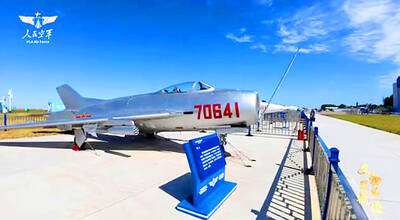
J-6 REMODEL: The converted drones are part of Beijing’s expanding mix of airpower weapons, including bombers with stand-off missiles and UAV swarms, the report said China has stationed obsolete supersonic fighters converted to attack drones at six air bases close to the Taiwan Strait, a report published this month by the Arlington, Virginia-based Mitchell Institute for Aerospace Studies said. Satellite imagery of the airfields from the institute’s “China Airpower Tracker” shows what appear to be lines of stubby, swept-winged aircraft matching the shape of J-6 fighters that first flew with the Chinese People’s Liberation Army (PLA) Air Force in the 1960s. Since their conversion to drones, the aircraft have been identified at five bases in China’s Fujian Province and one in Guangdong Province, the report said. J.


 RSS
RSS