


South Korean president-elect Yoon Suk-yeol yesterday asked Chinese President Xi Jinping (習近平) for close coordination on North Korea’s complete denuclearization, while Japanese Minister of Foreign Affairs Yoshimasa Hayashi said he had talked with his South Korean counterpart, agreeing to strengthen bilateral cooperation against the North Korean threat both countries are facing.
The moves came after Pyongyang said it test-fired its biggest-yet intercontinental ballistic missile (ICBM) under the orders of North Korean leader Kim Jong-un, who vowed to expand the North’s “nuclear war deterrent” while preparing for a “long-standing confrontation” with the US.
The report by North Korean state media came a day after the militaries of South Korea and Japan said they detected that North Korea had launched an ICBM in its first long-range test since 2017.
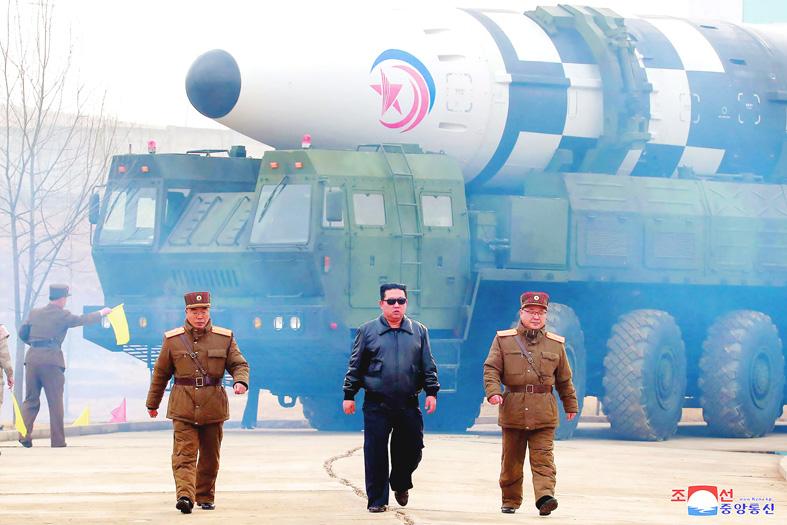
Photo: AFP / KCNA VIA KNS
The launch extended a barrage of weapons demonstrations this year that analysts say are aimed at forcing the US to accept North Korea as a nuclear power and remove crippling sanctions against its broken economy, which has been further damaged by COVID-19-related difficulties.
State TV dramatized the testing process like a Hollywood movie, showing Kim walking in slow motion in front of his giant missile in sunglasses and a black leather motorcycle jacket. It edited quick cuts that alternately show Kim and other officials staring at their watches before Kim takes off his shades and nods, with the video then showing the missile being rolled out of the hangar.
The Hwasong-17, which was fired at a high angle to avoid the territorial waters of neighbors, reached a maximum altitude of 6,248km and traveled 1,090km during a 67-minute flight before landing in waters between North Korea and Japan, Pyongyang’s official Korean Central News Agency (KCNA) said.
KCNA said the launch met Kim’s technical objectives and proved the ICBM could be operated quickly during wartime conditions.
The South Korean and Japanese militaries announced similar flight details, which analysts said suggests that the missile could reach targets 15,000km away when fired on a normal trajectory with a warhead weighing less than 1 tonne.
That would place the entire US mainland within striking distance.
Believed to be about 25m long, the Hwasong-17 is North Korea’s longest-range weapon and, by some estimates, the world’s biggest road-mobile ballistic missile system.
North Korea revealed the missile in a military parade in October 2020, and Thursday’s launch was its first full-range test.
KCNA quoted Kim as saying that his new weapon would make the “whole world clearly aware” of North Korea’s bolstered nuclear forces.
He vowed for his military to acquire “formidable military and technical capabilities unperturbed by any military threat and blackmail and keep themselves fully ready for long-standing confrontation with the US imperialists.”
In Seoul, Yoon, who is to take office on May 10, asked Beijing to coordinate closely and work with other countries in the region on North Korea’s denuclearization, Yoon’s office said.
In Tokyo, Hayashi said he talked with South Korean Minister of Foreign Affair Chung Eui-yong by telephone and they agreed to strengthen bilateral cooperation against the North Korean threat and seek further UN Security Council actions against Pyongyang.
US Secretary of Defense Lloyd Austin held separate telephone conversations with his counterparts in South Korea and Japan, in which they discussed response measures to North Korean missile activities and vowed to strengthen defense cooperation, the Pentagon said.
The South Korean Ministry of Unification, which handles inter-Korean affairs, criticized the North for breaking its self-imposed moratorium on ICBM tests.
“Whatever North Korea’s intent may be, the North must immediately suspend actions that create tensions on the Korean Peninsula and destabilizes the regional security situation and return to the table for dialogue and negotiations,” ministry spokesperson Cha Deok-cheol told a news briefing.
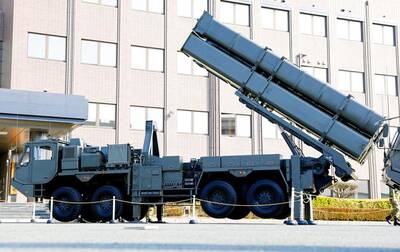
Japan has deployed long-range missiles in a southwestern region near China, the Japanese defense minister said yesterday, at a time when ties with Beijing are at their lowest in recent years. The missiles were installed in Kumamoto in the southern region of Kyushu, as Japan is attempting to shore up its military capacity as China steps up naval activity in the East China Sea. “Standoff defense capabilities enable us to counter the threat of enemy forces attempting to invade our country ... while ensuring the safety of our personnel,” Japanese Minister of Defense Shinjiro Koizumi said. “This is an extremely important initiative for
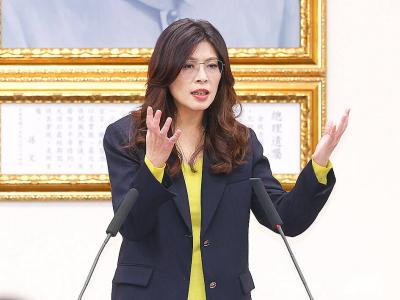
Chinese Nationalist Party (KMT) Chairwoman Cheng Li-wun (鄭麗文) today accepted an invitation from Chinese President Xi Jinping (習近平) to lead a delegation to China next month, saying she hopes to promote the peaceful development of cross-strait relations and bring stability to the Taiwan Strait. “I am grateful and happy to accept this invitation,” Cheng said in a statement from the KMT chairperson’s office. Cheng said she hopes both sides can work together to promote the peaceful development of cross-strait relations, enhance exchange and cooperation, bring stability to the Taiwan Strait and improve people’s livelihoods. At today's news conference, Cheng said any efforts to
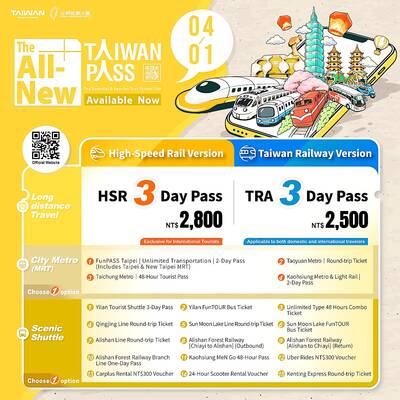
MORE POPULAR: Taiwan Pass sales increased by 59 percent during the first quarter compared with the same period last year, the Tourism Administration said The Tourism Administration yesterday said that it has streamlined the Taiwan Pass, with two versions available for purchase beginning today. The tourism agency has made the pass available to international tourists since 2024, allowing them to access the high-speed rail, Taiwan Railway Corp services, four MRT systems and four Taiwan Tourist Shuttles. Previously, five types of Taiwan Pass were available, but some tourists have said that the offerings were too complicated. The agency said only two types of Taiwan Pass would be available, starting from a three-day pass with the high-speed rail and a three-day pass with Taiwan Railway Corp. The former costs NT$2,800
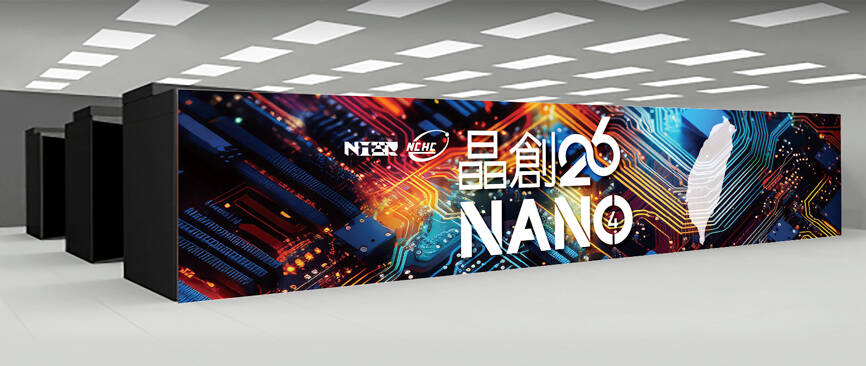
The nation’s fastest supercomputer, Nano 4 (晶創26), is scheduled to be launched in the third quarter, and would be used to train large language models in finance and national defense sectors, the National Center for High-Performance Computing (NCHC) said. The supercomputer, which would operate at about 86.05 petaflops, is being tested at a new cloud computing center in the Southern Taiwan Science Park in Tainan. The exterior of the server cabinet features chip circuitry patterns overlaid with a map of Taiwan, highlighting the nation’s central position in the semiconductor industry. The center also houses Taiwania 2, Taiwania 3, Forerunner 1 and


 RSS
RSS