


Defending Taiwan is something Taiwanese must do on their own, United Microelectronics Corp (UMC, 聯電) founder Robert Tsao (曹興誠) said, adding that those who doubt the US’ commitment to Taiwan aim to “dampen morale” and “create panic within Taiwan.”
Tsao made the remarks in two articles shared by Democratic Progressive Party caucus whip Ker Chien-ming (柯建銘), who posted them on Facebook on Saturday.
Tsao said that he was asked whether he believed statements by some Chinese Nationalist Party (KMT) members that the US would not send troops to help Taiwan in the event of a Chinese attack.
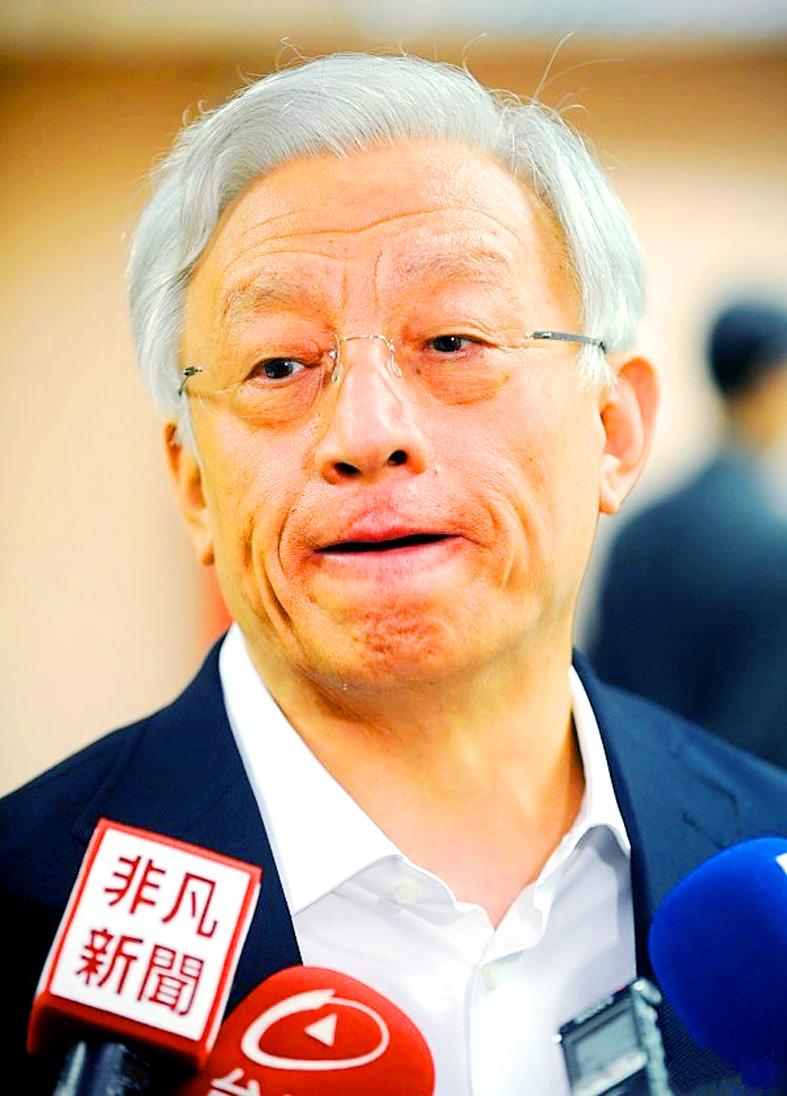
Photo: Chen Yu-fu, Taipei Times
Even asking such a question was an “embarrassment,” he said.
Tsao said the question of US troop deployment in the Taiwan Strait has been discussed a lot recently given Russia’s invasion of Ukraine, which some argued could spur Beijing to act on its own ambitions toward Taiwan.
“Russian President Vladimir Putin’s invasion of Ukraine is an act of insanity, but what is even more insane is those in Taiwan’s pan-blue camp expressing support for China,” he said. “Taiwanese should be on alert toward the threat created by these crazy people.”
Tsao said that with at least 10 million people between the ages of 18 and 65 who are combat capable, Taiwan could defend itself without US involvement.
Citing an example, he said that in seven wars with Arab countries, Israel requested only weapons from the US and the UK, not troop commitments.
Ukraine has also been resisting Russia with only arms support from other countries, he said.
“There are some things you can ask friends for help with, but the defense of your nation is something you must do on your own,” Tsao said.
The Taliban takeover of Afghanistan following the withdrawal of US troops shows that if locals are not willing to fight, then it is irrelevant how many troops the US sends, he said.
“In Ukraine there are even women in their 70s joining the fight. This spirit and courage in defending their nation has won Ukrainians the world’s sympathy and support,” he added.
Tsao said the US could provide weapons and facilities to train Taiwanese and better prepare them for war.
The US and Japan would be willing to provide further weapons and training if Taiwanese have the will to defend themselves, he said.
“The US has patrolled the Taiwan Strait for 70 years, but some politicians in Taiwan still doubt the US’ commitment to Taiwan,” he said. “Their aim is to dampen morale, create panic within Taiwan, and maliciously undermine Taiwan-US relations.”
In response to Tsao citing her as an example of someone who asked “malicious and shameless questions,” former KMT chairwoman Hung Hsiu-chu (洪秀柱) on Saturday said that she felt Tsao’s words were “regrettable” and that her perception of him had been changed.
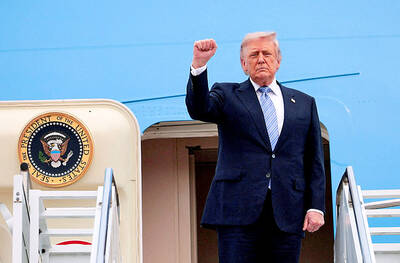
US-CHINA SUMMIT: MOFA welcomed US reassurance of no change in its Taiwan policy; Trump said he did not comment when Xi talked of opposing independence US President Donald Trump yesterday said he has not made a decision on whether to move forward with a major arms package for Taiwan after hearing concerns about it from Chinese President Xi Jinping (習近平). Trump’s comments on Taiwan came as he flew back to Washington after wrapping up critical talks in which both leaders said important progress was made in stabilizing US-China relations even as deep differences persist between the world’s two biggest powers on Iran and Taiwan. “I will make a determination,” Trump said, adding: “I’ll be making decisions. But, you know, I think the last thing we need right
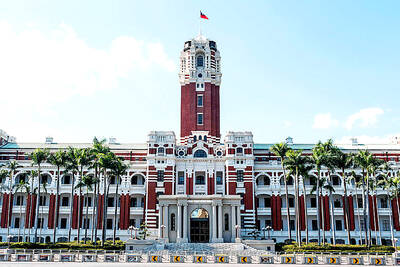
SECURITY: Taipei presses the US for arms supplies, saying the arms sales are not only a reflection of the US security commitment to Taiwan but also serve as a mutual deterrent against regional threats Taiwan is committed to preserving the cross-strait “status quo” and contributing to regional peace and stability, the Presidential Office said yesterday. “It is an undeniable fact that the Republic of China is a sovereign and independent democratic nation,” Presidential Office spokeswoman Karen Kuo (郭雅慧) reiterated, adding that Beijing has no right to claim sovereignty over Taiwan. The statements came after US President Donald Trump warned against Taiwanese independence. Trump wrapped up a state visit to Beijing on Friday, during which Chinese President Xi Jinping (習近平) had pressed him not to support Taiwan. Taiwan depends heavily on US security backing to deter China from carrying
The subsidiary of Taiwan Semiconductor Manufacturing Co (TSMC, 台積電) in Kumamoto, Japan, turned a profit in the first quarter of this year, marking the first time the first fab of the unit has become profitable since mass production started at the end of 2024. According to the contract chipmaker’s financial statement released on Friday, Japan Advanced Semiconductor Manufacturing Inc (JASM), a joint venture running the fab in Kumamoto, posted NT$951 million (US$30.19 million) in profit in the January-to-March period, compared with a loss of NT$1.39 billion in the previous quarter, and a loss of NT$3.25 billion in the first quarter of
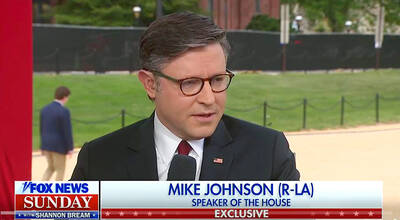
RESOLUTE BACKING: Two Republican senators are planning to introduce legislation that would impose immediate sanctions on China if it attempts to invade Taiwan US House of Representatives Speaker Mike Johnson on Sunday reaffirmed US congressional support for Taiwan, saying the US and “all freedom-loving people” have a stake in preventing China from seizing Taiwan by force. Johnson made the remarks in an interview with Fox News Sunday on US President Donald Trump’s summit with Chinese President Xi Jinping (習近平) last week. In an interview that aired on Friday on Fox News, just as Trump wrapped up a high-stakes visit to China, he said he has yet to green-light a new US$14 billion arms package to Taiwan and that it “depends on China.” “It’s a very good


 RSS
RSS