


The US remains focused long-term on the Indo-Pacific region, despite concerns over Russian aggression toward Ukraine, US Secretary of State Antony Blinken said yesterday.
Blinken is in Melbourne, Australia, for a meeting today with his counterparts from Australia, India and Japan.
The four nations form the Quadrilateral Security Dialogue, a bloc of Indo-Pacific democracies that was created to counter China’s regional influence.

Photo: AFP
“There are a few other things going on in the world right now, some of you may have noticed,” Blinken said in his first public address since arriving in Australia on Wednesday.
“We have a bit of a challenge with Ukraine and Russian aggression,” he said. “We’re working 24/7 on that, but we know, the [US] president [Joe Biden] knows better than anyone else, that so much of this century is going to be shaped by what happens here in the Indo-Pacific region.”
The Indo-Pacific is the fastest-growing region in the world, accounting for two-thirds of global economic growth over the past five years and home to half of the world’s population, Blinken said.
What matters in the region matters around the world, and challenges such as climate change and the COVID-19 pandemic cannot be tackled by any nation alone, he said.
“More than ever before, we need partnerships, we need alliances, we need coalitions of countries willing to put their efforts, their resources, their minds into tackling these problems,” Blinken said.
“What really drives us is a shared vision” of a “free and open society,” he added.
Blinken’s trip is designed to reinforce Washington’s interests in Asia and its intent to push back against increasing Chinese assertiveness in the region.
He is also to visit Fiji, and discuss concerns about North Korea with his Japanese and South Korean counterparts in Hawaii.
Australian Minister for Foreign Affairs Marise Payne, who is to chair today’s meeting, said that the agenda would include COVID-19 vaccine distribution, cyber and critical technologies, countering disinformation, terrorism, maritime security and climate change.
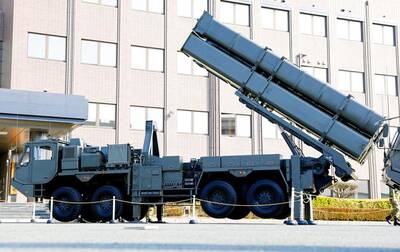
Japan has deployed long-range missiles in a southwestern region near China, the Japanese defense minister said yesterday, at a time when ties with Beijing are at their lowest in recent years. The missiles were installed in Kumamoto in the southern region of Kyushu, as Japan is attempting to shore up its military capacity as China steps up naval activity in the East China Sea. “Standoff defense capabilities enable us to counter the threat of enemy forces attempting to invade our country ... while ensuring the safety of our personnel,” Japanese Minister of Defense Shinjiro Koizumi said. “This is an extremely important initiative for
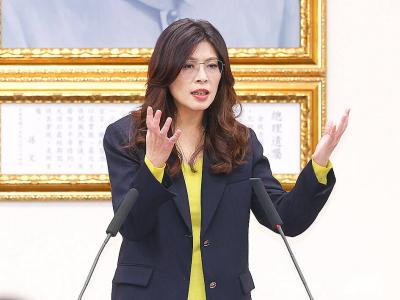
Chinese Nationalist Party (KMT) Chairwoman Cheng Li-wun (鄭麗文) today accepted an invitation from Chinese President Xi Jinping (習近平) to lead a delegation to China next month, saying she hopes to promote the peaceful development of cross-strait relations and bring stability to the Taiwan Strait. “I am grateful and happy to accept this invitation,” Cheng said in a statement from the KMT chairperson’s office. Cheng said she hopes both sides can work together to promote the peaceful development of cross-strait relations, enhance exchange and cooperation, bring stability to the Taiwan Strait and improve people’s livelihoods. At today's news conference, Cheng said any efforts to
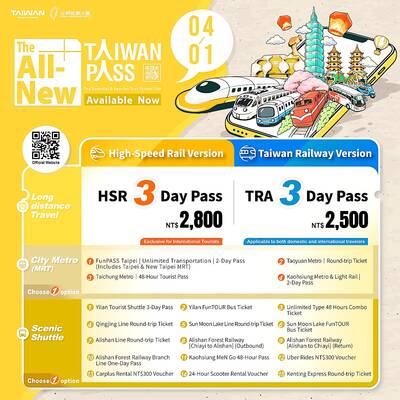
MORE POPULAR: Taiwan Pass sales increased by 59 percent during the first quarter compared with the same period last year, the Tourism Administration said The Tourism Administration yesterday said that it has streamlined the Taiwan Pass, with two versions available for purchase beginning today. The tourism agency has made the pass available to international tourists since 2024, allowing them to access the high-speed rail, Taiwan Railway Corp services, four MRT systems and four Taiwan Tourist Shuttles. Previously, five types of Taiwan Pass were available, but some tourists have said that the offerings were too complicated. The agency said only two types of Taiwan Pass would be available, starting from a three-day pass with the high-speed rail and a three-day pass with Taiwan Railway Corp. The former costs NT$2,800

The nation’s fastest supercomputer, Nano 4 (晶創26), is scheduled to be launched in the third quarter, and would be used to train large language models in finance and national defense sectors, the National Center for High-Performance Computing (NCHC) said. The supercomputer, which would operate at about 86.05 petaflops, is being tested at a new cloud computing center in the Southern Taiwan Science Park in Tainan. The exterior of the server cabinet features chip circuitry patterns overlaid with a map of Taiwan, highlighting the nation’s central position in the semiconductor industry. The center also houses Taiwania 2, Taiwania 3, Forerunner 1 and


 RSS
RSS