


The International Space Station (ISS) would continue its operations until 2030 before heading for a watery grave at the most remote point in the Pacific Ocean, NASA confirmed in a new transition plan this week.
More than 30 years after its 1998 launch, the ISS would be “de-orbited” in January 2031, the space agency’s budget estimates show.
Once out of orbit, the space station would make a dramatic descent before splash-landing in Point Nemo, which is about 2,700km from any land and has become known as the space cemetery, a final resting place for decommissioned space stations, old satellites and other human space debris.
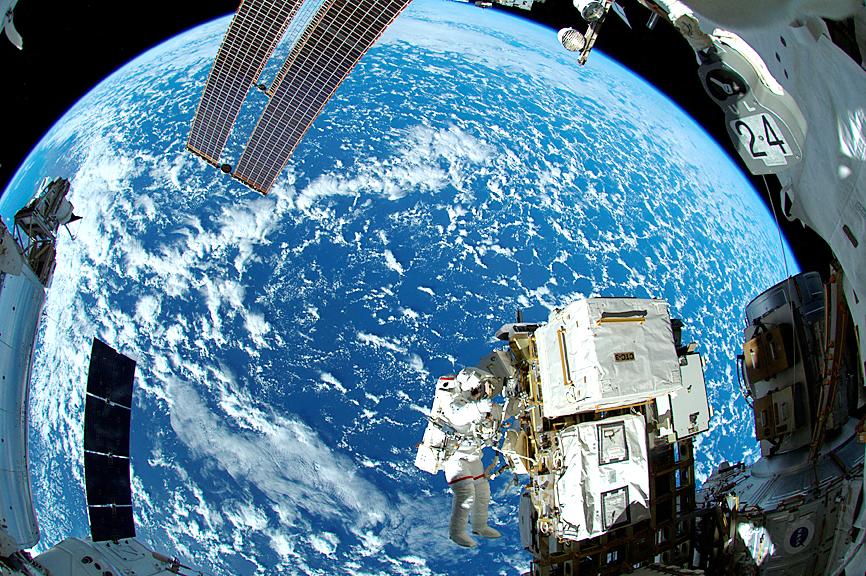
Photo: Reuters
Also known as the “Oceanic Pole of Inaccessibility” or the “South Pacific Ocean Uninhabited Area,” the region around the space cemetery is known for its utter lack of human activity.
It is “pretty much the farthest place from any human civilization you can find,” NASA said.
NASA said that it plans to continue space research by buying space and time for astronaut scientists on commercial spacecraft.
While celebrating the ISS’ record of scientific accomplishments, Robyn Gatens, the director of the International Space Station at NASA headquarters, also said in a statement that its current goal was to “lay the groundwork for a commercial future in low-Earth orbit.”
“We look forward to sharing our lessons learned and operations experience with the private sector to help them develop safe, reliable and cost-effective destinations in space,” said Phil McAlister, the director of commercial space at NASA headquarters.
NASA estimated that transitioning its space research from a dedicated space station to renting space aboard commercial space ventures would save US$1.3 billion in 2031 alone, and that the savings could “be applied to NASA’s deep-space exploration initiatives, allowing the agency to explore further and faster into deep space.”
The ISS, about the size of a football field, orbits the Earth about once every 90 minutes and has been continuously occupied by astronauts since November 2000.
In September last year, a Russian official said that small cracks had been discovered on the space station that could worsen over time and raised concerns about aging equipment and the risk of “irreparable failures,” BBC News reported.
The space station was originally intended to operate for just 15 years, but NASA said in a report that “there is high confidence that ISS life can be further extended through 2030,” although some analyses of its viability are still being conducted.
The ISS was “examining the recent technical issues aboard the Russian segment,” NASA said in its report.

PROVOCATIVE: Chinese Deputy Ambassador to the UN Sun Lei accused Japan of sending military vessels to deliberately provoke tensions in the Taiwan Strait China denounced remarks by Japan and the EU about the South China Sea at a UN Security Council meeting on Monday, and accused Tokyo of provocative behavior in the Taiwan Strait and planning military expansion. Ayano Kunimitsu, a Japanese vice foreign minister, told the Council meeting on maritime security that Tokyo was seriously concerned about the situation in the East China and South China seas, and reiterated Japan’s opposition to any attempt to change the “status quo” by force, and obstruction of freedom of navigation and overflight. Stavros Lambrinidis, head of the EU delegation to the UN, also highlighted South China Sea
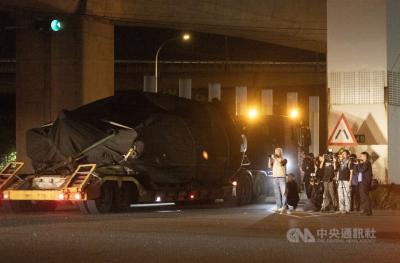
The final batch of 28 M1A2T Abrams tanks purchased from the US arrived at Taipei Port last night and were transported to the Armor Training Command in Hsinchu County’s Hukou Township (湖口), completing the military’s multi-year procurement of 108 of the tanks. Starting at 12:10am today, reporters observed more than a dozen civilian flatbed trailers departing from Taipei Port, each carrying an M1A2T tank covered with black waterproof tarps. Escorted by military vehicles, the convoy traveled via the West Coast Expressway to the Armor Training Command, with police implementing traffic control. The army operates about 1,000 tanks, including CM-11 Brave Tiger
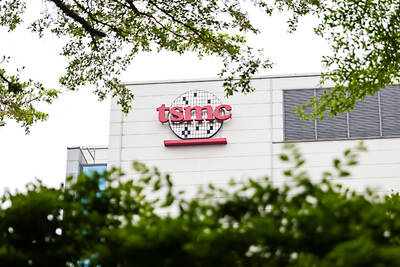
Taiwan Semiconductor Manufacturing Co (TSMC, 台積電), the world’s largest contract chipmaker, said it expects its 2-nanometer (2nm) chip capacity to grow at a compound annual rate of 70 percent from this year to 2028. The projection comes as five fabs begin volume production of 2-nanometer chips this year — two in Hsinchu and three in Kaohsiung — TSMC senior vice president and deputy cochief operating officer Cliff Hou (侯永清) said at the company’s annual technology symposium in Silicon Valley, California, last week. Output in the first year of 2-nanometer production, which began in the fourth quarter of last year, is expected to

Taiwan’s drone exports surged past US$100 million in the first quarter, exceeding last year’s full-year total, with the Czech Republic emerging as the largest buyer, the Ministry of Economic Affairs said. Exports of complete drones reached US$115.85 million in the period, about 1.2 times the total recorded for all of last year, the ministry said in a report. Exports to the Czech Republic accounted for about US$100 million, far outpacing other markets. Poland, last year’s top destination, recorded about US$11.75 million in the first quarter. Taiwan’s drone exports have expanded rapidly in the past few years, with last year’s total


 RSS
RSS