


US President Joe Biden was to use a high-stakes videoconference with Russian President Vladimir Putin late yesterday to tell him that Russia would be hit with the toughest economic sanctions yet if it invades Ukraine, US officials said.
They said the sanctions, which a source said could target Russia’s biggest banks and Moscow’s ability to convert rubles into US dollars and other currencies, were designed to dissuade Putin from using thousands of troops massed near the Ukrainian border to attack.
The Kremlin has repeatedly denied harboring such intentions and has said the posture of its troops is purely defensive. It in turn has raised concerns about Ukrainian intentions and has said it wants guarantees that Kiev would not use force to try to retake territory lost to Russia-backed separatists.
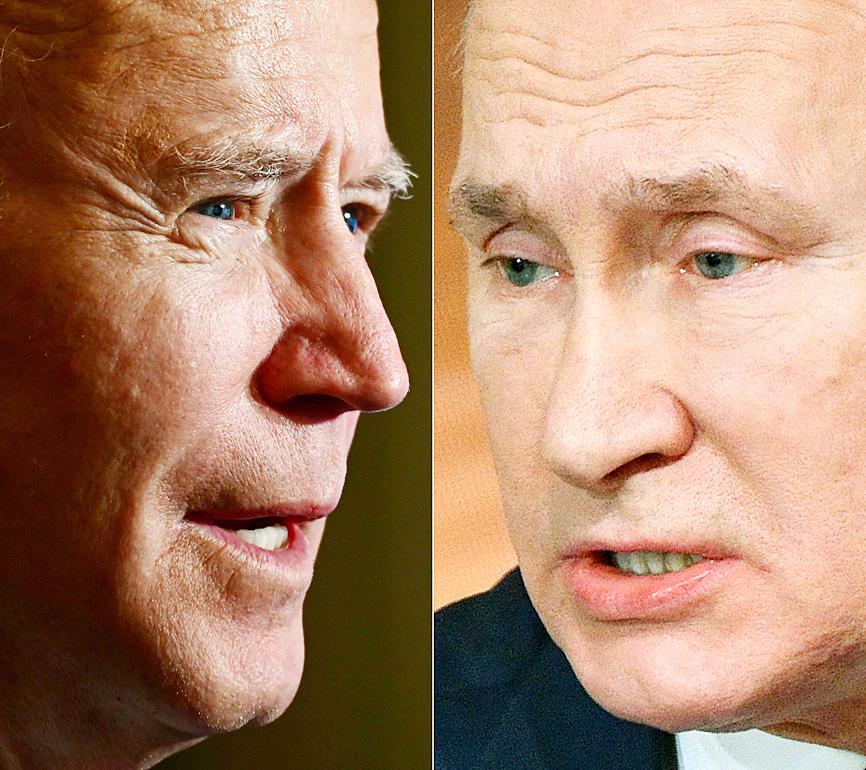
Photo: AFP
Ahead of his first direct talks with Putin since July, Biden on Monday consulted with European allies to discuss plans for the sanctions against Russia, and seek a strong allied stance in support of Ukraine’s territorial integrity and sovereignty.
Biden spoke to French President Emmanuel Macron, German Chancellor Angela Merkel, Italian Prime Minister Mario Draghi and British Prime Minister Boris Johnson.
They called on Russia to de-escalate tensions and return to diplomacy, and said their teams would stay in close touch, including in consultation with NATO allies and EU partners, on a “coordinated and comprehensive approach,” the White House said.
Biden’s team has identified a set of economic penalties to impose should Russia launch an invasion, a senior US official said.
A separate source familiar with the situation said targeting Putin’s inner circle has been discussed, but no decision had been made.
CNN reported that the US could include disconnecting Russia from the SWIFT international payment system used by banks around the world.
The secure videoconference, with Biden speaking from the White House Situation Room, was expected to take place at about 11pm Taiwan time.
White House spokeswoman Jen Psaki said it remained unclear whether Putin had made a final decision to invade Ukraine.
Ukraine and NATO powers accuse Russia of building up troops near the border, sparking fears of a possible attack. Moscow denies any such plan and accuses Kiev of building up its own forces in its east, where Russia-backed separatists control a large part of Ukrainian territory.
The US has urged both nations to return to a set of agreements signed in 2014 and 2015, which were designed to end a separatist war by Russian speakers in eastern Ukraine.
“He [Biden] will make clear that there will be very real costs should Russia choose to proceed, but he will also make clear that there is an effective way forward with respect to diplomacy,” the senior US official told reporters.
In Moscow, Kremlin spokesperson Dmitry Peskov said the talks would focus on what Russia regards as NATO’s creeping expansion toward its borders, as well as long-term security guarantees for Russia.
Putin has said he wants legally binding guarantees NATO would not expand further eastward and a pledge that certain types of weapons would not be deployed in nations close to Russia, including Ukraine.
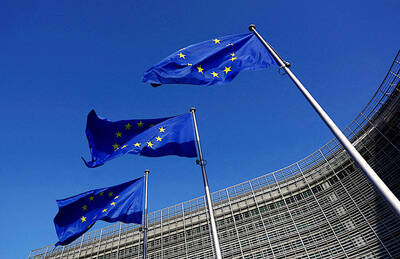
LEVERAGE: China did not ‘need to fire a shot’ to deny Taiwan airspace over Africa when it owns ‘half the continent’s debt,’ a US official said, calling it economic warfare The EU has raised concerns about overflight rights following the delay of President William Lai’s (賴清德) planned state visit to the Kingdom of Eswatini after three African nations denied overflight clearance for his charter at the last minute. Taiwanese allies Paraguay and Saint Kitts and Nevis, as well as several US lawmakers and the Inter-Parliamentary Alliance on China (IPAC) condemned China for allegedly pressuring the countries. Lai was scheduled to fly directly to Taiwan’s only African ally from yesterday to Sunday to celebrate the 40th anniversary of King Mswati III’s accession and his 58th birthday, but Seychelles, Mauritius and Madagascar suddenly revoked
PROVOCATIVE: Chinese Deputy Ambassador to the UN Sun Lei accused Japan of sending military vessels to deliberately provoke tensions in the Taiwan Strait China denounced remarks by Japan and the EU about the South China Sea at a UN Security Council meeting on Monday, and accused Tokyo of provocative behavior in the Taiwan Strait and planning military expansion. Ayano Kunimitsu, a Japanese vice foreign minister, told the Council meeting on maritime security that Tokyo was seriously concerned about the situation in the East China and South China seas, and reiterated Japan’s opposition to any attempt to change the “status quo” by force, and obstruction of freedom of navigation and overflight. Stavros Lambrinidis, head of the EU delegation to the UN, also highlighted South China Sea
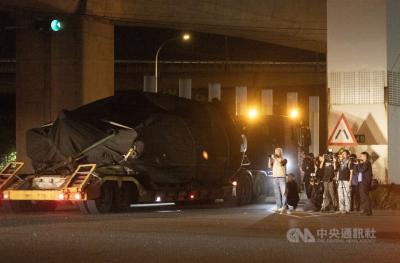
The final batch of 28 M1A2T Abrams tanks purchased from the US arrived at Taipei Port last night and were transported to the Armor Training Command in Hsinchu County’s Hukou Township (湖口), completing the military’s multi-year procurement of 108 of the tanks. Starting at 12:10am today, reporters observed more than a dozen civilian flatbed trailers departing from Taipei Port, each carrying an M1A2T tank covered with black waterproof tarps. Escorted by military vehicles, the convoy traveled via the West Coast Expressway to the Armor Training Command, with police implementing traffic control. The army operates about 1,000 tanks, including CM-11 Brave Tiger
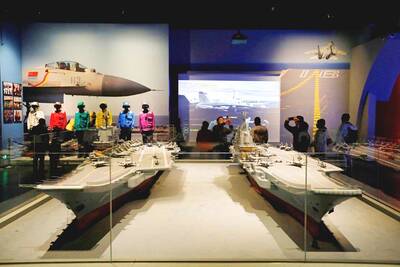
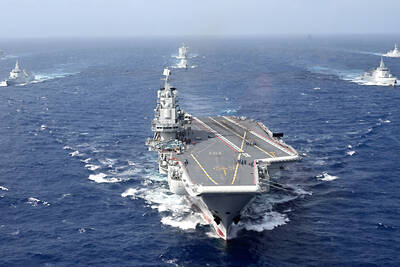
China on Wednesday teased in a video an aircraft carrier that could be its fourth, and the first using nuclear power, while making an allusion to Taiwan and vowing to further build up its islands, as it looks to boost maritime power, secure resources and bolster territorial claims. The video, issued on the eve of the 77th founding anniversary of the Chinese People’s Liberation Army Navy, featured fictional officers with names that are homophones of three commissioned aircraft carriers, the Liaoning (遼寧), Shandong (山東) and Fujian (福建). Titled Into the Deep, it showed a 19-year-old named “Hejian” (何劍) joining the group, sparking


 RSS
RSS