


A US effort to show unity between two of its closest allies backfired, after Japanese and South Korean officials walked out and left the No. 2 US diplomat to face reporters on her own.
US Deputy Secretary of State Wendy Sherman faced the media alone following talks on Wednesday, after Japan protested a visit by South Korea’s police chief to islets administered by Seoul, but claimed by Tokyo.
“As has been the case for some time, there are some bilateral differences between Japan and the Republic of Korea that are continuing to be resolved,” Sherman said, without elaborating on the dispute that led to the absence of Japanese Vice Minister for Foreign Affairs Takeo Mori and South Korean Vice Minister of Foreign Affairs Choi Jong-kun.
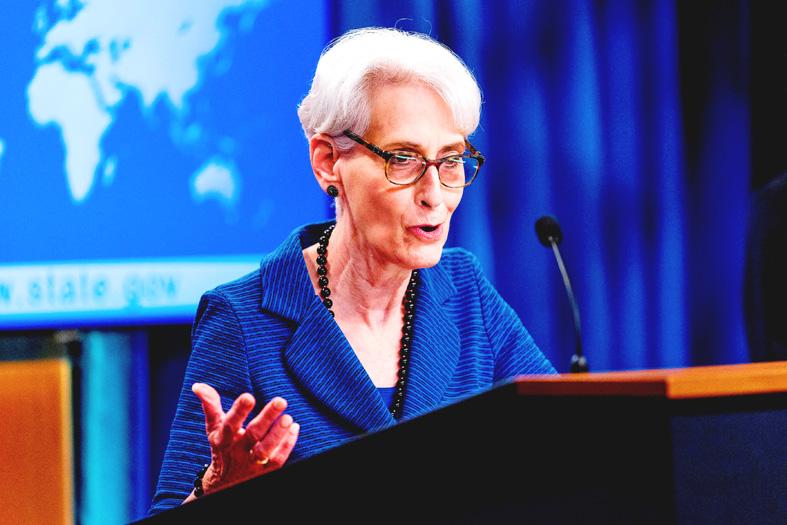
Photo: Reuters
“One of those differences which is unrelated to today’s meeting, has led to the change in format for today’s press availability,” she said.
Japan said that it objected to the news conference because South Korean National Police Agency Commissioner-General Kim Chang-yong visited the disputed islets, which are called Dokdo by Seoul and Takeshima by Tokyo.
A Japanese embassy spokesman in Washington said that the islets are “indisputably an inherent part of the territory of Japan” and that Tokyo had lodged a protest with Seoul over the visit.
“Under these circumstances, we have decided that it is inappropriate to hold a joint news conference,” the spokesman said.
Choi confirmed that the reason his Japanese counterpart did not attend the news conference was the “issue surrounding our police chief’s visit to Dokdo.”
Sherman said the talks had been “very constructive,” which “demonstrates exactly why the trilateral format with the United States, Japan and the Republic of Korea is so important and powerful.”
Tokyo and Seoul have had strained relations for decades due to Japan’s rule over the Korean Peninsula from 1910 to 1945.
Flare-ups are a source of concern for Washington, which fears tensions between its two closest Asian allies could have repercussions for regional security.
During the trilateral meeting on Wednesday, the three sides reaffirmed their “shared commitment” to the “complete denuclearization of the Korean Peninsula,” Sherman said.
She renewed US President Joe Biden’s offer of dialogue with North Korea, which so far remains unanswered.
She added that Washington, Tokyo and Seoul oppose “activities that undermine, destabilize or threaten the rules-based international order” in the Indo-Pacific region and in the Taiwan Strait, a clear warning to China.
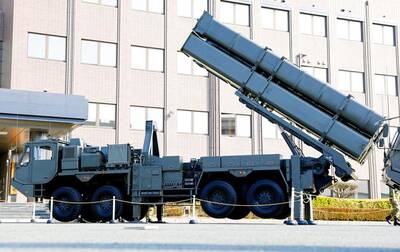
Japan has deployed long-range missiles in a southwestern region near China, the Japanese defense minister said yesterday, at a time when ties with Beijing are at their lowest in recent years. The missiles were installed in Kumamoto in the southern region of Kyushu, as Japan is attempting to shore up its military capacity as China steps up naval activity in the East China Sea. “Standoff defense capabilities enable us to counter the threat of enemy forces attempting to invade our country ... while ensuring the safety of our personnel,” Japanese Minister of Defense Shinjiro Koizumi said. “This is an extremely important initiative for

MORE POPULAR: Taiwan Pass sales increased by 59 percent during the first quarter compared with the same period last year, the Tourism Administration said The Tourism Administration yesterday said that it has streamlined the Taiwan Pass, with two versions available for purchase beginning today. The tourism agency has made the pass available to international tourists since 2024, allowing them to access the high-speed rail, Taiwan Railway Corp services, four MRT systems and four Taiwan Tourist Shuttles. Previously, five types of Taiwan Pass were available, but some tourists have said that the offerings were too complicated. The agency said only two types of Taiwan Pass would be available, starting from a three-day pass with the high-speed rail and a three-day pass with Taiwan Railway Corp. The former costs NT$2,800

POLLS CONCERNS: There are concerns within the KMT that a Cheng Li-wun-Xi Jinping meeting could trigger a voter backlash in elections in November Chinese Nationalist Party (KMT) Chairwoman Cheng Li-wun (鄭麗文) accepted an invitation from Chinese President Xi Jinping (習近平) to visit next month, her party and Chinese state media reported yesterday. Cheng, who took up her role in November last year, “gladly accepted” the invitation to lead a delegation to China, the KMT said in a statement, confirming a Xinhua news agency report. Cheng “looks forward to joint efforts by both parties to advance the peaceful development of cross-strait relations, promote cross-strait exchanges and cooperation, and work for peace in the Taiwan Strait and greater well-being for people on both sides,” the statement said. Chinese
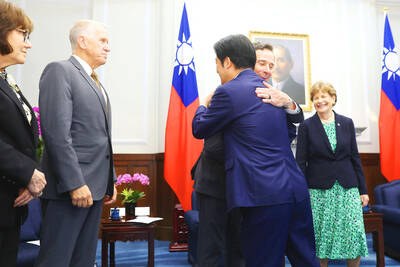
SIGNIFICANT TO THE WORLD: The delegation’s visit aims to send a clear message that bipartisan support for Taiwan is consistent, US Senator Jeanne Shaheen said The US Senate’s bipartisan support for Taiwan remains strong and Taiwan-US ties would continue for decades to come, a US Senate delegation said in Taipei yesterday, while calling on the legislature to swiftly pass a special defense budget bill. A US delegation led by Democratic US Senator Jeanne Shaheen and Republican US Senator John Curtis — both members of the US Senate Committee on Foreign Relations — arrived in Taiwan yesterday for a two-day visit. The other senators of the delegation included Senate Taiwan Caucus cochair Thom Tillis and Senate Committee on Armed Services senior member Jacky Rosen. Shaheen told a news


 RSS
RSS