


The top leaders of the Chinese Communist Party (CCP) yesterday started a pivotal meeting expected to further firm Chinese President Xi Jinping’s (習近平) grip on power.
About 400 members of the party’s Central Committee gathered in Beijing for the four-day plenary, which is being held behind closed doors.
Xi opened the meeting with a work report and “explanations on a draft resolution on the major achievements and historical experience” of the party through its 100-year history, Xinhua news agency reported.
The resolution would set the stage for the 20th National Party Congress next year, at which Xi is widely expected to declare that he will serve a third term in office, cementing his position as China’s most powerful leader since Mao Zedong (毛澤東).
State media has hailed Xi’s leadership in the run-up to this week’s meeting, with Xinhua saying he is “a man of profound thoughts and feelings, a man who inherited a legacy but dares to innovate, and a man who has forward-looking vision and is committed to working tirelessly.”
Xi’s tenure has been marked by a sprawling anti-corruption crackdown and repressive policies in regions like Xinjiang and Hong Kong.
He has also created a leadership cult that has quashed criticism, stamped out rivals and introduced his own political theory — known as Xi Jinping Thought — to schools.
Chris Johnson, senior fellow at the Center for Strategic International Studies, told the Sinocism podcast that the new resolution could mark an opportunity for Xi “to tidy up ... some of the bits from history that he doesn’t like,” including the excesses of economic reforms in the 1990s.
The Central Committee resolution would mark the third of its kind in the history of the CCP. The first, passed under Mao in 1945, helped cement his authority over the CCP four years before it seized power. The second, under Deng Xiaoping (鄧小平) in 1981, saw the regime adopt economic reforms and recognize the “mistakes” of Mao’s ways.
The latest could see Xi “do in effect to Deng what Deng did to Mao, which is to criticize the excesses of Deng Xiaoping’s reform and opening policies,” Johnson said.
The timing is significant, coming a year before Xi is expected to secure an unprecedented third term in office at a twice-a-decade congress.
“Xi Jinping has already started to rewrite the history of the party in school books, universities, and the press... greatly reducing the failures — Great Leap Forward, Cultural Revolution — and glorifying his action as general secretary of the party,” said Alice Ekman, senior analyst in charge of the Asia portfolio at the EU Institute for Security Studies.
The new resolution is “clearly part of Xi Jinping’s efforts to prolong his presence at the head of the party,” she added.

PROVOCATIVE: Chinese Deputy Ambassador to the UN Sun Lei accused Japan of sending military vessels to deliberately provoke tensions in the Taiwan Strait China denounced remarks by Japan and the EU about the South China Sea at a UN Security Council meeting on Monday, and accused Tokyo of provocative behavior in the Taiwan Strait and planning military expansion. Ayano Kunimitsu, a Japanese vice foreign minister, told the Council meeting on maritime security that Tokyo was seriously concerned about the situation in the East China and South China seas, and reiterated Japan’s opposition to any attempt to change the “status quo” by force, and obstruction of freedom of navigation and overflight. Stavros Lambrinidis, head of the EU delegation to the UN, also highlighted South China Sea
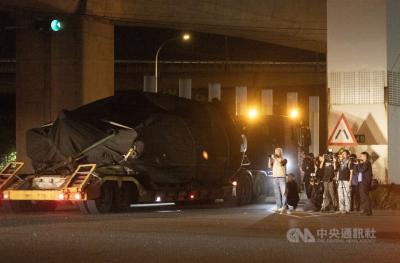
The final batch of 28 M1A2T Abrams tanks purchased from the US arrived at Taipei Port last night and were transported to the Armor Training Command in Hsinchu County’s Hukou Township (湖口), completing the military’s multi-year procurement of 108 of the tanks. Starting at 12:10am today, reporters observed more than a dozen civilian flatbed trailers departing from Taipei Port, each carrying an M1A2T tank covered with black waterproof tarps. Escorted by military vehicles, the convoy traveled via the West Coast Expressway to the Armor Training Command, with police implementing traffic control. The army operates about 1,000 tanks, including CM-11 Brave Tiger
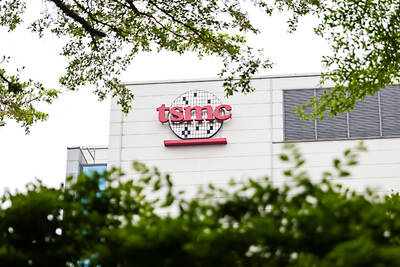
Taiwan Semiconductor Manufacturing Co (TSMC, 台積電), the world’s largest contract chipmaker, said it expects its 2-nanometer (2nm) chip capacity to grow at a compound annual rate of 70 percent from this year to 2028. The projection comes as five fabs begin volume production of 2-nanometer chips this year — two in Hsinchu and three in Kaohsiung — TSMC senior vice president and deputy cochief operating officer Cliff Hou (侯永清) said at the company’s annual technology symposium in Silicon Valley, California, last week. Output in the first year of 2-nanometer production, which began in the fourth quarter of last year, is expected to
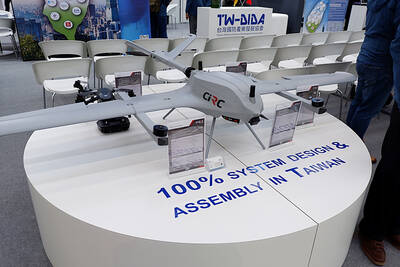
Taiwan’s drone exports surged past US$100 million in the first quarter, exceeding last year’s full-year total, with the Czech Republic emerging as the largest buyer, the Ministry of Economic Affairs said. Exports of complete drones reached US$115.85 million in the period, about 1.2 times the total recorded for all of last year, the ministry said in a report. Exports to the Czech Republic accounted for about US$100 million, far outpacing other markets. Poland, last year’s top destination, recorded about US$11.75 million in the first quarter. Taiwan’s drone exports have expanded rapidly in the past few years, with last year’s total


 RSS
RSS