


Taiwan would not negotiate with China under the threat of force, National Security Bureau (NSB) Director-General Chen Ming-tong (陳明通) told lawmakers yesterday.
Chen made the remark at a meeting of the legislature’s Foreign Affairs and National Defense Committee in response to a question by Chinese Nationalist Party (KMT) Legislator Wen Yu-hsia (溫玉霞) on the US Department of Defense’s Report on Military and Security Developments Involving the People’s Republic of China.
The report, released on Wednesday, said that the Chinese People’s Liberation Army (PLA) aims to complete the modernization of its forces by 2027, a goal that, if realized, “would provide Beijing with more credible military options in a Taiwan contingency.”
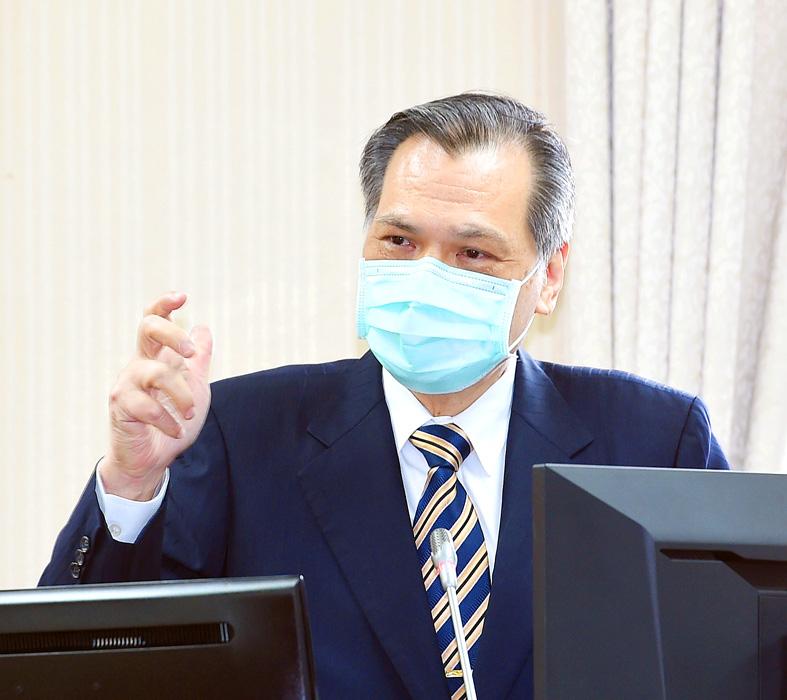
Photo: Fang Pin-chao, Taipei Times
The report, quoting a military source in the Chinese media, said that the PLA’s goals for 2027 were to “develop the capabilities to counter the US military in the Indo-Pacific region, and compel Taiwan’s leadership to the negotiation table on Beijing’s terms.”
The scenario cannot be ruled out, as using military action to force negotiations is part of the Chinese Communist Party’s (CCP) strategic thinking, Chen said, adding that Taiwan would need to react, but that certain safeguards are in place.
Chen cited the Act Governing Relations Between the People of the Taiwan Area and the Mainland Area (臺灣地區與大陸地區人民關係條例).
Article 5-3 of the act states that no negotiation with China can be conducted without a vote in favor from three-quarters of the Legislative Yuan, provisions for terminating the negotiation and a referendum to ratify agreements with Beijing.
“However, this government will never take part in a negotiation under the threat of military force, even if it had been duly authorized to do so,” Chen said, adding that Taiwan would by no means give up its pride.
KMT Legislator Johnny Chiang (江啟臣) asked whether China’s growing nuclear arsenal could be turned against Taiwan, and if Chen agreed that Washington is pushing the country into a proxy war with China.
Chen said that China is developing its nuclear capabilities in the context of its competition with the US and other nuclear-armed states in the region, including India and North Korea.
It would be a tragedy for people on both sides of the Taiwan Strait if China were to use its nuclear arsenal against Taiwan, he added.
Regarding the risks of being embroiled in the US-China rivalry, Chen said that Beijing’s military buildup against Taiwan is motivated by the CCP’s ideological need to “unify” the country, which Beijing has publicly affirmed.
KMT Legislator Lai Shyh-bao (賴士葆) said that Chen should definitively state that China would not invade the Pratas Islands (Dongsha Islands, 東沙島) before the end of President Tsai Ing-wen’s (蔡英文) term.
While a limited war over the Pratas Islands was part of the PLA’s strategic plan, the communist leadership rejected it following an internal debate, Chen said.
Lai added that some of his constituents are afraid for the safety of their children who are soldiers stationed on the Pratas Islands.
It is the duty of soldiers to lay down their lives for the country if necessary, Chen said.
“Appeasement will not bring peace,” he added.
Additional reporting by CNA
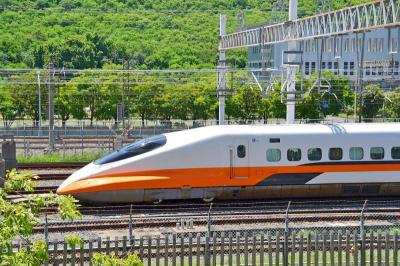
A signaling system malfunction disrupted high-speed rail (HSR) services beginning at 8am today, with trains temporarily reduced to three northbound and three southbound trains per hour as authorities conduct inspections. The malfunction occurred on a section of track in Miaoli County during pre-operation checks early this morning, forcing northbound and southbound trains to use a single track, the HSR operator said. The regular schedule has been replaced with three hourly trains offering only nonreserved seating in each direction, stopping at every station, it said, adding that business class cars would still have reserved seating. Departures from terminal stations are scheduled at the top
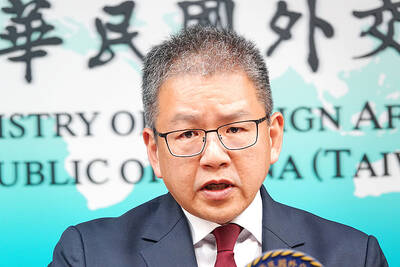
Taiwan is still in the process of assessing the possibility of recruiting workers from Eswatini, the Ministry of Foreign Affairs said yesterday, adding that its goal is to help Eswatini upgrade its vocational training centers. If there are plans to recruit workers from Eswatini, safeguarding national security, protecting public health and ensuring the employment rights of Taiwanese would be prerequisites, Department of West Asian and African Affairs Director-General Yen Chia-liang (顏嘉良) told a news conference. Key considerations would also include filling labor shortages in specific industries, and fostering bilateral professional and technical exchanges, he said. Yen was asked about the progress of labor

A US uncrewed surface vessel (USV) encountered multiple Chinese warships during an autonomous transit of the Taiwan Strait, US defense company Seasats said in a statement on Wednesday. Seasats announced that a Lightfish USV had completed the first autonomous transit of the Taiwan Strait. Over five days, the USV traversed the entire length of the Strait while constantly monitoring surface vessel traffic, the company said. The Lightfish encountered multiple Chinese warships, one of which was a Chinese People’s Liberation Army Navy (PLAN) Type 056 corvette, it said. The Chinese vessels were operating “well within Taiwan’s exclusive economic zone without transmitting their identity via the
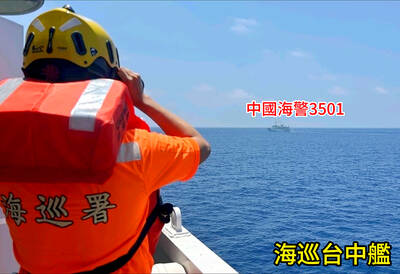
VERBOSE VESSELS: A CGA cutter and a China Coast Guard exchanged verbal barbs for more than a day in Taiwanese-controlled waters before the Chinese vessel left The Taiwanese and Chinese coast guards had a standoff near the strategically located Pratas Islands (Dongsha Islands, 東沙群島) in the north of the South China Sea, the Coast Guard Administration (CGA) said yesterday. The two sides engaged in intense radio exchanges over sovereignty claims during the 33-hour standoff. China Coast Guard vessel 3501 eventually left the restricted waters, 26.6 nautical miles (49.2km) west of the Pratas Islands, at 5pm yesterday, the CGA said. Lying approximately between southern Taiwan and Hong Kong, the Taiwan-controlled Pratas are seen by some security experts as vulnerable to Chinese attack due to their distance — more than


 RSS
RSS