


Preliminary findings from a “mix-and-match” clinical trial of COVID-19 vaccines showed that people who received a first dose of the AstraZeneca vaccine and a second dose of the Moderna vaccine have higher antibody levels than those who received two doses of the AstraZeneca vaccine, Central Epidemic Command Center (CECC) specialist advisory panel convener Chang Shan-chwen (張上淳) said yesterday.
The clinical trial conducted by National Taiwan University (NTU) Hospital recruited 400 participants, who were divided into four groups of 100 people each, Chang, an NTU executive vice president, told reporters on the sidelines of the 10th TEPHINET Southeast Asia/Western Pacific Bi-Regional Scientific Conference in Taipei.
The first group was given two doses of the AstraZeneca vaccine, eight weeks apart; the second group had two doses of the Moderna vaccine, four weeks apart; while the remaining two were given one dose of the AstraZeneca vaccine, followed by a dose of the Moderna vaccine, four weeks and eight weeks apart, Chang said.

Photo: CNA
Antibody tests conducted on the 14th day and the 28th day after the participants received a second dose have been completed, but a third test to be conducted three months after their second dose has yet to be done, he said.
Based on the first two antibody tests, people who received the AstraZeneca-Moderna combination have higher neutralizing antibody titers (levels) than those who received two doses of the AstraZeneca vaccine, but they are about the same as those who received two doses of Moderna, Chang said.
There were also more people in the AstraZeneca-Moderna combination groups who reported post-vaccination side effects than people in the groups who received two doses of the same vaccine, he said.
While a higher percentage of people who received the AstraZeneca-Moderna combination experienced side effects, the severity of the side effects was about the same, he added.
Moreover, when comparing the two AstraZeneca-Moderna combination groups, people who received the two doses eight weeks apart had slightly higher antibody levels than those who received them four weeks apart, so extending the interval a little longer should be acceptable, he said.
At the CECC’s daily news briefing yesterday, Centers for Disease Control Deputy Director-General Chuang Jen-hsiang (莊人祥) said the center is considering allowing the public to receive a mix of the AstraZeneca and Moderna vaccines from later this month.
At present, only medical workers have the option of choosing Moderna for their second shot after receiving an AstraZeneca jab at least 10 weeks earlier.
The CECC late last month said that it would this month offer the public the option to receive the AstraZeneca vaccine as their first dose and the Pfizer-BioNTech vaccine as the second.
Additional reporting by CNA
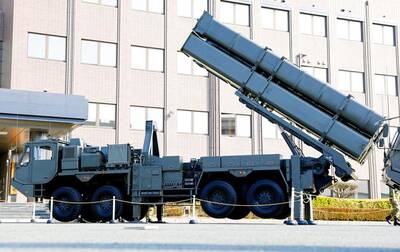
Japan has deployed long-range missiles in a southwestern region near China, the Japanese defense minister said yesterday, at a time when ties with Beijing are at their lowest in recent years. The missiles were installed in Kumamoto in the southern region of Kyushu, as Japan is attempting to shore up its military capacity as China steps up naval activity in the East China Sea. “Standoff defense capabilities enable us to counter the threat of enemy forces attempting to invade our country ... while ensuring the safety of our personnel,” Japanese Minister of Defense Shinjiro Koizumi said. “This is an extremely important initiative for

Chinese Nationalist Party (KMT) Chairwoman Cheng Li-wun (鄭麗文) today accepted an invitation from Chinese President Xi Jinping (習近平) to lead a delegation to China next month, saying she hopes to promote the peaceful development of cross-strait relations and bring stability to the Taiwan Strait. “I am grateful and happy to accept this invitation,” Cheng said in a statement from the KMT chairperson’s office. Cheng said she hopes both sides can work together to promote the peaceful development of cross-strait relations, enhance exchange and cooperation, bring stability to the Taiwan Strait and improve people’s livelihoods. At today's news conference, Cheng said any efforts to
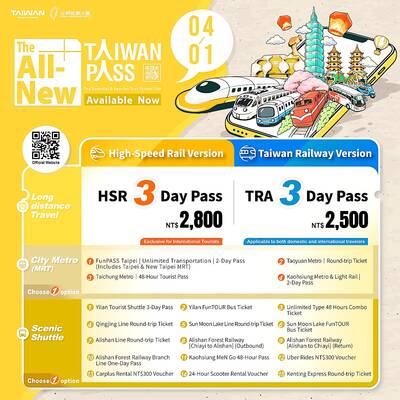
MORE POPULAR: Taiwan Pass sales increased by 59 percent during the first quarter compared with the same period last year, the Tourism Administration said The Tourism Administration yesterday said that it has streamlined the Taiwan Pass, with two versions available for purchase beginning today. The tourism agency has made the pass available to international tourists since 2024, allowing them to access the high-speed rail, Taiwan Railway Corp services, four MRT systems and four Taiwan Tourist Shuttles. Previously, five types of Taiwan Pass were available, but some tourists have said that the offerings were too complicated. The agency said only two types of Taiwan Pass would be available, starting from a three-day pass with the high-speed rail and a three-day pass with Taiwan Railway Corp. The former costs NT$2,800

The nation’s fastest supercomputer, Nano 4 (晶創26), is scheduled to be launched in the third quarter, and would be used to train large language models in finance and national defense sectors, the National Center for High-Performance Computing (NCHC) said. The supercomputer, which would operate at about 86.05 petaflops, is being tested at a new cloud computing center in the Southern Taiwan Science Park in Tainan. The exterior of the server cabinet features chip circuitry patterns overlaid with a map of Taiwan, highlighting the nation’s central position in the semiconductor industry. The center also houses Taiwania 2, Taiwania 3, Forerunner 1 and


 RSS
RSS