


North Korea yesterday said it had test-fired a newly developed anti-aircraft missile in the fourth round of weapons firings in the past few weeks, even as it pushes to reopen dormant communication channels with South Korea in a small reconciliation step.
Last month, North Korea resumed its first missile tests in six months, but still offered conditional talks with Seoul in what some experts say is an apparent attempt to extract sanctions relief and other outside concessions.
Earlier this week, North Korean leader Kim Jong-un said he is willing to restore communication hotlines with South Korea to promote peace on the Korean Peninsula.
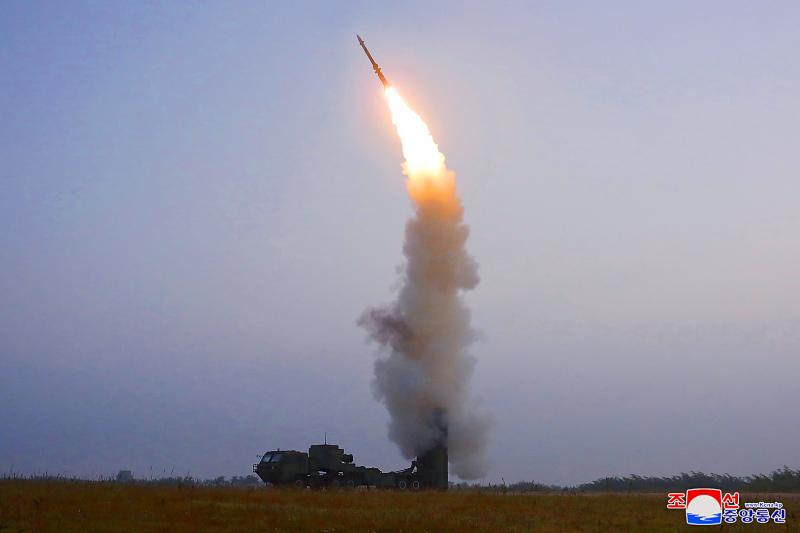
Photo: EPA-EFE
The North’s Korean Central News Agency said that the anti-aircraft missile test was “of very practical significance in studying and developing various prospective anti-aircraft missile systems.”
It said the test was aimed at confirming the practicality of operation of the launcher, radar and battle command vehicle as well as the combat performance of the missile.
South Korea, Japan and the US usually confirm North Korean missile launches soon after they occur, but did not do so for the latest test, indicating that it might not have been a major weapons test.
The South Korean Joint Chiefs of Staff said that South Korean and US intelligence authorities monitored related moves by North Korea, but did not elaborate.
Kim Dong-yub, a professor at the University of North Korean Studies in Seoul, said that the launch appears to be the primitive stage of a test to develop a missile designed to shoot down incoming enemy missiles and aircraft.
He said the missile resembles the Russian-made S-400 air defense system, which he said has a maximum range of 400km and is reportedly capable of intercepting radar-evading stealth jets.
While Kim Jong-un said that he intends to reopen inter-Korean hotlines during a speech at the North Korean legislature, he also shrugged off US offers for dialogue as a “cunning” concealment of its hostility against the North.
He also reiterated the North’s demands that South Korea abandon a “double-dealing attitude” over the North’s missile tests if Seoul wants to see the resumption of talks and major cooperation steps.
South Korea has said it would prepare for the restoration of the hotlines, which it called necessary to resolve many pending issues.
The cross-border telephone and fax lines have been largely dormant for more than a year.
As of yesterday morning, North Korea remained unresponsive to Seoul’s attempts to exchange messages over the channels, the South Korean Unifications Ministry said.
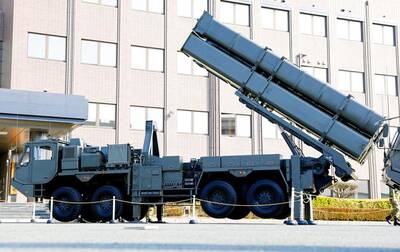
Japan has deployed long-range missiles in a southwestern region near China, the Japanese defense minister said yesterday, at a time when ties with Beijing are at their lowest in recent years. The missiles were installed in Kumamoto in the southern region of Kyushu, as Japan is attempting to shore up its military capacity as China steps up naval activity in the East China Sea. “Standoff defense capabilities enable us to counter the threat of enemy forces attempting to invade our country ... while ensuring the safety of our personnel,” Japanese Minister of Defense Shinjiro Koizumi said. “This is an extremely important initiative for
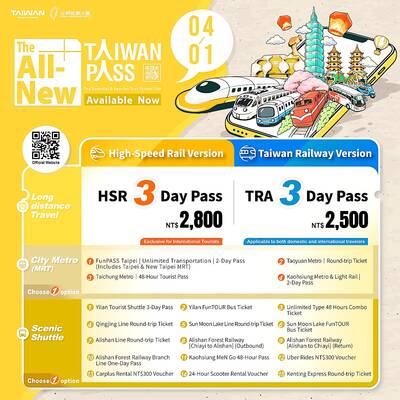
MORE POPULAR: Taiwan Pass sales increased by 59 percent during the first quarter compared with the same period last year, the Tourism Administration said The Tourism Administration yesterday said that it has streamlined the Taiwan Pass, with two versions available for purchase beginning today. The tourism agency has made the pass available to international tourists since 2024, allowing them to access the high-speed rail, Taiwan Railway Corp services, four MRT systems and four Taiwan Tourist Shuttles. Previously, five types of Taiwan Pass were available, but some tourists have said that the offerings were too complicated. The agency said only two types of Taiwan Pass would be available, starting from a three-day pass with the high-speed rail and a three-day pass with Taiwan Railway Corp. The former costs NT$2,800

POLLS CONCERNS: There are concerns within the KMT that a Cheng Li-wun-Xi Jinping meeting could trigger a voter backlash in elections in November Chinese Nationalist Party (KMT) Chairwoman Cheng Li-wun (鄭麗文) accepted an invitation from Chinese President Xi Jinping (習近平) to visit next month, her party and Chinese state media reported yesterday. Cheng, who took up her role in November last year, “gladly accepted” the invitation to lead a delegation to China, the KMT said in a statement, confirming a Xinhua news agency report. Cheng “looks forward to joint efforts by both parties to advance the peaceful development of cross-strait relations, promote cross-strait exchanges and cooperation, and work for peace in the Taiwan Strait and greater well-being for people on both sides,” the statement said. Chinese
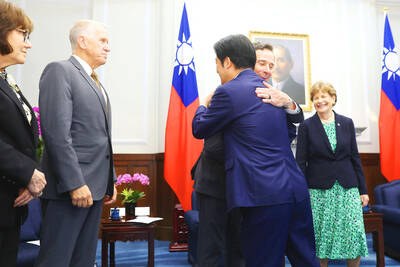
SIGNIFICANT TO THE WORLD: The delegation’s visit aims to send a clear message that bipartisan support for Taiwan is consistent, US Senator Jeanne Shaheen said The US Senate’s bipartisan support for Taiwan remains strong and Taiwan-US ties would continue for decades to come, a US Senate delegation said in Taipei yesterday, while calling on the legislature to swiftly pass a special defense budget bill. A US delegation led by Democratic US Senator Jeanne Shaheen and Republican US Senator John Curtis — both members of the US Senate Committee on Foreign Relations — arrived in Taiwan yesterday for a two-day visit. The other senators of the delegation included Senate Taiwan Caucus cochair Thom Tillis and Senate Committee on Armed Services senior member Jacky Rosen. Shaheen told a news


 RSS
RSS