

The Central Weather Bureau (CWB) yesterday issued a land warning for Typhoon Chanthu, as it continued to gain power while approaching Taiwan from the southeast.
As of 8pm last night, Chanthu was about 410km southeast of Pingtung County’s Oluanpi (鵝鑾鼻), the southernmost point of Taiwan proper, moving northwest at 15kph toward the Bashi Channel.
The typhoon had maximum sustained winds of 209kph, with gusts of up to 263kph, bureau data showed.
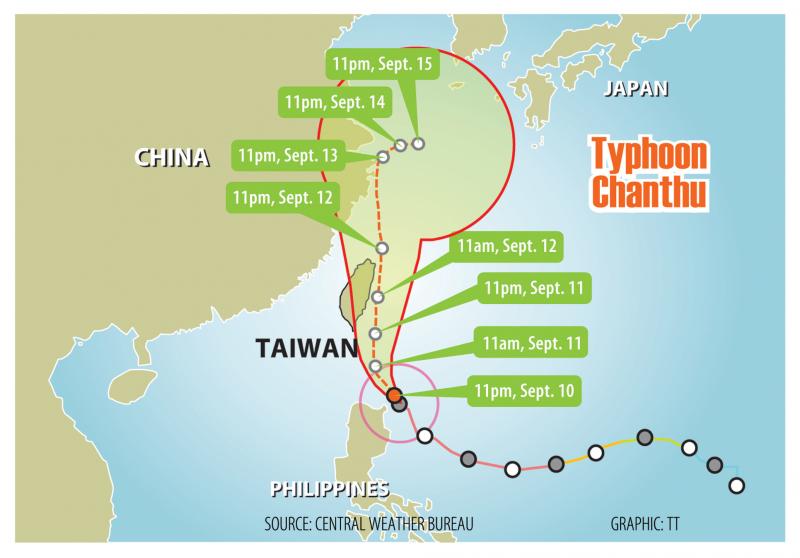
Chanthu, which is likely to come closest to the nation over the weekend, could pose a threat throughout Taiwan proper, but particularly in Taitung and Pingtung, the bureau said.
Strong winds and heavy rainfall are forecast throughout the nation tomorrow, it said.
It was unclear whether Chanthu’s eye would make landfall, as that would depend on a Pacific high-pressure system, it said.
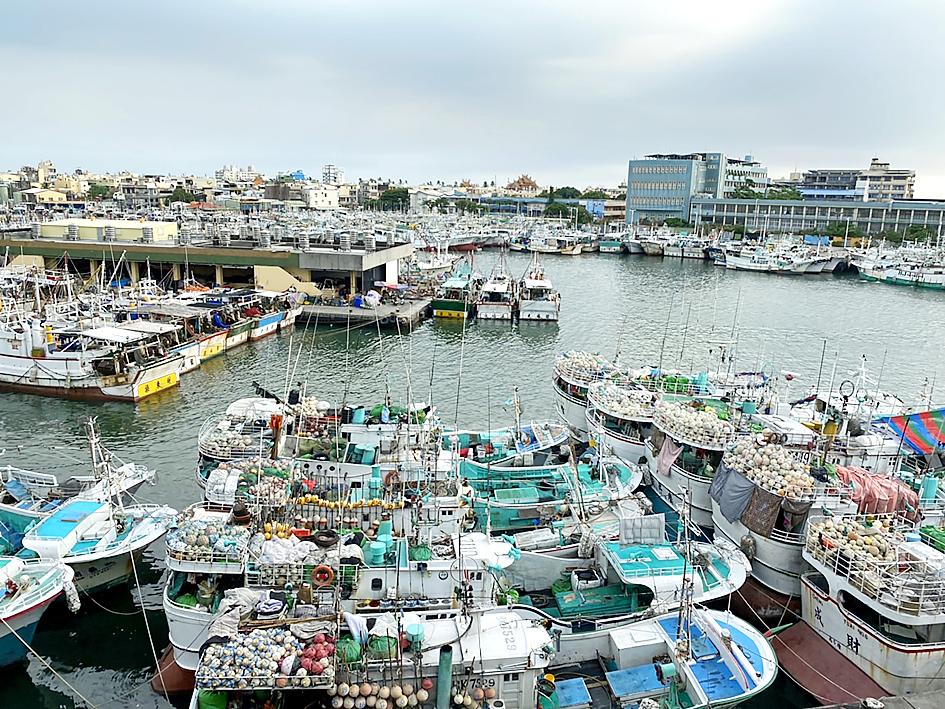
Photo: CNA
However, based on the storm’s trajectory yesterday afternoon, it is likely that Chanthu’s center would skirt eastern Taiwan as it heads north, forecasters said.
Food delivery service providers Uber Eats Taiwan and Foodpanda Taiwan Co (富胖達) said that no services would be offered should the government require office closures.
As of press time last night, Taitung County’s Lanyu (蘭嶼) and Green Island (綠島) townships had declared today a typhoon day, canceling work and classes.
In anticipation of Chanthu, ferries serving Taitung County, Pingtung County, Orchid Island (Lanyu) and Green Island were suspended for yesterday and today.
The Taitung County Government ended its annual hot air balloon festival early on Thursday, citing Chanthu and the COVID-19 situation.
The festival, which was originally scheduled to take place from July 3 to Aug. 8, opened on Aug. 14 due to a level 3 COVID-19 alert and was to end on Sunday.
Average wholesale vegetable prices in Taipei rose to NT$48 per kilogram, Council of Agriculture data showed yesterday.
Vegetable prices would likely fall after Chanthu passes, dropping to under NT$35 next month, Agricultural and Food Agency Deputy Director-General Yao Chih-wang (姚志旺) said.
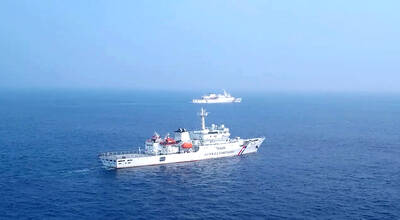
PATROL PARTNERS: The ‘Chiayi’ and the ‘Penghu’ departed for a two-day joint patrol of Palau’s exclusive economic zone, the CGA’s second diplomatic visit to the country The Coast Guard Administration (CGA) set a record for its southernmost deployment of a coast guard vessel as the vessels Chiayi and the Penghu reached Palau’s Pulo Anna Island on Saturday in a cooperative exercise between the two countries. The island, about 217 nautical miles (401km) southwest of Koror in the Palauan state of Sonsorol and 1,220 nautical miles from Taiwan’s southernmost point, Oluanpi (鵝鑾鼻), is the furthest south a CGA vessel has sailed. The two vessels are in Palau for the coast guard’s second diplomatic visit to the country. They docked at Malakal Harbor on Tuesday last week. The coast guard
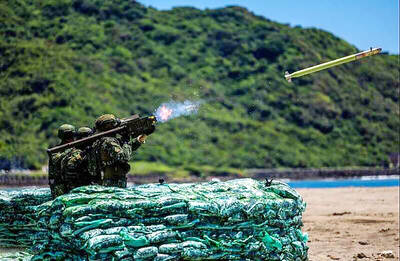
BATCH 1: The military has plans to assign the weapons to the army to defend Taiwan proper, as well as outlying islands and the navy for the Marine Corps, the official said Taiwan is to receive 500 Stinger missiles and 178 launchers from the US by the end of the year, the first batch under a planned two-stage acquisition totaling 2,621 missiles and 763 launchers, a defense official said yesterday on condition of anonymity. The portable missiles would play a vital role in the nation’s air defense capabilities, the source said. The army plans to deploy 2,235 missiles and 657 launchers to defend Taiwan proper and outlying islands, they said, citing military documents. The navy is allotted 295 missiles and 85 launchers to arm the Marine Corps and some surface vessels that lack air defense

The European Parliament on Wednesday adopted a recommendation on EU-China political relations that rejected China’s efforts to restrict Taiwan’s participation in international organizations and exchanges. The recommendation, addressed to the European Council, the European Commission and EU High Representative for Foreign Affairs and Security Policy Kaja Kallas, includes several references to EU-Taiwan relations and expresses support for closer ties, saying they would bring positive benefits and have strategic importance. Describing Taiwan as a valuable partner in trade and technology, the European Parliament said it “rejects China’s attempts to coerce international organizations, third countries and other actors into restricting Taiwan’s international participation and

Former president Tsai Ing-wen (蔡英文) on Monday arrived in San Francisco, receiving a warm welcome from hundreds of overseas Taiwanese as she launched a week-long visit. Accompanied by Representative to the US Alexander Yui (俞大?), and head of Taiwan’s San Francisco office Wu Chih-hsiang (伍志翔), Tsai arrived at her hotel, waving, smiling and giving high-fives to Taiwanese compatriots amid cheers of “Taiwan’s democracy involves you and me” to welcome her to the San Francisco Bay Area. It is Tsai’s first visit to the US since she left office in May 2024 after serving two four-year terms as president. Tsai is today to deliver


 RSS
RSS