


State-run Taiwan Power Co (Taipower, 台電) yesterday shipped 120 unused fuel rods from the mothballed Fourth Nuclear Power Plant back to their US supplier as part of its plan to shut down the plant, the Chinese-language Liberty Times (the sister paper of the Taipei Times) reported on its Web site yesterday.
It was the last batch of unused fuel rods stored at the plant in New Taipei City’s Gongliao District (貢寮) that Taipower planned to return to Global Nuclear Fuel Americas LLC, which is responsible for storing and dismantling the rods.
Taipower declined to comment on reports that it had shipped all of the fuel rods at the plant to the supplier, saying only that it shipped the rods as scheduled and cannot disclose more details, citing nuclear security regulations set by the International Atomic Energy Agency, the Liberty Times reported.
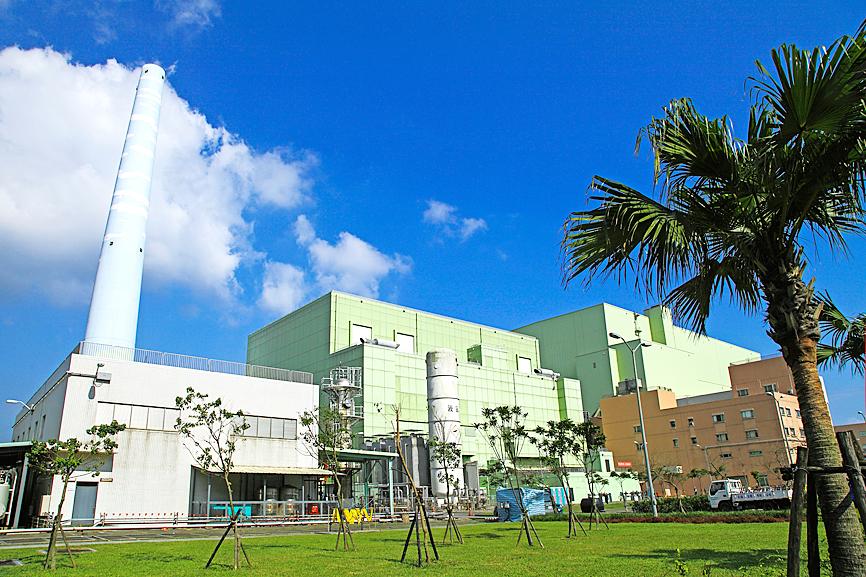
Photo courtesy of Taiwan Power Co via CNA
A legislative resolution passed in January 2018 required that all of the 1,744 unused fuel rods purchased to operate the power plant be shipped back to the US supplier by the end of last year.
However, the COVID-19 pandemic disrupted global shipping and delayed the process, leaving a small batch of fuel rods at the plant.
Taipower had said it would ship them out in the first quarter of this year, the Liberty Times reported.
Taipower has sent back all 1,744 fuel rods to the US in seven batches since July 2018, the report said.
The move came as a national referendum on activating the power plant is to take place on Aug. 28.
Asked by reporters whether shipping out all of the unused fuel rods means activating the plant is no longer an option, Premier Su Tseng-chang (蘇貞昌) yesterday said the power plant was incomplete when it was mothballed in 2014 and its construction license has long expired.
Former president Ma Ying-jeou (馬英九), who has spoken in favor of starting the power plant, said that Taipower should have waited for the referendum result before deciding on the issue, as it would be “troublesome” to transport back the fuel rods should the public vote in favor of activating the power plant.
Additional reporting by Ou Su-mei

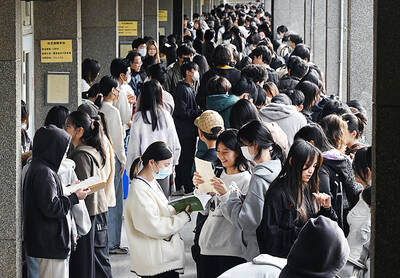
A global survey showed that 60 percent of Taiwanese had attained higher education, second only to Canada, the Ministry of the Interior said. Taiwan easily surpassed the global average of 43 percent and ranked ahead of major economies, including Japan, South Korea and the US, data from the Organisation for Economic Co-operation and Development (OECD) for 2024 showed. Taiwan has a high literacy rate, data released by the ministry showed. As of the end of last year, Taiwan had 20.617 million people aged 15 or older, accounting for 88.5 percent of the total population, with a literacy rate of 99.4 percent, the data

CCP ‘PAWN’? Beijing could use the KMT chairwoman’s visit to signal to the world that many people in Taiwan support the ‘one China’ principle, an academic said Chinese Nationalist Party (KMT) Chairwoman Cheng Li-wun (鄭麗文) yesterday arrived in China for a “peace” mission and potential meeting with Chinese President Xi Jinping (習近平), while a Taiwanese minister detailed the number of Chinese warships currently deployed around the nation. Cheng is visiting at a time of increased Chinese military pressure on Taiwan, as the opposition-dominated Legislative Yuan stalls a government plan for US$40 billion in extra defense spending. Speaking to reporters before going to the airport, Cheng said she was going on a “historic journey for peace,” but added that some people felt uneasy about her trip. “If you truly love Taiwan,

NEW LOW: The council in 2024 based predictions on a pessimistic estimate for the nation’s total fertility rate of 0.84, but last year that rate was 0.69, 17 percent lower An expected National Development Council (NDC) report expects the nation’s population to drop below 12 million by 2065, with the old-age dependency ratio to top 100 percent sooner than 2070, sources said yesterday. The council is slated to release its latest population projections in August, using an ultra-low fertility model, the sources said. The previous report projected that Taiwan’s population would fall to 14.37 million by 2070, but based on a new estimate of the total fertility rate (TFR) — the average number of children born to a woman over her lifetime — the population is expected to reach 12 million by
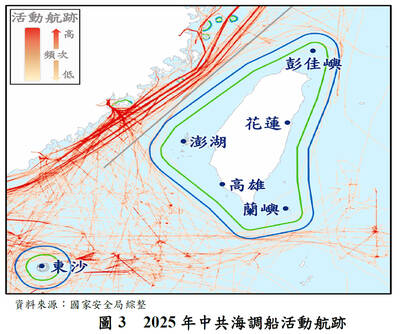
INTENSIFYING THREATS: Beijing’s tactics include massive attacks on the government service network, aircraft and naval vessel incursions and damaging undersea cables China is prepared to interfere in November’s nine-in-one local elections by launching massive attacks on the Taiwanese government’s service network (GSN), a report published by the National Security Bureau showed. The report was submitted to the Legislative Yuan ahead of the bureau’s scheduled briefing at the Foreign Affairs and National Defense Committee tomorrow. The national security team has identified about 13,000 suspicious Internet accounts and 860,000 disputed messages, the bureau said of China’s cognitive warfare against Taiwan. The disputed messages focus on major foreign affairs, national defense and economic issues, which were produced using generative artificial intelligence (AI) and distributed through Chinese


 RSS
RSS