


The Central Epidemic Command Center (CECC) announced an emergency expanded isolation order last night, effective immediately, after earlier reporting two more COVID-19 cases associated with a cluster infection at Taoyuan General Hospital.
Minister of Health and Welfare Chen Shih-chung (陳時中), who heads the center, said that one of the new cases is a man in his 60s (case No. 889), who was admitted to the hospital from Jan. 8 to Jan. 11.
The man had a rash between Jan. 16 and Monday last week, and developed symptoms including chills and tiredness on Wednesday.
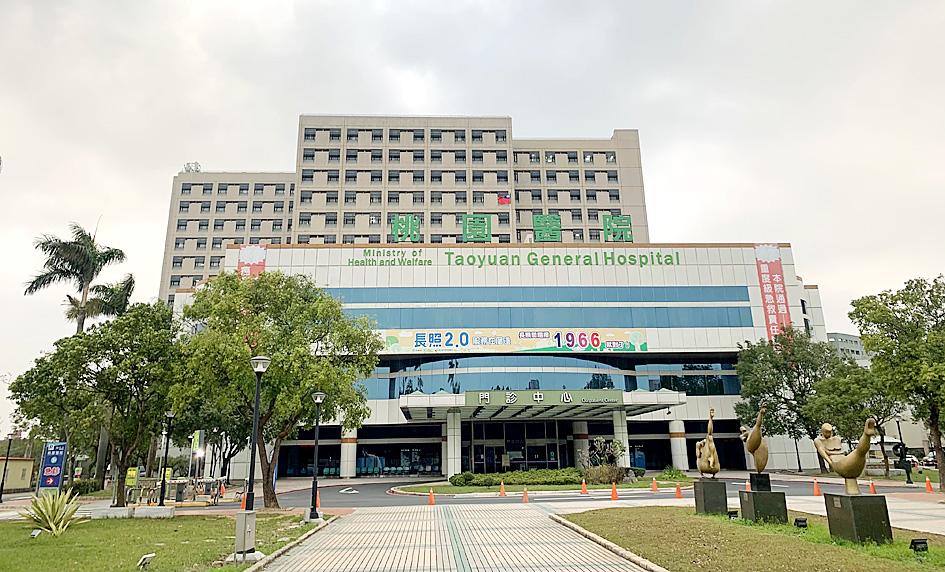
Photo: Chen En-hui, Taipei Times
He sought treatment for another condition on Friday, and was isolated and tested because he had a fever, and the result came back positive yesterday, Chen said.
The other case (No. 890), a woman in her 60s, is a family member of case No. 889 and took care of him when he was hospitalized, he said.
She began experiencing a sore throat on Wednesday and a fever on Friday, at which point she was tested, Chen said.
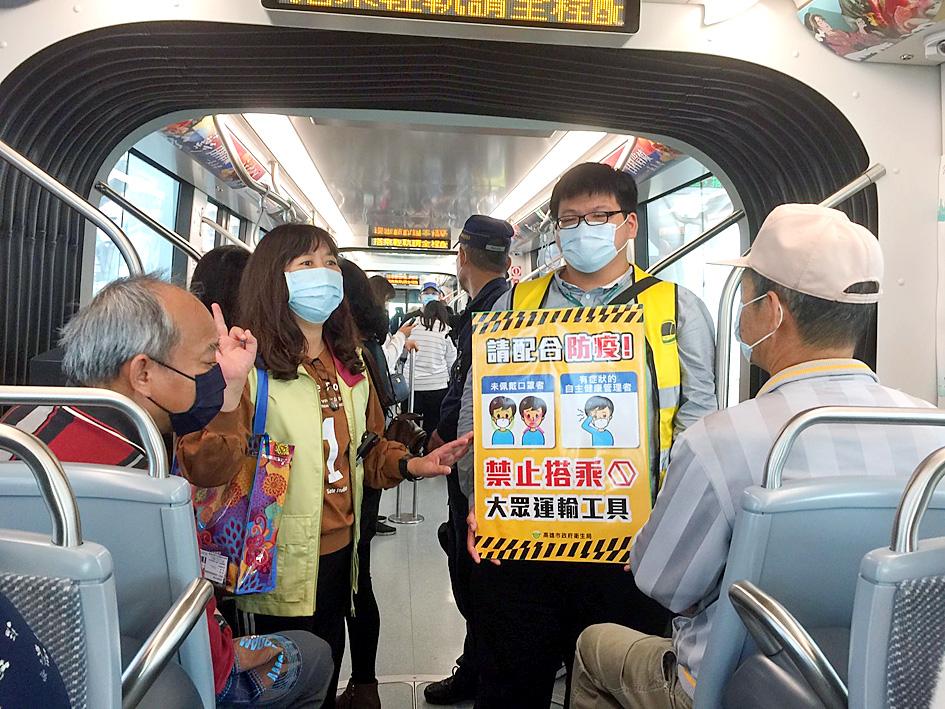
Photo courtesy of Department of Health, Kaohsiung City Government
Chen said that case No. 889 was in ward 12A on the 12th floor, which initially had been considered a “green zone” with a relatively low risk of COVID-19 infection, so both new cases had only been placed under self-health management.
While contact tracing is being conducted to clarify the possible infection source, the center yesterday afternoon listed the 12th floor as a “red zone” with a high risk of infection, Chen said, adding that expanded polymerase chain reaction (PCR) testing or even serological antibody testing would be considered if the infection source could not be identified.
However, the center at 6:30pm called an emergency news conference at which it announced expanded isolation measures.
“We need to build a better firewall at this critical moment, although it may affect many people,” Chen said.
The whole hospital building would be treated as a red zone, Chen said.
All patients who were discharged between Jan. 6 and Tuesday last week, as well as people living with them and their caregivers, would be traced and placed under household isolation, he said.
“We recognized that we have no time to wait for the results of further PCR and antibody tests, so we rather took action fast to reduce the risk of community infection,” he said.
Chen said that three categories of people associated with the hospital between Jan. 6 and Tuesday would be placed under home isolation immediately: patients who have been discharged and people living in the same home as them; caregivers of hospitalized patients and people living in the same home as them; and people who were exposed to case No. 889 when he sought medical treatment.
Starting from 6:30pm yesterday, they would be subject to 14-day home isolation starting from the day they were discharged from the hospital, mandatory testing upon ending isolation, and an additional seven days of self-health management, he said.
The hospital’s employees and people who sought treatment at the hospital’s outpatient departments or emergency room after Jan. 6 are required to practice self-health management, Chen said, adding that they were to be informed one by one beginning shortly after 6:30pm.
As the caregivers or family members who accompanied patients are more difficult to identify, discharged patients would be contacted to try and identify the people who visited them in hospital, as well as those they are living with, Chen said.
More than 5,000 people could be placed under isolation, he added.
The centers also reported three imported cases yesterday: a person who returned from South Africa and two people who returned from the US.
Japan has deployed long-range missiles in a southwestern region near China, the Japanese defense minister said yesterday, at a time when ties with Beijing are at their lowest in recent years. The missiles were installed in Kumamoto in the southern region of Kyushu, as Japan is attempting to shore up its military capacity as China steps up naval activity in the East China Sea. “Standoff defense capabilities enable us to counter the threat of enemy forces attempting to invade our country ... while ensuring the safety of our personnel,” Japanese Minister of Defense Shinjiro Koizumi said. “This is an extremely important initiative for
Chinese Nationalist Party (KMT) Chairwoman Cheng Li-wun (鄭麗文) today accepted an invitation from Chinese President Xi Jinping (習近平) to lead a delegation to China next month, saying she hopes to promote the peaceful development of cross-strait relations and bring stability to the Taiwan Strait. “I am grateful and happy to accept this invitation,” Cheng said in a statement from the KMT chairperson’s office. Cheng said she hopes both sides can work together to promote the peaceful development of cross-strait relations, enhance exchange and cooperation, bring stability to the Taiwan Strait and improve people’s livelihoods. At today's news conference, Cheng said any efforts to
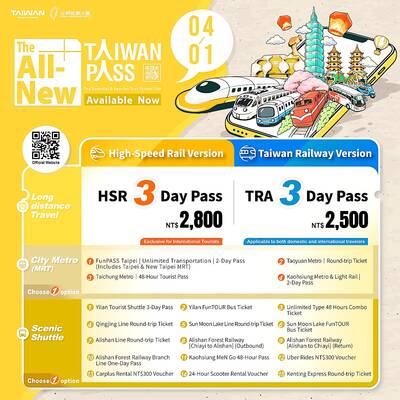
MORE POPULAR: Taiwan Pass sales increased by 59 percent during the first quarter compared with the same period last year, the Tourism Administration said The Tourism Administration yesterday said that it has streamlined the Taiwan Pass, with two versions available for purchase beginning today. The tourism agency has made the pass available to international tourists since 2024, allowing them to access the high-speed rail, Taiwan Railway Corp services, four MRT systems and four Taiwan Tourist Shuttles. Previously, five types of Taiwan Pass were available, but some tourists have said that the offerings were too complicated. The agency said only two types of Taiwan Pass would be available, starting from a three-day pass with the high-speed rail and a three-day pass with Taiwan Railway Corp. The former costs NT$2,800

The nation’s fastest supercomputer, Nano 4 (晶創26), is scheduled to be launched in the third quarter, and would be used to train large language models in finance and national defense sectors, the National Center for High-Performance Computing (NCHC) said. The supercomputer, which would operate at about 86.05 petaflops, is being tested at a new cloud computing center in the Southern Taiwan Science Park in Tainan. The exterior of the server cabinet features chip circuitry patterns overlaid with a map of Taiwan, highlighting the nation’s central position in the semiconductor industry. The center also houses Taiwania 2, Taiwania 3, Forerunner 1 and


 RSS
RSS