


The Moscow Classical Ballet canceled all planned performances in Taiwan after eight members of the troupe tested positive for COVID-19, bringing the tally of infected members to eight.
The three female dancers and one male dancer have been placed under isolation, Minister of Health and Welfare Chen Shih-chung (陳時中), who heads the Central Epidemic Command Center (CECC), told a news conference in Taipei.
As of yesterday, Taiwan had reported 757 cases — including the four new cases — with seven fatalities.

Photo: Tu Chien-jung, Taipei Times
The dancers’ tests showed cycle threshold (Ct) values of between 31 and 35, but had low virus counts, Chen said.
Although they were seen purchasing items at convenience stores and practicing with colleagues, the risk of the dancers spreading COVID-19 was low as they wore masks when outside of the hotel, and had designated transportation to and from the hotel, Chen added.
On Nov. 29, the ballet company arrived with proof of negative COVID-19 tests issued within three days of their flight, and the members stayed in a hotel during their quarantine, the center said.
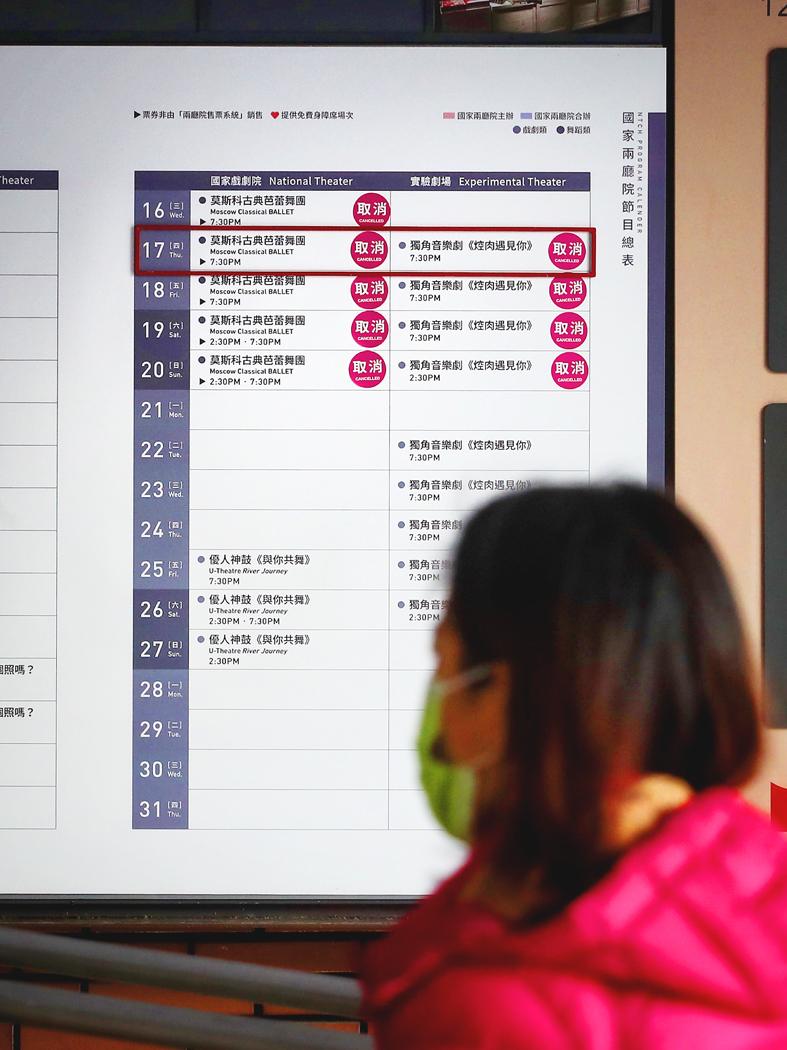
Photo: CNA
On Monday, the day after completing the quarantine, all of the troupe members were tested for COVID-19 at the request of event organizer udnFunLife Co Ltd (聯合數位文創).
The results for the four dancers returned positive on Wednesday, although none of them showed any symptoms.
Chen clarified that the dancers did not break any laws as they had not exited the quarantine area, saying that they had shopped at convenience stores when they were under self-management.
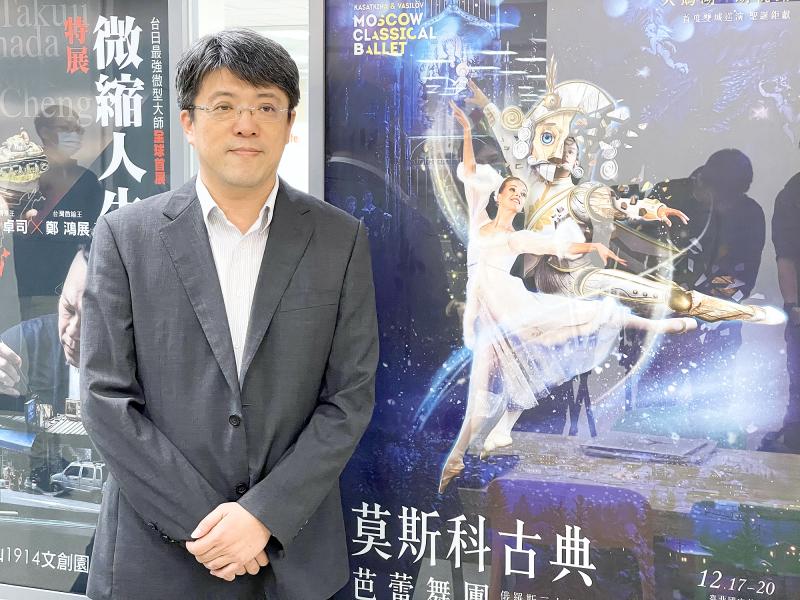
Photo: CNA
Those who tested positive have been hospitalized and would be discharged when free of COVID-19 symptoms, Chen said, adding that other troupe members would need to consult the regulations if wanting to leave the country.
Members under home isolation and quarantine are expected to pay for their test afterward, Chen said.
It has been adequately demonstrated that people who test positive after the full 14-day quarantine are not contagious, Chen said.
The center could not force the troupe members to self-isolate after the first members’ test results returned positive for COVID-19, Chen said.
The center had no legal basis to do so, but could only request that the Ministry of Culture and udnFunLife ensure, to the best of their ability, that there would be minimal contact between the performers and audience members, Chen said.
The Moscow Classical Ballet was scheduled to perform Wednesday to Sunday at the National Theater Hall in Taipei and Friday next week to Dec. 27 at the National Kaohsiung Center for the Arts, but ticket holders have been promised refunds.
Yesterday, 44 other troupe members requiring isolation initially refused to move out of the Howard Hotel (福華飯店) in Taipei.
Not an official quarantine hotel, the hotel management might be unable to take care of the foreign visitors, Taipei Deputy Mayor Vivian Huang (黃珊珊) said yesterday.
The Taipei City Government has prepared a quarantine facility for the troupe members, Huang said.
The Russian visitors had refused to communicate with the city government, but after Russian diplomats stepped in to help, the dance company agreed to relocate to the designated facility, Taipei Department of Health Commissioner Huang Shier-chieg (黃世傑) said.
The diplomats proposed that the troupe depart on a charter flight, which the center is considering, Huang said, adding that at least they agreed to move to the facility.
Some of the troupe members had doubts about the COVID-19 test results and some wanted to leave Taiwan right away, udnFunLife chairman Lee Yen-fu (李彥甫) said.
Lee said that he hoped the government could clarify its procedures, including when a performance can be staged following the initial quarantine upon arrival and the interval between COVID-19 tests.
CHAOS: Iranians took to the streets playing celebratory music after reports of Khamenei’s death on Saturday, while mourners also gathered in Tehran yesterday Iranian Supreme Leader Ayatollah Ali Khamenei was killed in a major attack on Iran launched by Israel and the US, throwing the future of the Islamic republic into doubt and raising the risk of regional instability. Iranian state television and the state-run IRNA news agency announced the 86-year-old’s death early yesterday. US President Donald Trump said it gave Iranians their “greatest chance” to “take back” their country. The announcements came after a joint US and Israeli aerial bombardment that targeted Iranian military and governmental sites. Trump said the “heavy and pinpoint bombing” would continue through the week or as long
TRUST: The KMT said it respected the US’ timing and considerations, and hoped it would continue to honor its commitments to helping Taiwan bolster its defenses and deterrence US President Donald Trump is delaying a multibillion-dollar arms sale to Taiwan to ensure his visit to Beijing is successful, a New York Times report said. The weapons sales package has stalled in the US Department of State, the report said, citing US officials it did not identify. The White House has told agencies not to push forward ahead of Trump’s meeting with Chinese President Xi Jinping (習近平), it said. The two last month held a phone call to discuss trade and geopolitical flashpoints ahead of the summit. Xi raised the Taiwan issue and urged the US to handle arms sales to

State-run CPC Corp, Taiwan (CPC, 台灣中油) yesterday said that it had confirmed on Saturday night with its liquefied natural gas (LNG) and crude oil suppliers that shipments are proceeding as scheduled and that domestic supplies remain unaffected. The CPC yesterday announced the gasoline and diesel prices will rise by NT$0.2 and NT$0.4 per liter, respectively, starting Monday, citing Middle East tensions and blizzards in the eastern United States. CPC also iterated it has been reducing the proportion of crude oil imports from the Middle East and diversifying its supply sources in the past few years in response to geopolitical risks, expanding
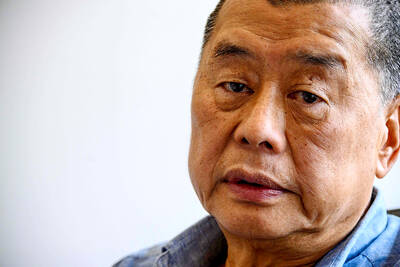
Pro-democracy media tycoon Jimmy Lai’s (黎智英) fraud conviction and prison sentence were yesterday overturned by a Hong Kong court, in a surprise legal decision that comes soon after Lai was jailed for 20 years on a separate national security charge. Judges Jeremy Poon (潘兆初), Anthea Pang (彭寶琴) and Derek Pang (彭偉昌) said in the judgement that they allowed the appeal from Lai, and another defendant in the case, to proceed, as a lower court judge had “erred.” “The Court of Appeal gave them leave to appeal against their conviction, allowed their appeals, quashed the convictions and set aside the sentences,” the judges


 RSS
RSS