


A group of scientists on Monday sent a formal letter to The Lancet outlining doubts about the accuracy of early data on Russia’s COVID-19 vaccine, one of the authors said, adding further fuel to a dispute surrounding the “Sputnik-V” shot.
Fifteen scientists from five countries signed the letter presenting their concerns to the international medical journal, said Enrico Bucci, biologist adjunct professor at Philadelphia’s Temple University.
Reuters did not see the contents of the letter.
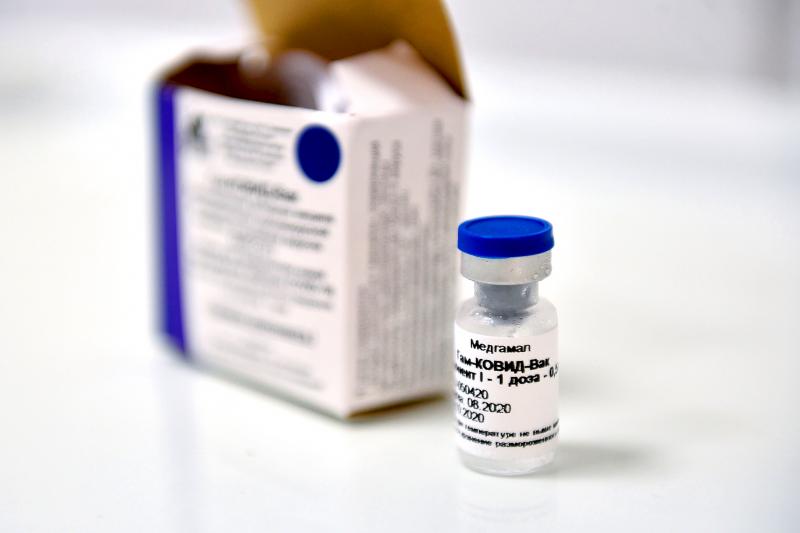
Photo: AFP
The move nonetheless highlights growing concern among scientists about the safety and efficacy of the Sputnik-V vaccine, which the Russian government approved for use before completing full human trials.
The official letter came days after a larger group of scientists — including the 15 — signed an open letter to The Lancet’s editor, published on Bucci’s personal blog, after the journal published the early-stage trial results from Moscow’s Gamaleya Institute.
They said they found patterns in the phase 1/2 data, which was peer-reviewed in the journal, that looked “highly unlikely,” with multiple participants reporting identical antibody levels.
The Gamaleya Institute did not immediately respond to a request for comment about the formal letter sent on Monday.
Last week, the institute rejected the critique contained in the open letter, which was initially signed by 26 scientists, but now has 38 signatories.
“The published results are authentic and accurate and were examined by five reviewers at The Lancet,” institute deputy director Denis Logunov said in a statement.
He said his institute submitted the entire body of raw data on the trial results to the journal.
The Lancet said it had invited the authors of the Russian vaccine study to respond to the questions raised in the open letter by Bucci.
“We continue to follow the situation closely,” it added.
Russian Assistant Minister of Health Alexey Kuznetsov on Thursday last week told the Interfax news agency that the institute had already sent detailed answers to The Lancet’s editor.
Naor Bar-Zeev, deputy director at John Hopkins Bloomberg School of Public Health, who peer-reviewed the Russian data, last week defended his analysis of the research following the publication of the blog.
“The results are plausible, and not very different to those seen with other AdV vectored products,” he said.

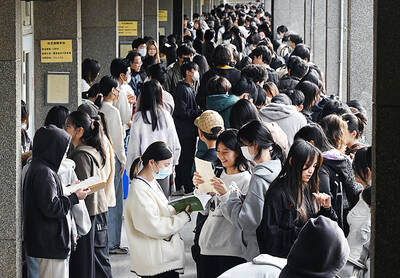
A global survey showed that 60 percent of Taiwanese had attained higher education, second only to Canada, the Ministry of the Interior said. Taiwan easily surpassed the global average of 43 percent and ranked ahead of major economies, including Japan, South Korea and the US, data from the Organisation for Economic Co-operation and Development (OECD) for 2024 showed. Taiwan has a high literacy rate, data released by the ministry showed. As of the end of last year, Taiwan had 20.617 million people aged 15 or older, accounting for 88.5 percent of the total population, with a literacy rate of 99.4 percent, the data

CCP ‘PAWN’? Beijing could use the KMT chairwoman’s visit to signal to the world that many people in Taiwan support the ‘one China’ principle, an academic said Chinese Nationalist Party (KMT) Chairwoman Cheng Li-wun (鄭麗文) yesterday arrived in China for a “peace” mission and potential meeting with Chinese President Xi Jinping (習近平), while a Taiwanese minister detailed the number of Chinese warships currently deployed around the nation. Cheng is visiting at a time of increased Chinese military pressure on Taiwan, as the opposition-dominated Legislative Yuan stalls a government plan for US$40 billion in extra defense spending. Speaking to reporters before going to the airport, Cheng said she was going on a “historic journey for peace,” but added that some people felt uneasy about her trip. “If you truly love Taiwan,

NEW LOW: The council in 2024 based predictions on a pessimistic estimate for the nation’s total fertility rate of 0.84, but last year that rate was 0.69, 17 percent lower An expected National Development Council (NDC) report expects the nation’s population to drop below 12 million by 2065, with the old-age dependency ratio to top 100 percent sooner than 2070, sources said yesterday. The council is slated to release its latest population projections in August, using an ultra-low fertility model, the sources said. The previous report projected that Taiwan’s population would fall to 14.37 million by 2070, but based on a new estimate of the total fertility rate (TFR) — the average number of children born to a woman over her lifetime — the population is expected to reach 12 million by
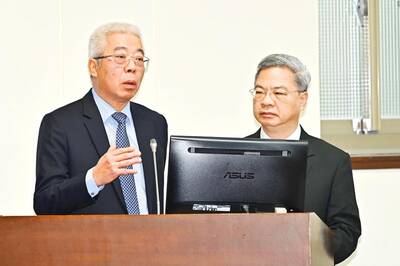
Taiwan has arranged for about 8 million barrels of crude oil, or about one-third of its monthly needs, to be shipped from the Red Sea this month to bypass the Strait of Hormuz and ease domestic supply pressures, CPC Corp, Taiwan (CPC, 台灣中油) said yesterday. The state-run oil company has worked with Middle Eastern suppliers to secure routes other than the Strait of Hormuz, through which about 20 percent of the world’s oil and liquefied natural gas typically passes, CPC chairman Fang Jeng-zen (方振仁) said at a meeting of the legislature’s Economics Committee in Taipei. Suppliers in Saudi Arabia have indicated they


 RSS
RSS