


The Ministry of Culture yesterday scrapped the Public Television Service’s (PTS, 公視) “international video platform” after it sparked controversy following reports that the Democratic Progressive Party (DPP) tried to use the platform as a mouthpiece and interfere with its personnel plans.
The ministry in a statement thanked the PTS board — which on Monday voted 11-4 to pass a pilot project to develop an “international communication digital plan” — for its support.
However, the ministry said that to prevent the controversy from spreading, it has terminated the international video platform commission following a careful and comprehensive assessment.
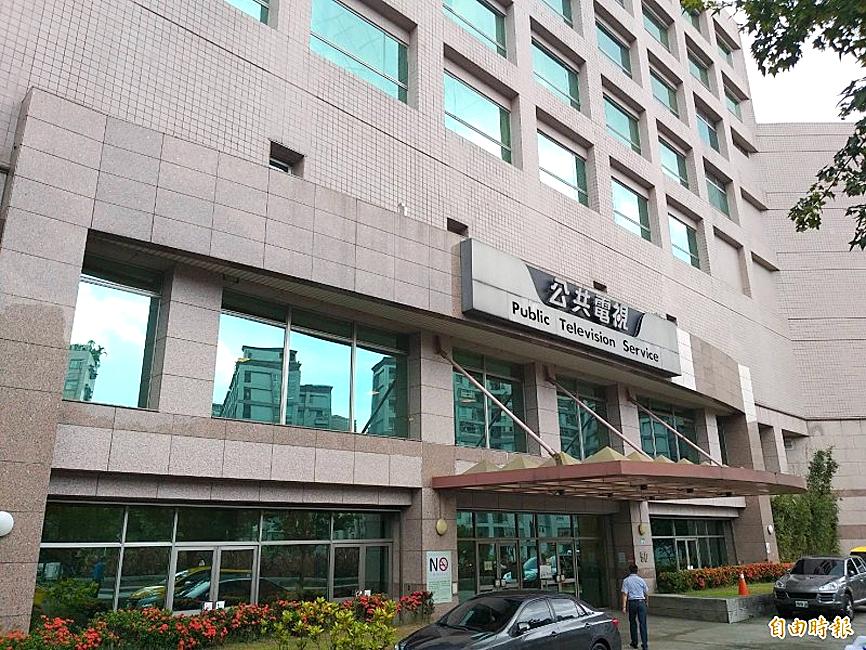
Photo: Chung Chih-kai, Taipei Times
The direction of the ministry’s policy in promoting the project would not change, it said, adding that it would continue to seek advice from various circles and find the best way to execute the project.
Executive Yuan spokesman Ting Yi-ming (丁怡銘) said that the Executive Yuan respects the ministry’s decision, as well as the PTS’ independence.
The Executive Yuan would not interfere with the production and broadcasting of PTS programs, he said.

Photo: Chen Yu-hsun, Taipei Times
As there are differing opinions about the ministry commission within PTS, the Executive Yuan respects PTS’ opinion, he said.
Board member Hsu Jui-hsi (徐瑞希) yesterday said that she would resign from the PTS board in protest of the ministry’s decision to dissolve the commission.
She saw a detailed version of the international video platform plan at an extraordinary board meeting on Monday, Hsu said.
Although some of the political vocabulary in the proposal was not handled well, she believed that PTS was capable of executing the project, Hsu added.
She believed that it could be left to the new board and management team to make adjustments, which is why she had voted in favor of the project, she said.
The ministry had previously said that it respects the board’s decision, she said, accusing the ministry of contradicting itself.
PTS said it respects Hsu’s decision to resign from the board.
The ministry has terminated the application for the case, it said, calling for rational discussion among various groups on how an international video platform could be planned.
At Monday’s board meeting, three PTS executives — PTS president Tsao Wen-chieh (曹文傑), executive vice president Hsieh Tsui-yu (謝翠玉) and news department manager Su Chi-chen (蘇啟禎) — tendered their resignations.
PTS yesterday said planning department manager Hsu Chiu-hua (徐秋華) would serve as acting president from Saturday until a president is selected and the handover has been completed.
The New Power Party (NPP) said that the ministry should give a comprehensive briefing to lawmakers on the legislature’s Education and Culture Committee about controversies over its proposed creation of the international video platform, even though it has canceled the project.
NPP Chairman Hsu Yung-ming (徐永明) told a news conference in Taipei that controversies surrounding the project would not go away simply because the ministry has terminated it.
The government is obligated to tell lawmakers what it plans to do with the NT$5.8 billion (US$196.6 million) budget that had been earmarked for the platform, Hsu said.
“The DPP should realize that it cannot equate public media with state-controlled media. PTS is a public media outlet, which is owned by the public, and should maintain its independence,” he said.
“It should not yield to the government’s every demand only because it receives funding from the ministry,” he added.
Additional reporting by Shelley Shan and Lin Nan-ku

Japan has deployed long-range missiles in a southwestern region near China, the Japanese defense minister said yesterday, at a time when ties with Beijing are at their lowest in recent years. The missiles were installed in Kumamoto in the southern region of Kyushu, as Japan is attempting to shore up its military capacity as China steps up naval activity in the East China Sea. “Standoff defense capabilities enable us to counter the threat of enemy forces attempting to invade our country ... while ensuring the safety of our personnel,” Japanese Minister of Defense Shinjiro Koizumi said. “This is an extremely important initiative for

MORE POPULAR: Taiwan Pass sales increased by 59 percent during the first quarter compared with the same period last year, the Tourism Administration said The Tourism Administration yesterday said that it has streamlined the Taiwan Pass, with two versions available for purchase beginning today. The tourism agency has made the pass available to international tourists since 2024, allowing them to access the high-speed rail, Taiwan Railway Corp services, four MRT systems and four Taiwan Tourist Shuttles. Previously, five types of Taiwan Pass were available, but some tourists have said that the offerings were too complicated. The agency said only two types of Taiwan Pass would be available, starting from a three-day pass with the high-speed rail and a three-day pass with Taiwan Railway Corp. The former costs NT$2,800

POLLS CONCERNS: There are concerns within the KMT that a Cheng Li-wun-Xi Jinping meeting could trigger a voter backlash in elections in November Chinese Nationalist Party (KMT) Chairwoman Cheng Li-wun (鄭麗文) accepted an invitation from Chinese President Xi Jinping (習近平) to visit next month, her party and Chinese state media reported yesterday. Cheng, who took up her role in November last year, “gladly accepted” the invitation to lead a delegation to China, the KMT said in a statement, confirming a Xinhua news agency report. Cheng “looks forward to joint efforts by both parties to advance the peaceful development of cross-strait relations, promote cross-strait exchanges and cooperation, and work for peace in the Taiwan Strait and greater well-being for people on both sides,” the statement said. Chinese

SIGNIFICANT TO THE WORLD: The delegation’s visit aims to send a clear message that bipartisan support for Taiwan is consistent, US Senator Jeanne Shaheen said The US Senate’s bipartisan support for Taiwan remains strong and Taiwan-US ties would continue for decades to come, a US Senate delegation said in Taipei yesterday, while calling on the legislature to swiftly pass a special defense budget bill. A US delegation led by Democratic US Senator Jeanne Shaheen and Republican US Senator John Curtis — both members of the US Senate Committee on Foreign Relations — arrived in Taiwan yesterday for a two-day visit. The other senators of the delegation included Senate Taiwan Caucus cochair Thom Tillis and Senate Committee on Armed Services senior member Jacky Rosen. Shaheen told a news


 RSS
RSS