


Australia has rejected Beijing’s territorial and maritime claims in the South China Sea in a formal declaration to the UN.
In a statement filed on Thursday, Australia said there was “no legal basis” to several disputed Chinese claims in the sea, including those related to the construction of artificial islands on small shoals and reefs.
“Australia rejects China’s claim to ‘historic rights’ or ‘maritime rights and interests’ as established in the ‘long course of historical practice’ in the South China Sea,” the declaration read.
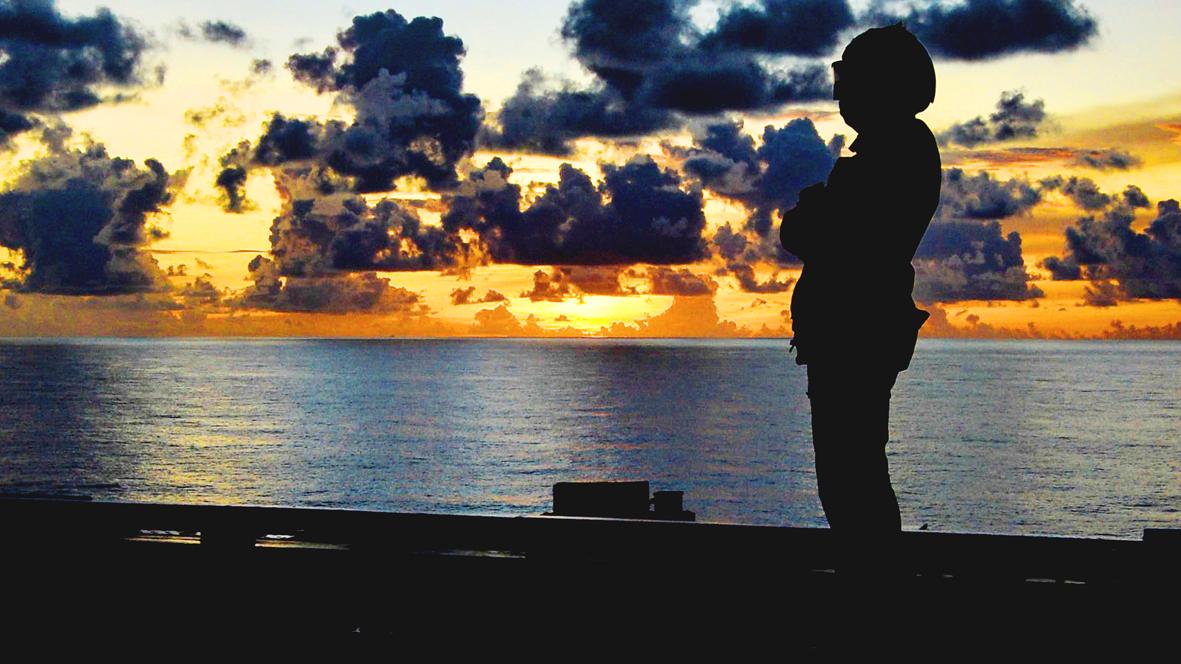
Photo: Reuters
“There is no legal basis for China to draw straight baselines connecting the outermost points of maritime features or ‘island groups’ in the South China Sea, including around the ‘Four Sha’ or ‘continental’ or ‘outlying’ archipelagos,” it read.
“Four sha,” or four sands (四沙), refers to Beijing’s claim over the Pratas Islands (Dongsha Islands, 東沙群島), the Paracels (Xisha Islands, 西沙群島), the Spratlys (Nansha Islands, 南沙群島), and an island group that includes Macclesfield Bank (Zhongsha Islands, 中沙群島), all of which are also claimed by Taiwan.
The declaration came after US Secretary of State Mike Pompeo declared Beijing’s pursuit of territory and resources in the South China Sea to be illegal, explicitly backing the territorial claims of Southeast Asian countries against China’s.
Beijing claims almost all of the South China Sea based on a so-called “nine-dash line,” a vague delineation from maps dating back to the 1940s.
The latest escalation comes ahead of annual talks between Australia and the US, with Australian ministers to travel to Washington for the first time since Canberra closed the nation’s borders amid the COVID-19 pandemic.
The meetings come at a “critical time” and it is essential that they are held face-to-face, Australian Minister of Foreign Affairs Marise Payne and Australian Minister of Defence Linda Reynolds said in a statement yesterday.
Payne and Reynolds also penned an article in the Australian newspaper, labeling national security legislation that Beijing imposed on Hong Kong last month as “sweeping and vague.”
“We face a public health crisis, economic upheaval and resurgent authoritarian regimes using coercion in a bid to gain power and influence at the expense of our freedoms and sovereignty,” they wrote.
Additional reporting by staff writer
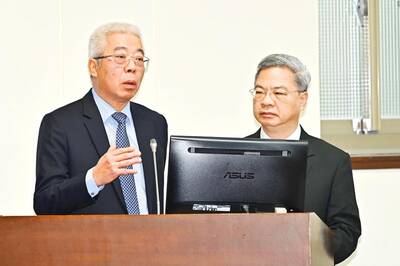
Taiwan has arranged for about 8 million barrels of crude oil, or about one-third of its monthly needs, to be shipped from the Red Sea this month to bypass the Strait of Hormuz and ease domestic supply pressures, CPC Corp, Taiwan (CPC, 台灣中油) said yesterday. The state-run oil company has worked with Middle Eastern suppliers to secure routes other than the Strait of Hormuz, through which about 20 percent of the world’s oil and liquefied natural gas typically passes, CPC chairman Fang Jeng-zen (方振仁) said at a meeting of the legislature’s Economics Committee in Taipei. Suppliers in Saudi Arabia have indicated they
South Korea has adjusted its electronic arrival card system to no longer list Taiwan as a part of China, a move that the Ministry of Foreign Affairs said would help facilitate exchanges between the two sides. South Korea previously listed “Taiwan” as “Taiwan (China)” in the drop-down menus of its online arrival card system, where people had to fill out where they came from and their next destination. The ministry had requested South Korea make a revision and said it would change South Korea’s name on Taiwan’s online immigration system from “Republic of Korea” to “Korea (South),” should the issue not be

CCP ‘PAWN’? Beijing could use the KMT chairwoman’s visit to signal to the world that many people in Taiwan support the ‘one China’ principle, an academic said Chinese Nationalist Party (KMT) Chairwoman Cheng Li-wun (鄭麗文) yesterday arrived in China for a “peace” mission and potential meeting with Chinese President Xi Jinping (習近平), while a Taiwanese minister detailed the number of Chinese warships currently deployed around the nation. Cheng is visiting at a time of increased Chinese military pressure on Taiwan, as the opposition-dominated Legislative Yuan stalls a government plan for US$40 billion in extra defense spending. Speaking to reporters before going to the airport, Cheng said she was going on a “historic journey for peace,” but added that some people felt uneasy about her trip. “If you truly love Taiwan,

Tainan, Taipei and New Taipei City recorded the highest fines nationwide for illegal accommodations in the first quarter of this year, with fines issued in the three cities each exceeding NT$7 million (US$220,639), Tourism Administration data showed. Among them, Taipei had the highest number of illegal short-term rental units, with 410. There were 3,280 legally registered hotels nationwide in the first quarter, down by 14 properties, or 0.43 percent, from a year earlier, likely indicating operators exiting the market, the agency said. However, the number of unregistered properties rose to 1,174, including 314 illegal hotels and 860 illegal short-term rental


 RSS
RSS