


Minister of Health and Welfare Chen Shih-chung (陳時中) yesterday expressed gratitude to the Central Epidemic Command Center (CECC) advisory specialist panel for serving as its “brain” in the fight against the novel coronavirus.
Taiwan yesterday reported no new COVID-19 cases and 429 patients have been released from isolation after recovering, said Chen, who heads the CECC.
The panel has provided numerous priceless suggestions to the center, including setting the guidelines for diagnosis, testing and treatment, and played a significant role in the nation’s efforts against the disease, he said.
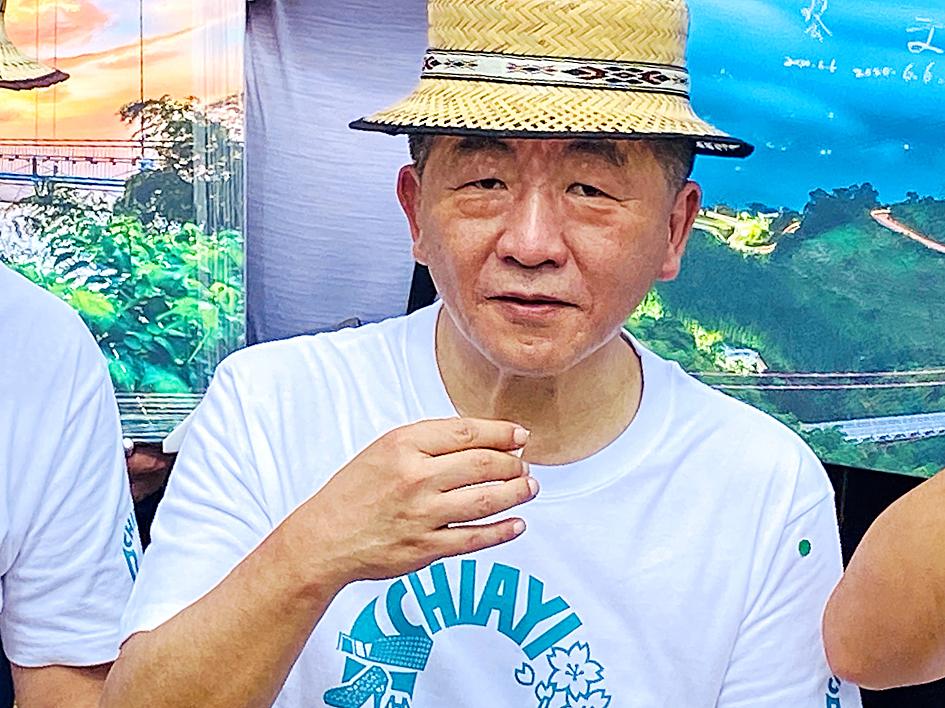
Photo: Tsai Tsung-hsun, Taipei Times
The CECC extends its special thanks to the panel, led by Chang Shan-chwen (張上淳), for keeping its policies on the right track, he added.
Chang said that of the nation’s 443 confirmed cases, 306 (69.1 percent) were asymptomatic or had only mild symptoms, 100 (22.6 percent) developed pneumonia and 37 (8.4 percent) developed severe pneumonia or acute respiratory distress syndrome.
Seven patients remain in isolation waiting for three consecutive negative test results and 11 remain hospitalized for treatment, including four who were removed from isolation, but are being treated for other conditions, Chang said, adding that all patients are expected to be released from isolation in the next week or two.
Since the panel first convened on Jan. 5, its number of specialists has risen from seven to 22 who have discussed various issues, including the case definition for COVID-19, reporting criteria, treatment procedures and recommendations, outbreak monitoring and infection control measures, he said.
As COVID-19 is a new disease, the panel often had to respond quickly and modify guidelines according to new findings, and the nation’s success in controlling the spread of the disease was beyond their expectations, Chang said, expressing thanks for all the efforts by Centers for Disease Control officials, panel members, frontline healthcare professionals and related government officials.
Lee Ping-ing (李秉穎), a National Taiwan University Hospital pediatrician who is a member of the specialist panel, said that it seems like a miracle that 10 domestic cases with an unknown source of infection did not spread further, which indicates that the public was well-versed in disease prevention measures and Taiwan’s healthcare system established a good infection control system.
Asked if there are still certain rules of which people should be aware, as the CECC previously announced that disease prevention regulations would be loosened from today, Chen said: “We still have to practice the ‘new disease prevention lifestyle.’”
This includes frequently washing hands, wearing a mask, maintaining social distancing, measuring body temperature and avoiding public spaces when feeling ill, Chen said, adding that some facilities should also enforce a real-name or contact registration system, should contact tracing be required after a confirmed infection.
“Unless a competent authority has set its own regulations for better management, the CECC would no longer limit the number of participants or flow of people at certain activities,” Chen said.
Asked about passengers once again being allowed to eat and drink, as well as conditionally taking off their masks, on Taiwan Railways Administration and Taiwan High Speed Rail Corp trains, Chen said that people sitting close to each other should avoid eating at the same time and that masks should be worn whenever possible for better collective protection of all passengers.
He said that he hopes people can internalize personal protective measures, such as wearing a mask, into their daily routines, similar to the practice of washing their hands after using the toilet.
However, people should not be criticized or punished for not wearing a mask, but rather practice the measures as part of their social responsibility to protect themselves and others, he added.
The governments of Taipei, New Taipei City, Keelung and Taoyuan on Friday announced the conditional loosening from today of a requirement for masks to be worn while riding their MRT metropolitan railway networks or public buses.
Passengers are required to wear a mask when entering MRT stations, and boarding trains and buses, but are allowed to take masks off if they can maintain social distancing once in transit.

Right-wing political scientist Laura Fernandez on Sunday won Costa Rica’s presidential election by a landslide, after promising to crack down on rising violence linked to the cocaine trade. Fernandez’s nearest rival, economist Alvaro Ramos, conceded defeat as results showed the ruling party far exceeding the threshold of 40 percent needed to avoid a runoff. With 94 percent of polling stations counted, the political heir of outgoing Costa Rican President Rodrigo Chaves had captured 48.3 percent of the vote compared with Ramos’ 33.4 percent, the Supreme Electoral Tribunal said. As soon as the first results were announced, members of Fernandez’s Sovereign People’s Party
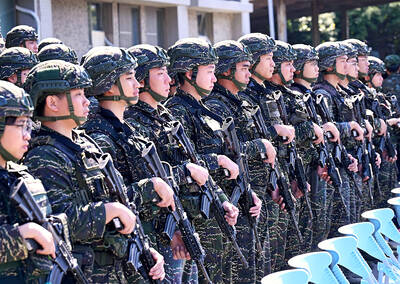
MORE RESPONSIBILITY: Draftees would be expected to fight alongside professional soldiers, likely requiring the transformation of some training brigades into combat units The armed forces are to start incorporating new conscripts into combined arms brigades this year to enhance combat readiness, the Executive Yuan’s latest policy report said. The new policy would affect Taiwanese men entering the military for their compulsory service, which was extended to one year under reforms by then-president Tsai Ing-wen (蔡英文) in 2022. The conscripts would be trained to operate machine guns, uncrewed aerial vehicles, anti-tank guided missile launchers and Stinger air defense systems, the report said, adding that the basic training would be lengthened to eight weeks. After basic training, conscripts would be sorted into infantry battalions that would take

GROWING AMBITIONS: The scale and tempo of the operations show that the Strait has become the core theater for China to expand its security interests, the report said Chinese military aircraft incursions around Taiwan have surged nearly 15-fold over the past five years, according to a report released yesterday by the Democratic Progressive Party’s (DPP) Department of China Affairs. Sorties in the Taiwan Strait were previously irregular, totaling 380 in 2020, but have since evolved into routine operations, the report showed. “This demonstrates that the Taiwan Strait has become both the starting point and testing ground for Beijing’s expansionist ambitions,” it said. Driven by military expansionism, China is systematically pursuing actions aimed at altering the regional “status quo,” the department said, adding that Taiwan represents the most critical link in China’s
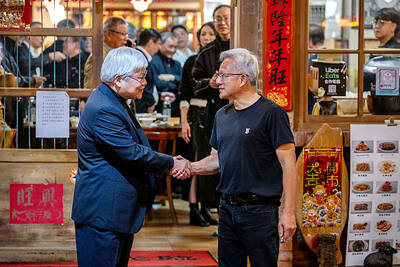
‘REALLY PROUD’: Nvidia would not be possible without Taiwan, Huang said, adding that TSMC would be increasing its capacity by 100 percent Nvidia Corp CEO Jensen Huang (黃仁勳) on Saturday praised and lightly cajoled his major Taiwanese suppliers to produce more to help power strong demand for artificial intelligence (AI), capping a visit to the country of his birth, where he has been mobbed by adoring fans at every step. Speaking at an impromptu press conference in the rain outside a Taipei restaurant, where he had hosted suppliers for a “trillion-dollar dinner,” named after the market capitalization of those firms attending, Huang said this would be another good year for business. “TSMC needs to work very hard this year because I need a lot


 RSS
RSS