


The nation marked its 49th day with no new domestic COVID-19 cases yesterday, and there were no new imported cases, but that does not mean the Central Epidemic Command Center (CECC) can relax its attention, Minister of Health and Welfare Chen Shih-chung (陳時中), who heads the center, said yesterday in Tainan as he and a team of health officials wrapped up a weekend visit to the city.
The visit is part of the center’s efforts to promote domestic travel under the “new disease prevention lifestyle.”
Among the 442 confirmed cases, 423 have been released from isolation and 12 people remain hospitalized, Chen said at the center’s daily news conference, which was held at the Jian Shan Pi Jianganan Resort (尖山埤江南渡假村), the second time it has be held outside of Taipei.
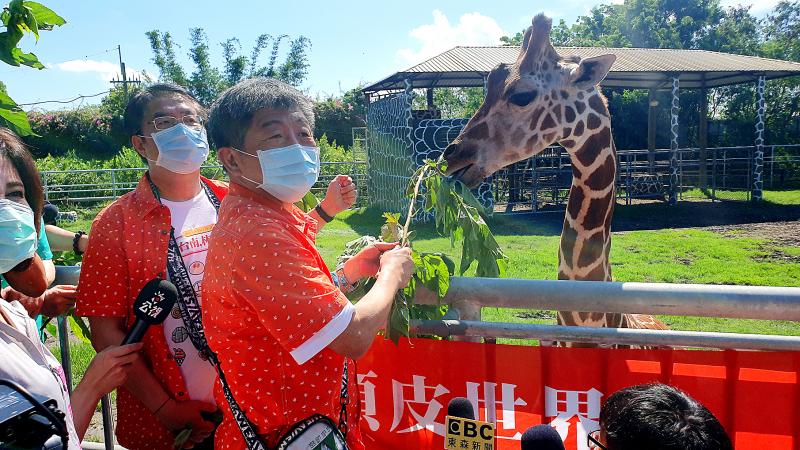
Photo: Wang Han-ping, Taipei Times
Chen joked with reporters that he had not been working while in Tainan, simply enjoying seeing the sights, trying various local delicacies and appreciating the warmth of the residents’ welcome.
Asked if he was worried that people will let their guard down following the center’s announcement on Friday that it would loosen disease-prevention regulations starting from Sunday, including those barring food sampling at supermarkets and night markets, Chen said: “It is inevitable that people might feel more relaxed after June 7, just like people slacken after mid-term exams are over.”
“That is why in April we began promoting a ‘new disease prevention lifestyle,’” he said.
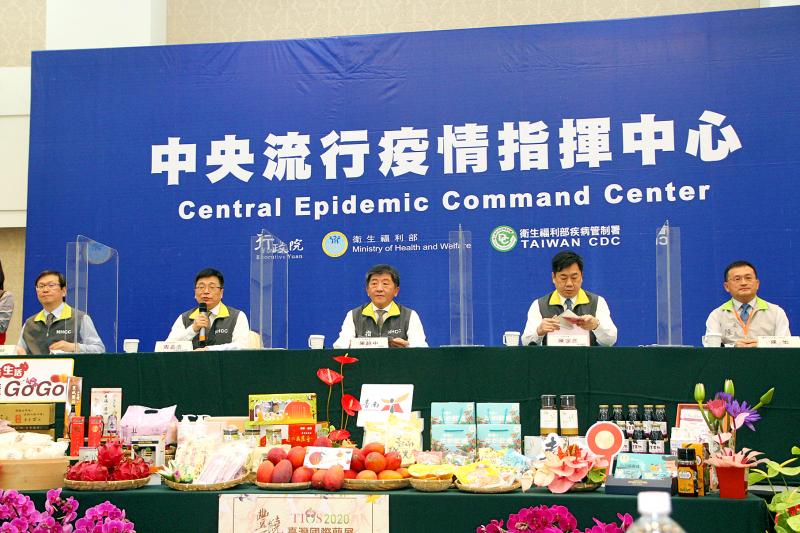
Photo: CNA
“I have to bore people by repeatedly reminding them every day to wear a mask or keep safe social distances, wash their hands frequently, take their temperature and implement a real-name registration system, because I hope they internalize the ‘new disease prevention lifestyle’ into their daily habits,” the minister said.
While people are excited about easing the regulations, the move will be a big test for the CECC, so the health officials will have to pay more attention to any abnormal signs in local communities, Chen said.
It is likely that by Sunday, no domestic cases would have been reported for 56 consecutive days, or four incubations periods, which specialists agree would make local communities very safe, he said.
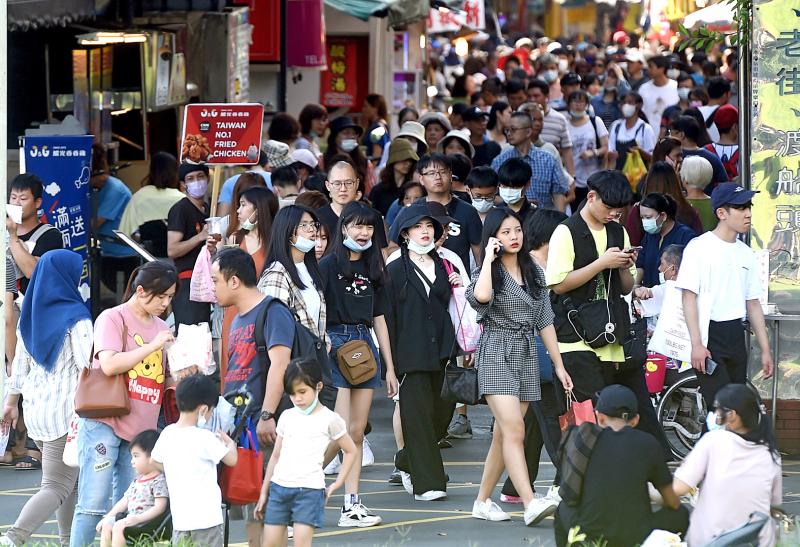
Photo: Chien Jung-fong, Taipei Times
However, there is still concern about more imported cases, so the center would continue to carefully monitor prevention measures at the borders.
Given the enthusiasm shown by the large crowds that greeted Chen wherever he went in Tainan — so many people were on hand on Guohua Street (國華街) he could barely make headway — reporters asked if such visits might hamper efforts to promote a “new disease prevention lifestyle.”
The main principle of this lifestyle is that people can choose between practicing social distancing or wearing a mask, so everyone can choose what they feel is suitable for them, Chen said.
After leaving Tainan yesterday, Chen and his team stopped in Taichung to plug domestic tourism before heading back to Taipei.
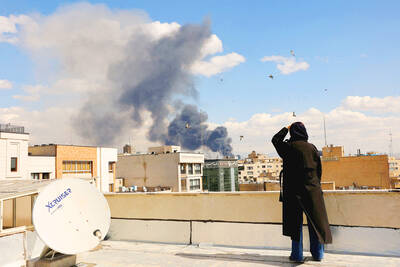
CHAOS: Iranians took to the streets playing celebratory music after reports of Khamenei’s death on Saturday, while mourners also gathered in Tehran yesterday Iranian Supreme Leader Ayatollah Ali Khamenei was killed in a major attack on Iran launched by Israel and the US, throwing the future of the Islamic republic into doubt and raising the risk of regional instability. Iranian state television and the state-run IRNA news agency announced the 86-year-old’s death early yesterday. US President Donald Trump said it gave Iranians their “greatest chance” to “take back” their country. The announcements came after a joint US and Israeli aerial bombardment that targeted Iranian military and governmental sites. Trump said the “heavy and pinpoint bombing” would continue through the week or as long
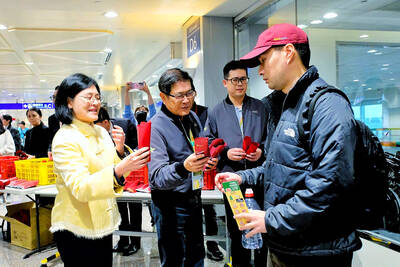
An Emirates flight from Dubai arrived at Taiwan Taoyuan International Airport yesterday afternoon, the first service of the airline since the US and Israel launched strikes against Iran on Saturday. Flight EK366 took off from the United Arab Emirates (UAE) at 3:51am yesterday and landed at 4:02pm before taxiing to the airport’s D6 gate at Terminal 2 at 4:08pm, data from the airport and FlightAware, a global flight tracking site, showed. Of the 501 passengers on the flight, 275 were Taiwanese, including 96 group tour travelers, the data showed. Tourism Administration Deputy Director-General Huang He-ting (黃荷婷) greeted Taiwanese passengers at the airport and
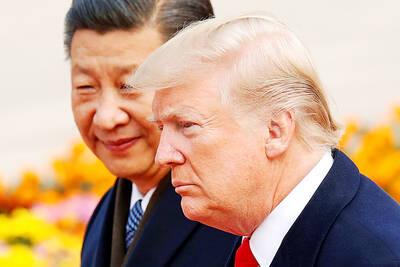
TRUST: The KMT said it respected the US’ timing and considerations, and hoped it would continue to honor its commitments to helping Taiwan bolster its defenses and deterrence US President Donald Trump is delaying a multibillion-dollar arms sale to Taiwan to ensure his visit to Beijing is successful, a New York Times report said. The weapons sales package has stalled in the US Department of State, the report said, citing US officials it did not identify. The White House has told agencies not to push forward ahead of Trump’s meeting with Chinese President Xi Jinping (習近平), it said. The two last month held a phone call to discuss trade and geopolitical flashpoints ahead of the summit. Xi raised the Taiwan issue and urged the US to handle arms sales to
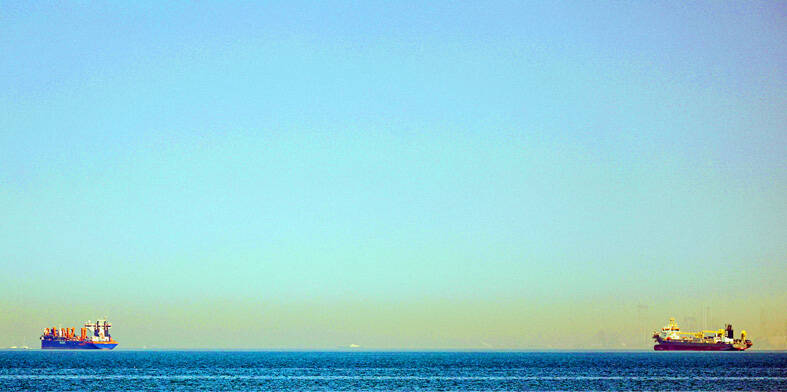
State-run CPC Corp, Taiwan (CPC, 台灣中油) yesterday said that it had confirmed on Saturday night with its liquefied natural gas (LNG) and crude oil suppliers that shipments are proceeding as scheduled and that domestic supplies remain unaffected. The CPC yesterday announced the gasoline and diesel prices will rise by NT$0.2 and NT$0.4 per liter, respectively, starting Monday, citing Middle East tensions and blizzards in the eastern United States. CPC also iterated it has been reducing the proportion of crude oil imports from the Middle East and diversifying its supply sources in the past few years in response to geopolitical risks, expanding


 RSS
RSS