


The nation yesterday reported no new cases of COVID-19, the Central Epidemic Command Center (CECC) said, adding that 311 patients have been removed from isolation after recovering.
It was the fourth consecutive day with no new confirmed cases and the 17th consecutive day with no new domestic cases.
People can feel light-hearted regardless of whether they plan stay at home or travel during the International Workers’ Day long weekend, but they should not let their guard down, said Minister of Health and Welfare Chen Shih-chung (陳時中), who heads the center.
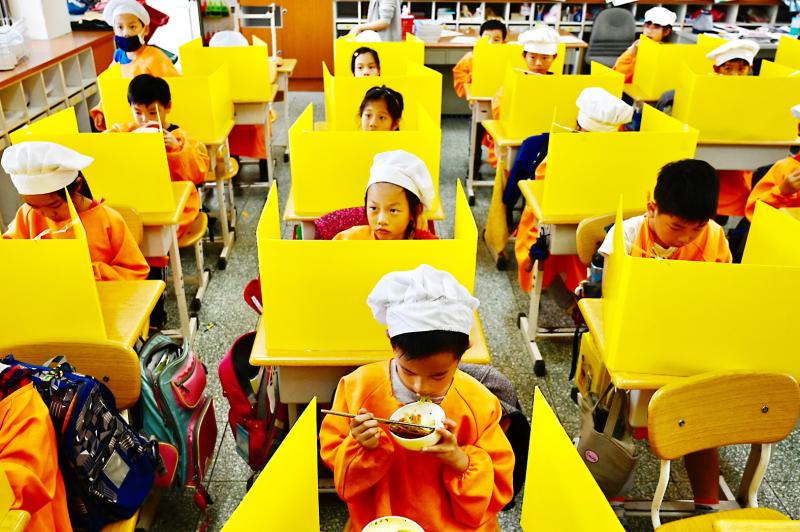
Photo: Sam Yeh, AFP
The CECC’s goal now is to withdraw the line of defense back to “individuals,” meaning that if everyone in society can maintain good personal hygiene and practice social distancing, the chain of infection between people would be broken, preventing large-scale outbreaks, and regulations could gradually be loosened, allowing people to lead more normal lives, he said.
“Everyone is happy to hear that there are no new cases, but it does not mean there are no sources of infection anymore, so it is important that everyone foster good living habits,” Chen said.
Asked whether hostess bars and nightclubs that were ordered to suspend operations could reopen, Deputy Minister of the Interior Chen Tsung-yen (陳宗彥), deputy head of the center, said that the CECC thanks local governments and businesses for their cooperation, but hopes that they can “hold on for a little longer.”
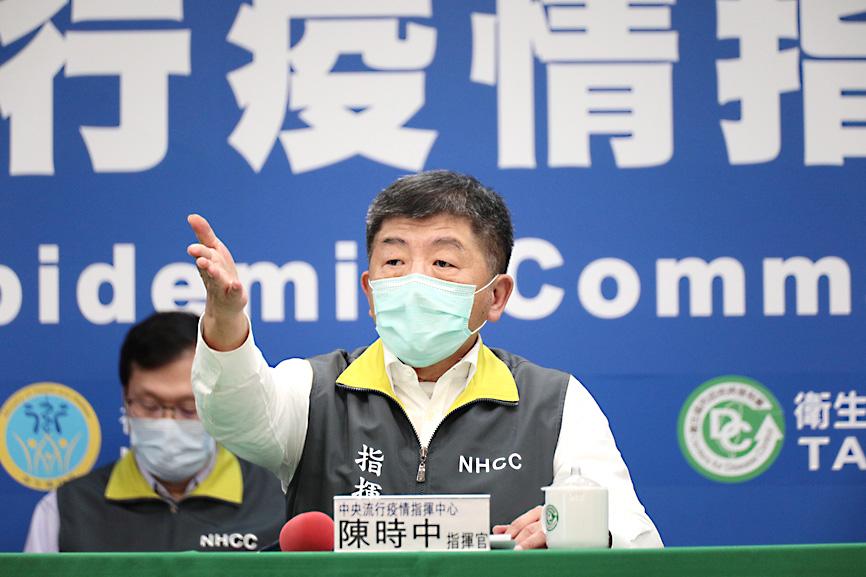
Photo courtesy of the Central Epidemic Command Center
The center is still observing the COVID-19 situation, as well as how well people perform in conducting self-health management, he said.
Local governments have ordered recreational facilities to implement real-name registration systems to keep track of customers, Chen said.
Asked about an interview with Academia Sinica President James Liao (廖俊智) published in the Chinese-language Mirror Media weekly yesterday — in which he cited an Academia Sinica research team as suggesting that there might be six types of SARS-CoV-2, which causes COVID-19, and that viral evolutionary changes might lead to a higher mortality rate — CECC advisory specialist panel convener Chang Shan-chwen (張上淳) said that it is possible that changes to the virus could lead to a higher mortality rate, but the rate could also be affected by other factors.
As Taiwan has a relatively low incidence rate and high-quality healthcare, it has a low mortality rate, he said.
However, the mortality rate could increase if the healthcare system were overwhelmed, he added.
Seven patients in Taiwan are on a ventilator in intensive care units, but their conditions are relatively stable, Chang said.
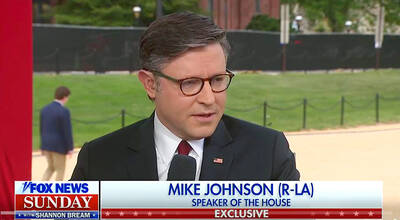
RESOLUTE BACKING: Two Republican senators are planning to introduce legislation that would impose immediate sanctions on China if it attempts to invade Taiwan US House of Representatives Speaker Mike Johnson on Sunday reaffirmed US congressional support for Taiwan, saying the US and “all freedom-loving people” have a stake in preventing China from seizing Taiwan by force. Johnson made the remarks in an interview with Fox News Sunday on US President Donald Trump’s summit with Chinese President Xi Jinping (習近平) last week. In an interview that aired on Friday on Fox News, just as Trump wrapped up a high-stakes visit to China, he said he has yet to green-light a new US$14 billion arms package to Taiwan and that it “depends on China.” “It’s a very good
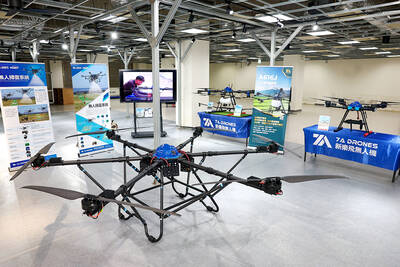
DRONE CENTRAL: Taiwan aims to become Asia’s democratic hub for drones, with most exports focused on high-quality military-grade models, an official said Taiwan’s drone industry is expected to expand significantly by 2030, producing 100,000 units per month and exporting half of them, the Ministry of Economic Affairs said yesterday. Current drone production capacity is about 15,000 units per month, but the industry can quickly scale up as demand increases, Industrial Development Administration Director-General Chiou Chyou-huey (邱求慧) told a news conference in Taipei. Taiwan’s drone output grew 2.5-fold last year to NT$12.9 billion (US$408.3 million) under a government program to develop the uncrewed vehicle sector, he said. The Executive Yuan in October last year approved plans to invest NT$44.2 billion into domestic production of uncrewed aerial
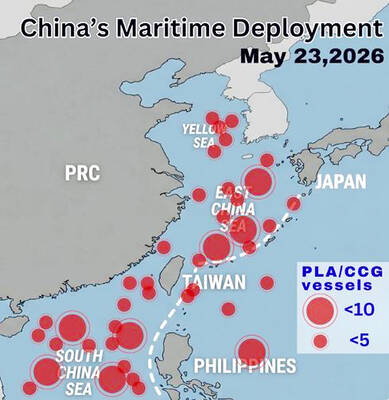
WARNING: China should stop engaging in actions that undermine regional peace and stability, as it would only build resentment among people across the Strait, the CGA said China has deployed more than 100 navy, coast guard and other vessels in waters from the Yellow Sea to the South China Sea and the western Pacific since US President Donald Trump and Chinese President Xi Jinping (習近平) met in Beijing, National Security Council Secretary-General Joseph Wu (吳釗燮) said yesterday. “In this part of the world, #China is the one & only PROBLEM wrecking the #StatusQuo & threatening regional peace & stability,” Wu wrote on X. In a separate post, he said Beijing was coercing Taiwan’s maritime domain, calling it illegal and provocative, after the Coast Guard Administration (CGA) expelled a
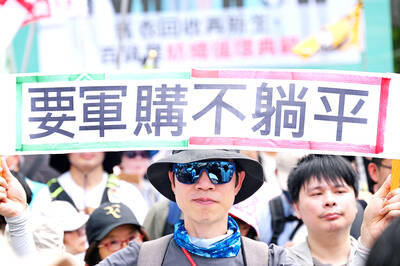
More than 8,000 people took part in a rally in Taipei yesterday to express support for more defense spending, after the opposition slashed the Cabinet’s proposed NT$1.25 trillion (US$39.6 billion) special defense budget and capped it at NT$780 billion. The demonstrators urged the Cabinet to propose another bill. Taiwan Economic Democracy Union convener Lai Chung-chiang (賴中強) said the main problem of the passed budget plan is the removal of funding for critical items, not just that the total amount is smaller. Critical budget items included purchasing or developing uncrewed vehicles, Strong Bow (強弓) missile systems, additional ammunition, artificial intelligence-powered combat systems and Taiwan-US


 RSS
RSS