


The global death toll in the COVID-19 pandemic yesterday soared past the grim 200,000 milestone as the WHO warned against “immunity passports” for recovered patients, seen as a possible tool for countries preparing to reopen their economies.
The WHO opposes such “passports,” because recovery from the virus might not protect a person from reinfection.
“There is currently no evidence that people who have recovered from COVID-19 and have antibodies are protected from a second infection,” the UN health body said in a statement.
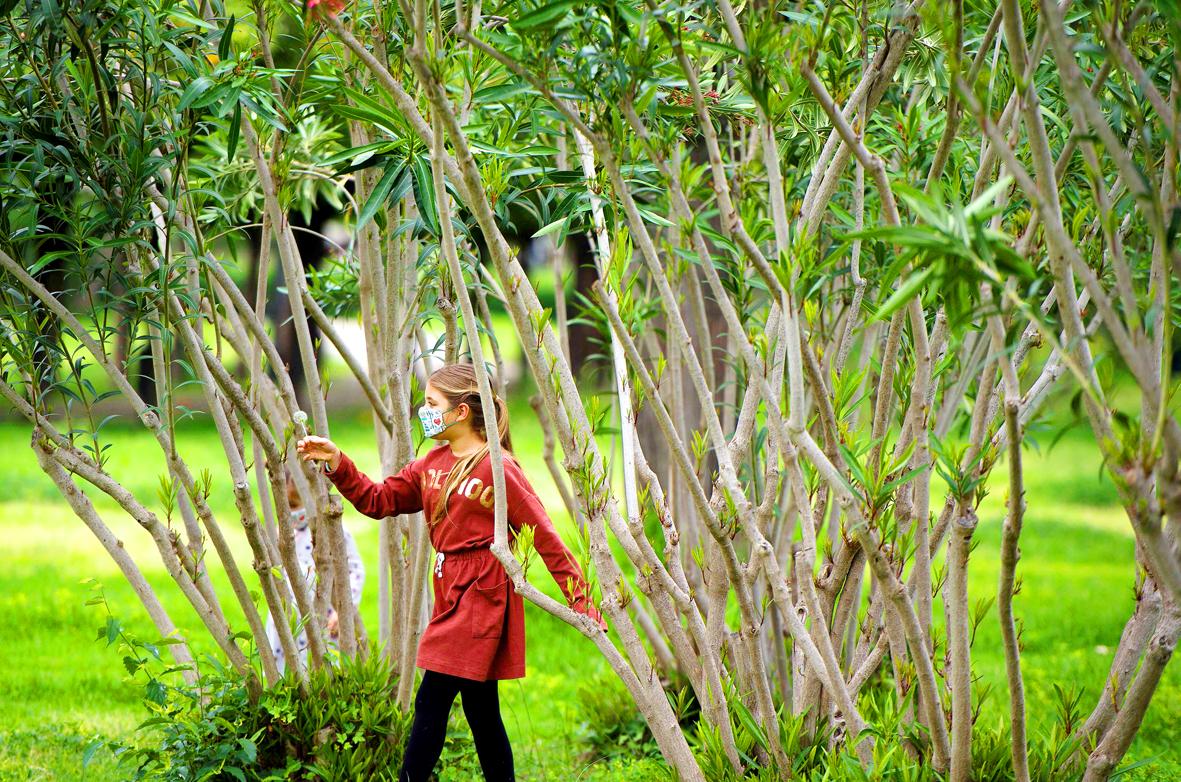
Photo: AFP
Even as governments from Sri Lanka to Belgium to the US began moving in the direction of partial reopening, the pandemic still had nearly half of humanity under some form of lockdown or confinement.
Total cases around the world rose to 2.86 million and deaths mounted past 203,000, doubling since April 10.
Europe, the hardest-hit region, has recorded 122,171 coronavirus deaths.
The US toll rose to 53,934 deaths. The number of cases in the US jumped by more than 46,000 to 939,249 since Friday.
In Italy, the number of COVID-19 fatalities rose to 26,384; Spain 22,902, France 22,648 and the UK 20,381.
The WHO warned on Saturday that people who test positive and survive infection cannot be certain they would not be hit again by the coronavirus.
The warning came as some governments study measures, such as “immunity passports,” for those who have recovered as one way to get people back to work after weeks of economic shutdown.
People holding such a “passport” might tend to ignore public health advice, such as continuing to wear masks, assuming they are not a danger to themselves or others, the WHO said.
Despite Saturday’s grim milestone, the daily toll in Western countries appeared to be leveling off and even falling, a sign hopeful epidemiologists had been looking for.
Likewise, new reported cases appear to have plateaued at about 80,000 a day.
Shrieks of joy rang out yesterday in the streets of Spain as children were allowed to leave their homes for the first time in six weeks.
Spaniards would be allowed out for exercise and to take walks starting next weekend, Spanish Prime Minister Pedro Sanchez announced on Saturday.
The Spanish government would tomorrow unveil its broader coronavirus exit plan that would likely be put into action in the second half of next month, he said.
However, in many countries there were worries of a second surge after lockdown restrictions are eased, possibly also coinciding with a new flu season.
In hard-hit Iran, health officials on Saturday raised fears of a “fresh outbreak” with another 76 fatalities declared, bringing the country’s official death toll to 5,650.
In China, the city of Wuhan, where the pandemic began, now has no remaining cases in its hospitals, a health official told reporters yesterday.
“The latest news is that by April 26, the number of new coronavirus patients in Wuhan was at zero, thanks to the joint efforts of Wuhan and medical staff from around the country,” Chinese National Health Commission spokesman Mi Feng (米鋒) said at a briefing.
The city had reported 46,452 cases, 56 percent of the national total. It saw 3,869 fatalities, or 84 percent of China’s total.
Tokyo registered 72 new coronavirus cases, Kyodo news agency reported, the lowest daily tally since April 1.
The latest figures brought the total coronavirus infections in Japan’s capital to more than 3,900 cases, according to Tokyo Metropolitan Government statistics.
Additional reporting by Reuters

National Taiwan University (NTU) yesterday said it disqualified a person from an entrance examination for using AI smart glasses to cheat, along with two others for making untruthful statements in their curriculum vitae. The three applicants were given null scores, Taiwan’s highest-ranked university said, calling on prospective students to be honest in the admissions process. NTU registrar Lee Hung-sen (李宏森) said that the cheating applicant wore a hat and thick-rimmed glasses to the second written exam for medical school, claiming that they felt cold. Suspicions were aroused when the applicant stared oddly at the test for long stretches while steadily bringing the paper
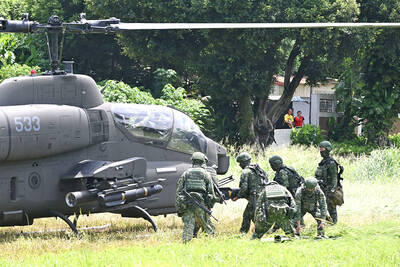
MILITARY ISSUES: A partisan divide between the Cabinet and the legislature ‘raised questions about Taiwan’s ability to adequately fund its defense,’ the report said Taiwan’s defense budget, military personnel numbers and resilience are challenges to its ability to meet national defense goals, the US Naval Institute said in a report published on Tuesday. In response to the perception of a growing military threat posed by China, Taiwan has embarked on an effort to enhance the capabilities needed to deter an attempt by Beijing to annex the nation by force, the institute said in the US Congressional Research Service report, titled Taiwan: Defense and Military Issues, which was filed on Thursday last week. Taiwan’s defense budget increased by about 7.5 percent from 2024 to last year, it

66 FIGHTER JETS: The aircraft is likely undergoing preparations for its transfer to Taiwan — a significant step forward in the nation’s modernization program, a lawmaker said The first of Taiwan’s order of F-16V Block 70 aircraft has been sighted in Texas ahead of delivery, Democratic Progressive Party (DPP) Legislator Wang Ting-yu (王定宇) said. Taiwan’s first F-16V Block 70 two-seat aircraft, tail number 6831, was seen flying from Lockheed Martin’s production facility in Greenville, South Carolina, to Naval Air Station Joint Reserve Base Fort Worth in Texas, Wang wrote on Facebook yesterday. The plane is likely undergoing preparations for its transfer to Taiwan, marking a significant step forward in the Republic of China Air Force’s modernization program, Wang said, citing military analysts. The F-16V Block 70 is a new-build version
NOT JUST NUMBERS: What matters to intelligence work is crucial, reliable information, so even a few credible leads can be highly valuable to national security, a legislator said The National Security Bureau (NSB) yesterday said it has finished the establishment of an information-reporting channel for Chinese nationals, the aim of which is to broaden intelligence gathering on China’s political, military, economic and social developments. Chinese nationals can submit information on the Web page, https://report.nsb.gov.tw, the NSB said in a statement. The move aims to expand the bureau’s diverse intelligence sources and is pursuant to the National Intelligence Services Act (國家情報工作法), it said, adding that it referenced practices adopted by intelligence agencies in the US, the UK and Israel. An increasing number of people are approaching Taiwanese agencies to provide information, as


 RSS
RSS