


Outspoken Chinese Communist Party (CCP) critic and millionaire property tycoon Ren Zhiqiang (任志強) has been placed under investigation for “serious violations of discipline and law,” an anti-graft watchdog said.
The party’s Central Commission for Discipline Inspection announced late on Tuesday that the 69-year-old former chairman of the state-owned real-estate developer Beijing Huayuan Group (北京市華遠集團) was under investigation.
Rights campaigners have accused Chinese President Xi Jinping (習近平) and the CCP of using charges such as “disciplinary violations” — often considered to refer to corruption — as a way to silence dissent.
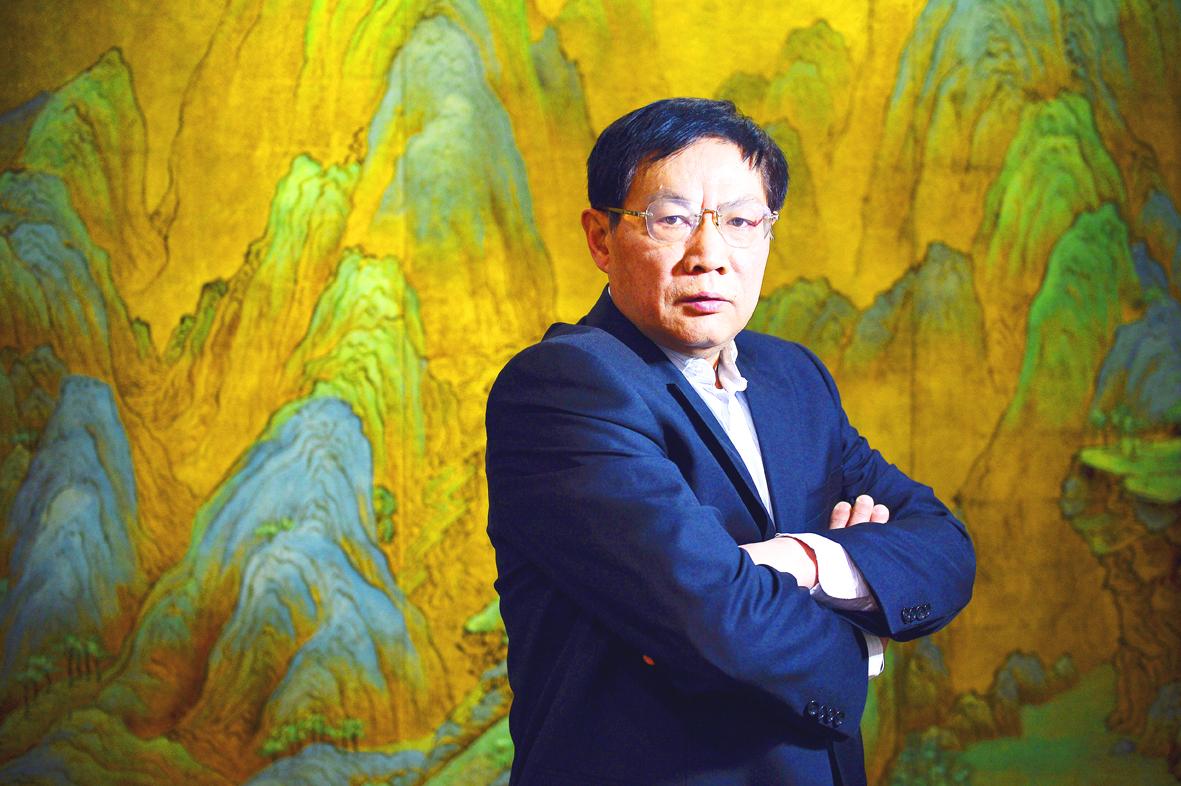
Photo: AP
Beijing has stepped up its crackdown on civil society since Xi took power in 2012, tightening restrictions on freedom of speech, and detaining hundreds of activists and lawyers.
Ren disappeared from the public eye last month, shortly after penning an essay that was fiercely critical of Xi’s response to the COVID-19 outbreak.
The retired entrepreneur has emerged in the past few years as one of the CCP’s most prominent critics in the business world.
His essay has been scrubbed from China’s Internet, which regularly censors content that challenges the authorities, but it has been shared online outside China and a copy has been saved by news aggregator China Digital Times.
“This epidemic has revealed the fact that the Party and government officials only care about protecting their own interests, and the monarch only cares about protecting their interests and core position,” Ren wrote, without referencing Xi by name.
It also accuses the government of concealing the initial outbreak.
Nicknamed “Big Cannon” for his fiery rhetoric, Ren formerly enjoyed close links with major figures in China’s political establishment, including his former classmate Chinese Vice President Wang Qishan (王岐山).
A CCP member for decades, Ren was also an influential blogger on Sina Weibo, where he had millions of followers. His account was closed by authorities in 2016 after he repeatedly called for greater freedom of the press.
Wang Yaqiu (王亞秋), a China researcher at Human Rights Watch, said the probe against Ren fitted a pattern of the CCP using charges such as “disciplinary violations” to silence its critics.
“It is quite clear that the Chinese government is punishing Ren for his speech critical of President Xi Jinping and Chinese government under the veneer of law. The government has a record of criminalizing peaceful speech using bogus charges,” Wang said.
Ren is likely being held in a form of extrajudicial secret detention known as liuzhi (留置), Wang said.
“Under liuzhi, detainees are held incommunicado — without access to lawyers or families — for up to six months,” Wang said.
Human rights lawyer Li Fangping (李方平) said the announcement was deliberately timed to minimize its effect, coming just hours before travel restrictions were lifted in Wuhan, the Chinese city where the novel coronavirus first emerged.

LEVERAGE: China did not ‘need to fire a shot’ to deny Taiwan airspace over Africa when it owns ‘half the continent’s debt,’ a US official said, calling it economic warfare The EU has raised concerns about overflight rights following the delay of President William Lai’s (賴清德) planned state visit to the Kingdom of Eswatini after three African nations denied overflight clearance for his charter at the last minute. Taiwanese allies Paraguay and Saint Kitts and Nevis, as well as several US lawmakers and the Inter-Parliamentary Alliance on China (IPAC) condemned China for allegedly pressuring the countries. Lai was scheduled to fly directly to Taiwan’s only African ally from yesterday to Sunday to celebrate the 40th anniversary of King Mswati III’s accession and his 58th birthday, but Seychelles, Mauritius and Madagascar suddenly revoked
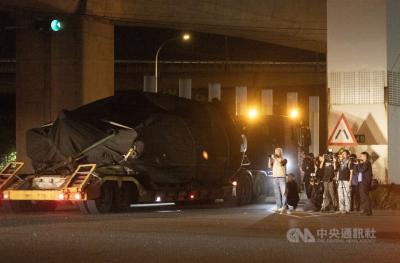
The final batch of 28 M1A2T Abrams tanks purchased from the US arrived at Taipei Port last night and were transported to the Armor Training Command in Hsinchu County’s Hukou Township (湖口), completing the military’s multi-year procurement of 108 of the tanks. Starting at 12:10am today, reporters observed more than a dozen civilian flatbed trailers departing from Taipei Port, each carrying an M1A2T tank covered with black waterproof tarps. Escorted by military vehicles, the convoy traveled via the West Coast Expressway to the Armor Training Command, with police implementing traffic control. The army operates about 1,000 tanks, including CM-11 Brave Tiger
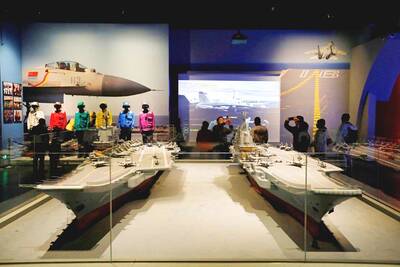
China on Wednesday teased in a video an aircraft carrier that could be its fourth, and the first using nuclear power, while making an allusion to Taiwan and vowing to further build up its islands, as it looks to boost maritime power, secure resources and bolster territorial claims. The video, issued on the eve of the 77th founding anniversary of the Chinese People’s Liberation Army Navy, featured fictional officers with names that are homophones of three commissioned aircraft carriers, the Liaoning (遼寧), Shandong (山東) and Fujian (福建). Titled Into the Deep, it showed a 19-year-old named “Hejian” (何劍) joining the group, sparking
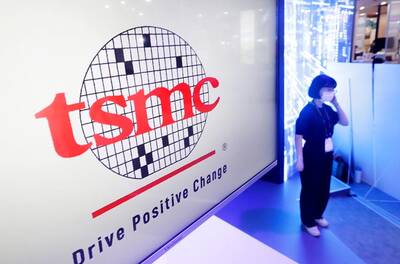
BIG YEAR: The company said it would also release its A12 chip the same year to keep a ‘reliable stream of new silicon technologies’ flowing to its customers Taiwan Semiconductor Manufacturing Co (TSMC, 台積電) yesterday said its newest A13 chip is to enter volume production in 2029 as the chipmaker seeks to hold onto its tech leadership and demand for next-generation chips used in artificial intelligence (AI), high-performance-computing (HPC) and mobile applications. TSMC, the world’s biggest contract chipmaker, also unveiled its A12 chip at its annual technology symposium in Santa Clara, California. The A12 chip, which features TSMC’s super-power-rail technology to provide backside power delivery for AI and HPC applications, is also to enter volume production in 2029, a year after the scheduled release of the A14 chip. The technology moves


 RSS
RSS