


Japan’s ruling party yesterday proposed the nation’s biggest-ever stimulus package of ¥60 trillion (US$554 billion) as the COVID-19 pandemic locks the economy in a recession.
The sum includes ¥20 trillion in fiscal measures with private initiatives and other elements likely making up the rest, the proposal by the Liberal Democratic Party showed.
More than ¥10 trillion, or the equivalent of a 5 percentage point cut in the sales tax rate, would be handed out to the public in a combination of cash, subsidies and coupons, the plan showed.

Photo: Reuters
The proposal puts an initial figure on a stimulus package that Japanese Prime Minister Shinzo Abe promised on Saturday would be bigger than the economic support offered in the wake of the 2008 global financial crisis.
The plan did not include details on how the package would be funded, although the scale of fiscal measures suggests a sharp increase in the budget deficit is likely.
The main takeaway from the plan is the Abe administration’s signaling of its strong commitment to support the economy, economists said.
“There’s a lot of debate about how big the package needs to be, but right now there’s no point in debating size,” Itochu Research Institute chief economist Atsushi Takeda said.
“The government is saying: ‘Yes, we’re worried about sorting out the nation’s finances, but right now we’ll do whatever needs to be done.’ And there’s no opposition party in Japan that’s going to disagree with that,” Takeda said.
The plan leaves the door open to more stimulus down the line, flagging the need to consider more measures if needed.
Past experience shows that one package is unlikely to be enough, with as many as five sets of measures unleashed between August 2008 and December 2009 as Japan battled the fallout of the world financial crisis.
“Quite a few in the party hold the view that this still isn’t enough,” said Fumio Kishida, the party’s policy chief, who submitted the proposal to Abe. “I asked the prime minister to take leadership on this matter and put together an even bigger number for our policy response.”
Japanese Minister of Finance Taro Aso has already called for a two-stage response to the impact of the pandemic.
Kishida on Monday said that a series of packages could eventually amount to ¥100 trillion.
The latest package would be equivalent to more than 10 percent of the nation’s GDP and calls for corporate funding measures of more than ¥40 trillion, the plan says.
It also says the party tax panel would consider tax payment deferrals and cuts.
The plan said cash handouts would be made periodically for households and individuals whose incomes have been greatly hit by the virus.
It also calls for increased subsidies to companies that do not cut jobs.
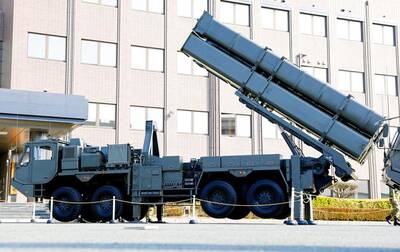
Japan has deployed long-range missiles in a southwestern region near China, the Japanese defense minister said yesterday, at a time when ties with Beijing are at their lowest in recent years. The missiles were installed in Kumamoto in the southern region of Kyushu, as Japan is attempting to shore up its military capacity as China steps up naval activity in the East China Sea. “Standoff defense capabilities enable us to counter the threat of enemy forces attempting to invade our country ... while ensuring the safety of our personnel,” Japanese Minister of Defense Shinjiro Koizumi said. “This is an extremely important initiative for
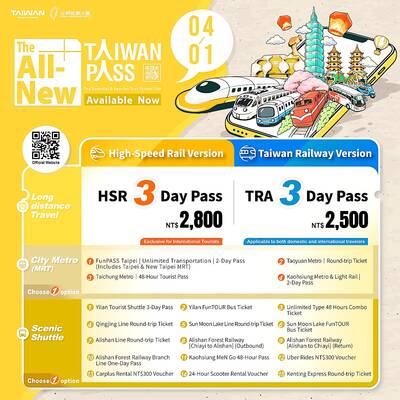
MORE POPULAR: Taiwan Pass sales increased by 59 percent during the first quarter compared with the same period last year, the Tourism Administration said The Tourism Administration yesterday said that it has streamlined the Taiwan Pass, with two versions available for purchase beginning today. The tourism agency has made the pass available to international tourists since 2024, allowing them to access the high-speed rail, Taiwan Railway Corp services, four MRT systems and four Taiwan Tourist Shuttles. Previously, five types of Taiwan Pass were available, but some tourists have said that the offerings were too complicated. The agency said only two types of Taiwan Pass would be available, starting from a three-day pass with the high-speed rail and a three-day pass with Taiwan Railway Corp. The former costs NT$2,800
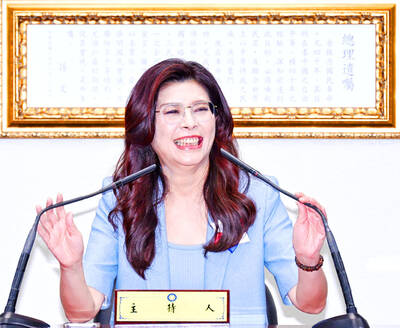
POLLS CONCERNS: There are concerns within the KMT that a Cheng Li-wun-Xi Jinping meeting could trigger a voter backlash in elections in November Chinese Nationalist Party (KMT) Chairwoman Cheng Li-wun (鄭麗文) accepted an invitation from Chinese President Xi Jinping (習近平) to visit next month, her party and Chinese state media reported yesterday. Cheng, who took up her role in November last year, “gladly accepted” the invitation to lead a delegation to China, the KMT said in a statement, confirming a Xinhua news agency report. Cheng “looks forward to joint efforts by both parties to advance the peaceful development of cross-strait relations, promote cross-strait exchanges and cooperation, and work for peace in the Taiwan Strait and greater well-being for people on both sides,” the statement said. Chinese
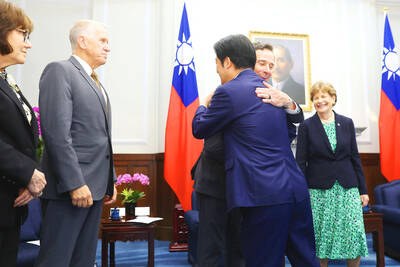
SIGNIFICANT TO THE WORLD: The delegation’s visit aims to send a clear message that bipartisan support for Taiwan is consistent, US Senator Jeanne Shaheen said The US Senate’s bipartisan support for Taiwan remains strong and Taiwan-US ties would continue for decades to come, a US Senate delegation said in Taipei yesterday, while calling on the legislature to swiftly pass a special defense budget bill. A US delegation led by Democratic US Senator Jeanne Shaheen and Republican US Senator John Curtis — both members of the US Senate Committee on Foreign Relations — arrived in Taiwan yesterday for a two-day visit. The other senators of the delegation included Senate Taiwan Caucus cochair Thom Tillis and Senate Committee on Armed Services senior member Jacky Rosen. Shaheen told a news


 RSS
RSS