


The nation’s 27th and 28th confirmed cases of COVID-19 were announced by the Central Epidemic Command Center (CECC) yesterday, which also issued a level 1 “watch” travel notice for Italy and Iran amid reports of a rapid rise in confirmed cases in the two nations.
The 27th case is a man in his 80s who has chronic hypertension and diabetes and is on dialysis, but has not been abroad recently, while the 28th case is his son, who is in his 50s and lives with his father, Centers for Disease Control (CDC) Deputy Director-General Chuang Jen-hsiang (莊人祥) said.
The older man began suffering coughs and a runny nose on Feb. 6 and was hospitalized for pneumonia in a single-room ward after he developed a fever on Feb. 9, Chuang said.
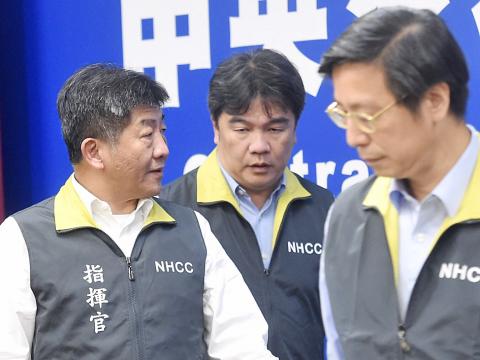
Photo: Chien Jung-fong, Taipei Times
He was transferred to an intensive care unit on Sunday last week and moved to a negative pressure isolation ward on Thursday for suspected tuberculosis, he said.
The son developed a fever, runny nose and sore throat on Jan. 31, sought treatment on Feb. 4 and was diagnosed with pneumonia on Feb. 8, but returned home for self-health management before making two return visits for treatment on Feb. 11 and Tuesday.
The pair were reported as suspected COVID-19 cases on Friday, and the test results that came back yesterday were positive, Chuang said, adding that officials have begun a contact investigation to screen family members and close contacts of the pair, along with healthcare personnel who might have come into contact with them.
The center suspects the family’s younger son, who is in his 40s and lives with his father and brother, might be the source of infection, as he frequently visits China for work, Chuang said.
The younger man returned from Guangzhou on Dec. 2 last year, but late last month he had a meal with friends who had returned from China, and developed a sore throat on Jan. 29, Chuang said.
CDC Director-General Chou Jih-haw (周志浩) said the younger man has been hospitalized and tested for COVID-19.
Minister of Health and Welfare Chen Shih-chung (陳時中), head of the CECC, said all 19 Taiwanese passengers on the Diamond Princess cruise ship who returned home on a charter flight on Friday have tested negative for COVID-19 for a second time.
They are being quarantined for another 14 days, but the location of the quarantine site would not be made public, he said.
The CECC will cooperate with local governments on home-isolation and home-quarantine care services by providing medical assistance, transportation arrangements, life support and other services for people under home quarantine, Chen said.
The project would begin this coming Sunday and the center has told local governments to establish special hotlines for the services, so that people under home quarantine can receive help more effectively, the minister said.
Meanwhile, the CECC issued a level 1 “watch” travel notice for Italy and Iran, which advises travelers to practice the usual precautions.
Asked if the CECC would impose additional border controls on passengers from Japan and South Korea, Chen said that specialists are discussing whether enhanced measures, such as mandatory home quarantine, should be imposed, as the number of COVID-19 cases in those nations continue to rise.
Asked whether mass public events should be canceled or postponed nationally, given that more than 100 confirmed cases in South Korea were linked to a church, Chou said the risk of local transmission is still relatively low, so public events would not be banned yet.
However, event organizers should make sure they are familiar with the COVID-19 prevention guidelines on the CDC’s Web site, the health minister said.
The guidelines could change if the COVID-19 situation in Taiwan changes, he added.

SILENCING CRITICS: In addition to blocking Taiwan, China aimed to prevent rights activists from speaking out against authoritarian states, a Cabinet department said The Ministry of Foreign Affairs (MOFA) yesterday condemned transnational repression by Beijing after RightsCon, a major digital human rights conference scheduled to be held in Zambia this week, was abruptly canceled due to Chinese pressure over Taiwanese participation. This year’s RightsCon, the world’s largest conference discussing issues “at the intersection of human rights and technology,” was scheduled to take place from tomorrow to Friday in Lusaka, and expected to draw 2,600 in-person attendees from 150 countries, along with 1,100 online participants. However, organizers were forced to cancel the event due to behind-the-scenes pressure from China, the ministry said, expressing its “strongest condemnation”
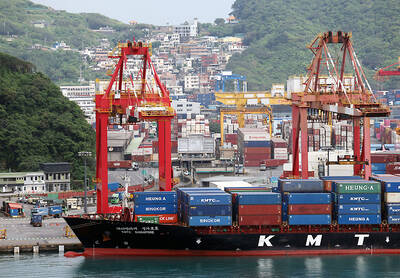
Taiwan’s economy grew far faster than expected in the first quarter, as booming demand for artificial intelligence (AI) applications drove a surge in exports, spilling over into investment and consumption, the Directorate-General of Budget, Accounting and Statistics (DGBAS) said yesterday. GDP growth was 13.69 percent year-on-year during the January-to-March period, beating the DGBAS’ February forecast by 2.23 percentage points and marking the most robust growth in nearly four decades, DGBAS senior official Chiang Hsin-yi (江心怡) told a news conference in Taipei. The result was powered by exports, which remain the backbone of Taiwan’s economy, Chiang said. Outbound shipments jumped 51.12 percent year-on-year to
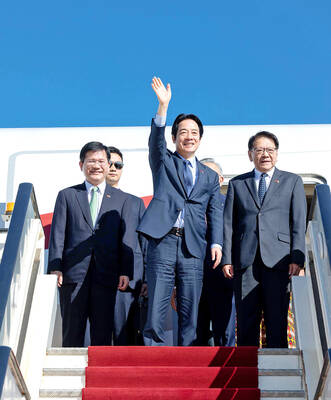
DELAYED BUT DETERMINED: The president’s visit highlights Taiwan’s right to international engagement amid regional pressure from China President Willaim Lai (賴清德) yesterday arrived in Eswatini, more than a week after his planned visit to Taiwan’s sole African ally was suspended because of revoked overflight permits. “The visit, originally scheduled for April 22, was postponed due to unforeseen external factors,” Lai wrote on social media. “After several days of careful arrangements by our diplomatic and national security teams, we successfully arrived today.” Lai said he looked forward to further deepening Taiwan-Eswatini relations through closer cooperation in the economy, agriculture, culture and education, as well as advancing the nation’s international partnerships. The president was initially scheduled to arrive in time to celebrate
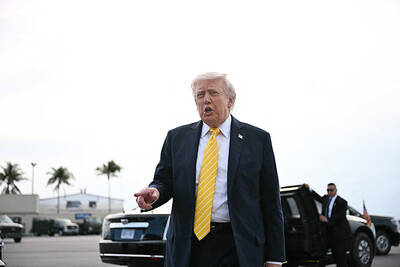
Iran’s Islamic Revolutionary Guard Corp (IRGC) yesterday said the US faced a choice between an “impossible” military operation or a “bad deal” with Tehran, after US President Donald Trump disparaged Iran’s latest peace proposal. Negotiations between the two countries have been deadlocked since a ceasefire came into effect on April 8, with only one round of direct peace talks held so far. Iran’s Tasnim and Fars news agencies reported that Tehran had submitted a 14-point proposal to mediator Pakistan, but Trump was quick to cast doubt on it. “I will soon be reviewing the plan that Iran has just sent to us, but


 RSS
RSS