


A man suspected of planting a bomb near the offices of the Chinese Nationalist Party’s (KMT) Houbi District (後壁) chapter in Tainan was arrested yesterday morning in Kaohsiung following an overnight standoff with police.
Police said that the suspect, surnamed Wu (吳), was captured on surveillance cameras on Thursday night as he approached the building on foot and allegedly placed an improvised explosive device next to the building’s main entrance.
On Friday evening, the Criminal Investigation Bureau and the Kaohsiung City Police Department traced the man to a fourth-floor apartment on Yongle Street in Lingya District (苓雅), police said.
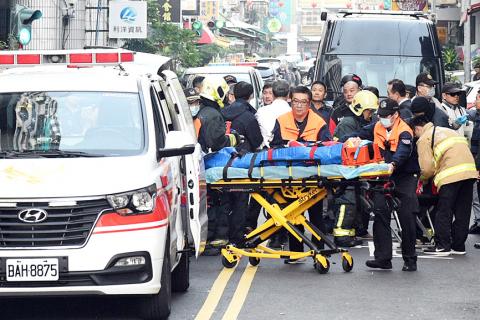
Photo: Chang Chung-yi, Taipei Times
Wu refused to give himself up, so police brought family members to the scene to coax him out of the building, Tainan District Prosecutors’ Office spokesman Lin Chung-pin (林仲斌) said.
However, Wu’s mother’s pleas were unsuccessful, police said, adding that when they refused his demands to meet with Kaohsiung Deputy Mayor Yeh Kuang-shih (葉匡時) or Evelyn Tsai (蔡沁瑜), deputy chief executive of the Yonglin Foundation — launched by Hon Hai Precision Industry Co (鴻海精密) founder Terry Gou (郭台銘) — Wu threw a home-made explosive from the fourth floor.
It did not explode, police said.
When efforts to coax Wu out of the building failed, SWAT officers made successive attempts to break into the apartment at about 4am, 5am and 7am, firing tear gas and exchanging gunfire with Wu, who had a handgun, police said.
Officers fired more than 100 bullets, they said.
In the final attempt, officers arrested Wu, who was transferred to Chung-ho Memorial Hospital for treatment for four non-life-threatening gunshot wounds to his neck and buttocks, and under his left and right arms.
Wu, who is in his late 40s, was renting an apartment in Kaohsiung and the Yongle Street residence where he was arrested belonged to a friend, prosecutors said.
After treatment, he is to be questioned as prosecutors seek details about his professional background and possible motives, Lin said.
The device that Wu is accused of planting in Tainan contained triacetone triperoxide, or TATP, which was used in terrorist attacks in Paris in November 2015 and Brussels in March 2016, Tainan Police Commissioner Chou Yew-woei (周幼偉) said.
The device held nearly 4 liters of TATP, Chou said.
Police also found bottles containing approximately 1kg of the substance in a backpack at the residence in Kaohsiung, as well as suspected bomb-making components in a vehicle rented in Wu’s name, he said.
Residents in homes near the Yongle Street standoff said they had been afraid to sleep, as they could hear the police and Wu trading gunfire.
A man surnamed Ni (倪), who was visiting his mother-in-law in the vicinity, said that the use of TATP was of great concern, as it has half the explosive power of TNT.
“My mother-in-law’s house was at the edge of the area police had cordoned off and I was very worried about collateral damage,” Ni said, adding that he was relieved to see that Wu was arrested.
Preliminary investigations indicate that Wu learned online how to obtain materials to make TATP, Chou said, adding that it was fortunate that he was only able to remotely detonate one device at a time and that his alleged attempt to detonate the device in Houbi was unsuccessful.
KMT deputy spokeswoman Hung Yu-chien (洪于茜) said the KMT thanked the police for their hard work.
Calling on the public to remain rational and calm, the party called on President Tsai Ing-wen’s (蔡英文) administration to issue guarantees for a safe election environment for candidates and voters.
Tsai also thanked the police and called on people to remain calm.
Additional reporting by Yang Chin-cheng, Shih Hsiao-kuang and Ko You-hao
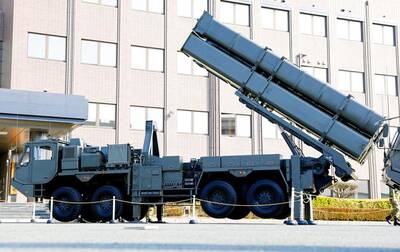
Japan has deployed long-range missiles in a southwestern region near China, the Japanese defense minister said yesterday, at a time when ties with Beijing are at their lowest in recent years. The missiles were installed in Kumamoto in the southern region of Kyushu, as Japan is attempting to shore up its military capacity as China steps up naval activity in the East China Sea. “Standoff defense capabilities enable us to counter the threat of enemy forces attempting to invade our country ... while ensuring the safety of our personnel,” Japanese Minister of Defense Shinjiro Koizumi said. “This is an extremely important initiative for
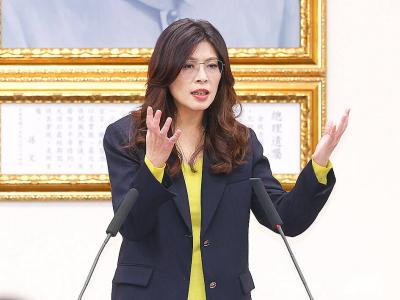
Chinese Nationalist Party (KMT) Chairwoman Cheng Li-wun (鄭麗文) today accepted an invitation from Chinese President Xi Jinping (習近平) to lead a delegation to China next month, saying she hopes to promote the peaceful development of cross-strait relations and bring stability to the Taiwan Strait. “I am grateful and happy to accept this invitation,” Cheng said in a statement from the KMT chairperson’s office. Cheng said she hopes both sides can work together to promote the peaceful development of cross-strait relations, enhance exchange and cooperation, bring stability to the Taiwan Strait and improve people’s livelihoods. At today's news conference, Cheng said any efforts to

MORE POPULAR: Taiwan Pass sales increased by 59 percent during the first quarter compared with the same period last year, the Tourism Administration said The Tourism Administration yesterday said that it has streamlined the Taiwan Pass, with two versions available for purchase beginning today. The tourism agency has made the pass available to international tourists since 2024, allowing them to access the high-speed rail, Taiwan Railway Corp services, four MRT systems and four Taiwan Tourist Shuttles. Previously, five types of Taiwan Pass were available, but some tourists have said that the offerings were too complicated. The agency said only two types of Taiwan Pass would be available, starting from a three-day pass with the high-speed rail and a three-day pass with Taiwan Railway Corp. The former costs NT$2,800

The nation’s fastest supercomputer, Nano 4 (晶創26), is scheduled to be launched in the third quarter, and would be used to train large language models in finance and national defense sectors, the National Center for High-Performance Computing (NCHC) said. The supercomputer, which would operate at about 86.05 petaflops, is being tested at a new cloud computing center in the Southern Taiwan Science Park in Tainan. The exterior of the server cabinet features chip circuitry patterns overlaid with a map of Taiwan, highlighting the nation’s central position in the semiconductor industry. The center also houses Taiwania 2, Taiwania 3, Forerunner 1 and


 RSS
RSS