


Industries in northeastern China have spewed large quantities of an ozone-depleting gas into the atmosphere in contravention of an international treaty, scientists said on Wednesday.
Since 2013, annual emissions from northeastern China of the banned chemical trichlorofluoromethane, or CFC-11, have increased by about 7,000 tonnes, they reported in the journal Nature.
“CFCs are the main culprit in depletion of the stratospheric ozone layer, which protects us from the sun’s ultraviolet radiation,” said lead author Matt Rigby, an atmospheric chemist at the University of Bristol in Britain.
CFC-11 was widely used in the 1970s and 1980s as a refrigerant and to make foam insulation. The 1987 Montreal Protocol banned CFCs and other industrial aerosols that chemically dissolve protective ozone 10 to 40km above Earth’s surface, especially over Antarctica and Australia.
Following the ban, global concentrations of CFC-11 declined steadily until about 2012, but last year startled scientists discovered that the pace of that slowdown dropped by half from 2013 to 2017.
Because the chemical does not occur in nature, the change could only have been produced by new emissions.
Evidence pointed to East Asia, but scientists could not nail down the exact origin.
“Our monitoring stations were set up in remote locations far from potential sources,” said coauthor Ron Prinn, a professor at the Massachusetts Institute of Technology.
Reports last year from non-governmental organization the Environmental Investigation Agency fingered Chinese foam factories in the coastal province of Shandong and the inland province of Hebei, which surrounds Beijing.
Suspicions were strengthened when authorities subsequently shut down some of the facilities without explanation.
To probe further, an international team of atmospheric scientists gathered additional data from monitoring stations in Taiwan and Japan.
“Our measurements showed ‘spikes’ in pollution when air arrived from industrialized areas” in China, said another lead author, Park Sun-young of Kyungpook National University in South Korea.
The team also ran computer simulations that confirmed the origin of the CFC-11 molecules.
“We didn’t find evidence of increased emissions from Japan, the Korean Peninsula or any other country,” added Luke Western, a post-doctoral researcher at the University of Bristol.
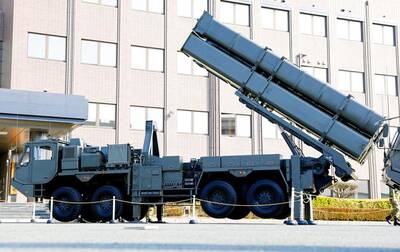
Japan has deployed long-range missiles in a southwestern region near China, the Japanese defense minister said yesterday, at a time when ties with Beijing are at their lowest in recent years. The missiles were installed in Kumamoto in the southern region of Kyushu, as Japan is attempting to shore up its military capacity as China steps up naval activity in the East China Sea. “Standoff defense capabilities enable us to counter the threat of enemy forces attempting to invade our country ... while ensuring the safety of our personnel,” Japanese Minister of Defense Shinjiro Koizumi said. “This is an extremely important initiative for
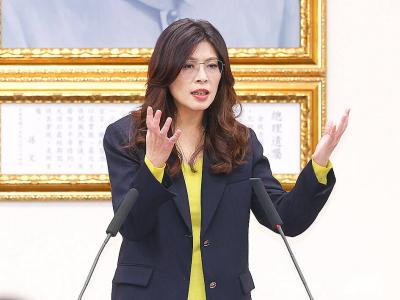
Chinese Nationalist Party (KMT) Chairwoman Cheng Li-wun (鄭麗文) today accepted an invitation from Chinese President Xi Jinping (習近平) to lead a delegation to China next month, saying she hopes to promote the peaceful development of cross-strait relations and bring stability to the Taiwan Strait. “I am grateful and happy to accept this invitation,” Cheng said in a statement from the KMT chairperson’s office. Cheng said she hopes both sides can work together to promote the peaceful development of cross-strait relations, enhance exchange and cooperation, bring stability to the Taiwan Strait and improve people’s livelihoods. At today's news conference, Cheng said any efforts to
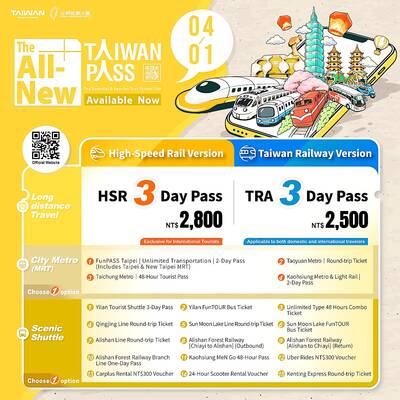
MORE POPULAR: Taiwan Pass sales increased by 59 percent during the first quarter compared with the same period last year, the Tourism Administration said The Tourism Administration yesterday said that it has streamlined the Taiwan Pass, with two versions available for purchase beginning today. The tourism agency has made the pass available to international tourists since 2024, allowing them to access the high-speed rail, Taiwan Railway Corp services, four MRT systems and four Taiwan Tourist Shuttles. Previously, five types of Taiwan Pass were available, but some tourists have said that the offerings were too complicated. The agency said only two types of Taiwan Pass would be available, starting from a three-day pass with the high-speed rail and a three-day pass with Taiwan Railway Corp. The former costs NT$2,800

The nation’s fastest supercomputer, Nano 4 (晶創26), is scheduled to be launched in the third quarter, and would be used to train large language models in finance and national defense sectors, the National Center for High-Performance Computing (NCHC) said. The supercomputer, which would operate at about 86.05 petaflops, is being tested at a new cloud computing center in the Southern Taiwan Science Park in Tainan. The exterior of the server cabinet features chip circuitry patterns overlaid with a map of Taiwan, highlighting the nation’s central position in the semiconductor industry. The center also houses Taiwania 2, Taiwania 3, Forerunner 1 and


 RSS
RSS