


The White House late on Thursday cautioned China against luring away Taiwan’s allies, in the latest sign that trade friction between Washington and Beijing is expanding into a broader struggle for global clout.
In a harshly worded statement, White House press secretary Sarah Huckabee Sanders said that the US would rethink relations with El Salvador after the Central American nation this week cut ties with Taipei in favor of Beijing.
The US would seek to deter Chinese efforts to forge new diplomatic bonds in the region, Sanders said.
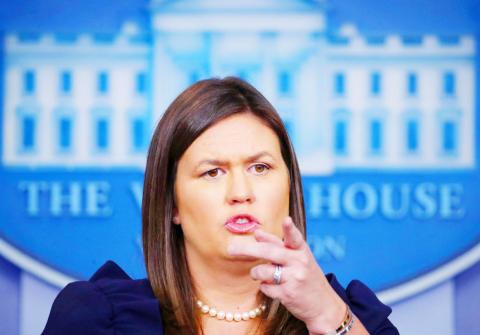
Photo: AP
“The El Salvadoran government’s receptiveness to China’s apparent interference in the domestic politics of a Western Hemisphere country is of grave concern to the United States, and will result in a re-evaluation of our relationship with El Salvador,” she said. “The United States will continue to oppose China’s destabilization of the cross-strait relationship and political interference in the Western Hemisphere.”
While the statement mentioned no specific action, it represented a potentially significant shift in the US’ posture toward China.
The western hemisphere reference evoked the US’ historical claim to a sphere of influence over North and South America under the Monroe Doctrine, which then-US secretary of state John Kerry in 2013 declared “over.”
El Salvador was the third Central American nation to recognize Beijing in two years, leaving Taipei with only 17 diplomatic allies.
The Presidential Office yesterday thanked the US for “speaking out for justice.”
“Taiwan is grateful to the US authorities, including the White House, government and Congress, for the remarks they made in favor of Taiwan” after El Salvador switched recognition to China, Presidential Office spokesperson Alex Huang (黃重諺) said in a statement.
“Protecting the country’s sovereignty and dignity, strengthening our self-defense and safeguarding our free and democratic lifestyle is our bottom line, which is also an internationally recognized value,” Huang quoted President Tsai Ing-wen (蔡英文) as saying. “Taiwan will not yield to China’s intimidation and will continue to contribute to the stabilization and the forces of good in the region.”
Separately, Tsai met with former US Pacific Fleet commander Admiral Scott Swift in Taipei yesterday.
She thanked Swift, the US Congress and US government for their support, and said she hoped for regular arms sales to Taiwan, as well as more exchanges on autonomous defense capabilities.
Maintaining security and stability in the Taiwan Strait and in the region is a goal that the two countries share, Tsai said.
As China’s suppression of Taiwan continues to increase, Taipei should work closely with the US and other nations that have similar beliefs, and play a more active role in regional security, she said.
Apart from boosting military exchanges between the US and Taiwan, Swift’s visit was evidence of the strong partnership between the two nations, Tsai said.
This month, US President Donald Trump signed the US National Defense Authorization Act for fiscal year 2019, she said, adding that the sections pertaining to Taiwan contain benefits that include mutual visits between officials from Taiwan and the US, Taiwan-US military exchanges and the improvement of Taiwan’s military preparedness.
Additional reporting by CNA
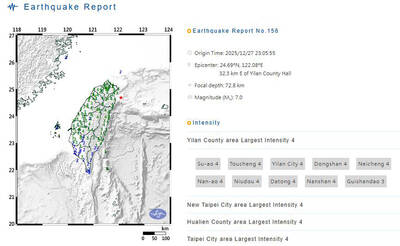
A magnitude 7.0 earthquake struck off Yilan at 11:05pm yesterday, the Central Weather Administration (CWA) said. The epicenter was located at sea, about 32.3km east of Yilan County Hall, at a depth of 72.8km, CWA data showed There were no immediate reports of damage. The intensity of the quake, which gauges the actual effect of a seismic event, measured 4 in Yilan County area on Taiwan’s seven-tier intensity scale, the data showed. It measured 4 in other parts of eastern, northern and central Taiwan as well as Tainan, and 3 in Kaohsiung and Pingtung County, and 2 in Lienchiang and Penghu counties and 1
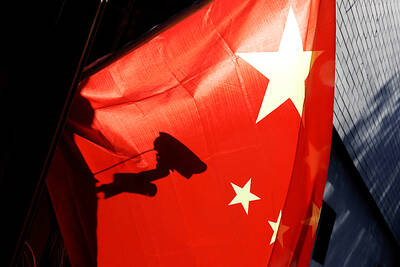
FOREIGN INTERFERENCE: Beijing would likely intensify public opinion warfare in next year’s local elections to prevent Lai from getting re-elected, the ‘Yomiuri Shimbun’ said Internal documents from a Chinese artificial intelligence (AI) company indicated that China has been using the technology to intervene in foreign elections, including propaganda targeting Taiwan’s local elections next year and presidential elections in 2028, a Japanese newspaper reported yesterday. The Institute of National Security of Vanderbilt University obtained nearly 400 pages of documents from GoLaxy, a company with ties to the Chinese government, and found evidence that it had apparently deployed sophisticated, AI-driven propaganda campaigns in Hong Kong and Taiwan to shape public opinion, the Yomiuri Shimbun reported. GoLaxy provides insights, situation analysis and public opinion-shaping technology by conducting network surveillance
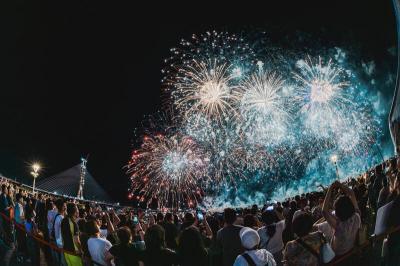
Taiwan is gearing up to celebrate the New Year at events across the country, headlined by the annual countdown and Taipei 101 fireworks display at midnight. Many of the events are to be livesteamed online. See below for lineups and links: Taipei Taipei’s New Year’s Party 2026 is to begin at 7pm and run until 1am, with the theme “Sailing to the Future.” South Korean girl group KARA is headlining the concert at Taipei City Hall Plaza, with additional performances by Amber An (安心亞), Nick Chou (周湯豪), hip-hop trio Nine One One (玖壹壹), Bii (畢書盡), girl group Genblue (幻藍小熊) and more. The festivities are to

Auckland rang in 2026 with a downtown fireworks display launched from New Zealand’s tallest structure, Sky Tower, making it the first major city to greet the new year at a celebration dampened by rain, while crowds in Taipei braved the elements to watch Taipei 101’s display. South Pacific countries are the first to bid farewell to 2025. Clocks struck midnight in Auckland, with a population of 1.7 million, 18 hours before the famous ball was to drop in New York’s Times Square. The five-minute display involved 3,500 fireworks launched from the 240m Sky Tower. Smaller community events were canceled across New Zealand’s


 RSS
RSS