


A woman suspected of shooting three people at YouTube headquarters before killing herself “hated’ the company because it had stopped paying her for videos she posted on the platform, her father said late on Tuesday.
San Bruno police identified the suspect as Nasim Aghdam of southern California.
YouTube had “stopped everything,” and “she was angry,” her father Ismail Aghdam said from his San Diego home in a telephone interview with the Bay Area News Group.
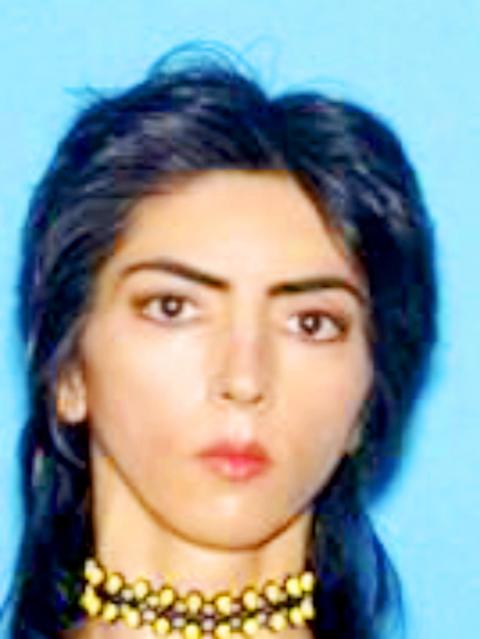
Photo: AP
People who post on YouTube can receive money from advertisements that accompany their videos, but the company “de-monetizes” some channels for reasons including inappropriate material or having fewer than 1,000 subscribers.
Ismail Aghdam said he had reported his daughter missing on Monday after she did not answer her telephone for two days.
He said the family received a call from Mountain View Police at about 2am on Tuesday saying they found Nasim Aghdam sleeping in a car.
He said he warned them she might be headed to YouTube because she “hated” the company.
Mountain View Police spokeswoman Katie Nelson confirmed officers located a woman by the same name asleep in a vehicle in a Mountain View parking lot on Tuesday morning.
Nelson said the woman declined to answer further questions, but the police spokeswoman did not respond to a question about whether police were warned Nasim Aghdam might go to YouTube.
Authorities earlier on Tuesday said that the shooting was being investigated as a domestic dispute.
Terrified employees huddled inside, calling 911, as police officers and federal agents swarmed the company’s suburban campus sandwiched between two interstate freeways in the San Francisco Bay area of San Bruno, California.
YouTube employee Dianna Arnspiger said she was on the building’s second floor when she heard gunshots, ran to a window and saw the shooter on a patio outside.
She said the woman wore glasses and a scarf, and was using a “big, huge pistol.”
“It was a woman and she was firing her gun, and I just said: ‘Shooter,’ and everybody started running,” Arnspiger said.
She and others hid in a conference room for an hour while another employee repeatedly called 911 for updates.
“It was terrifying,” she said.
A 36-year-old man was in critical condition, a 32-year-old woman was in serious condition and a 27-year-old woman was in fair condition, a spokesman for San Francisco General Hospital said.
Witnesses described terror before police officers arrived and discovered a victim near a front door and then found the shooter several minutes later with what appeared to be a self-inflicted gunshot wound, San Bruno Police Chief Ed Barberini said.
He said two additional gunshot victims were found at an adjacent business minutes later.
The White House said US President Donald Trump was briefed on the shooting and that officials were monitoring developments.
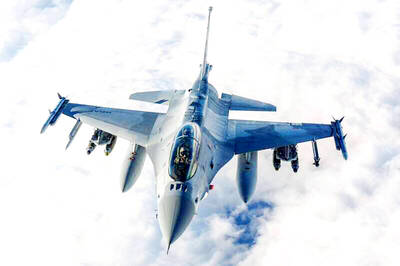
LONG FLIGHT: The jets would be flown by US pilots, with Taiwanese copilots in the two-seat F-16D variant to help familiarize them with the aircraft, the source said The US is expected to fly 10 Lockheed Martin F-16C/D Block 70/72 jets to Taiwan over the coming months to fulfill a long-awaited order of 66 aircraft, a defense official said yesterday. Word that the first batch of the jets would be delivered soon was welcome news to Taiwan, which has become concerned about delays in the delivery of US arms amid rising military tensions with China. Speaking on condition of anonymity, the official said the initial tranche of the nation’s F-16s are rolling off assembly lines in the US and would be flown under their own power to Taiwan by way
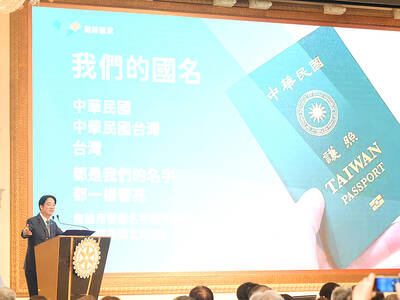
‘OF COURSE A COUNTRY’: The president outlined that Taiwan has all the necessary features of a nation, including citizens, land, government and sovereignty President William Lai (賴清德) discussed the meaning of “nation” during a speech in New Taipei City last night, emphasizing that Taiwan is a country as he condemned China’s misinterpretation of UN Resolution 2758. The speech was the first in a series of 10 that Lai is scheduled to give across Taiwan. It is the responsibility of Taiwanese citizens to stand united to defend their national sovereignty, democracy, liberty, way of life and the future of the next generation, Lai said. This is the most important legacy the people of this era could pass on to future generations, he said. Lai went on to discuss
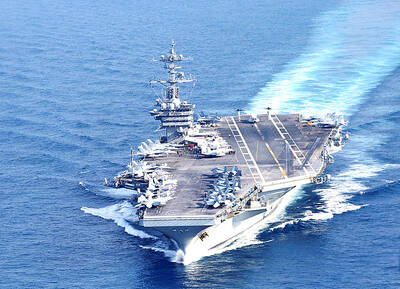
MISSION: The Indo-Pacific region is ‘the priority theater,’ where the task of deterrence extends across the entire region, including Taiwan, the US Pacific Fleet commander said The US Navy’s “mission of deterrence” in the Indo-Pacific theater applies to Taiwan, Pacific Fleet Commander Admiral Stephen Koehler told the South China Sea Conference on Tuesday. The conference, organized by the Center for Strategic and International Studies (CSIS), is an international platform for senior officials and experts from countries with security interests in the region. “The Pacific Fleet’s mission is to deter aggression across the Western Pacific, together with our allies and partners, and to prevail in combat if necessary, Koehler said in the event’s keynote speech. “That mission of deterrence applies regionwide — including the South China Sea and Taiwan,” he

UNPRECEDENTED: In addition to the approved recall motions, cases such as Ma Wen-chun’s in Nantou are still under review, while others lack enough signatures The Central Election Commission (CEC) announced yesterday that a recall vote would take place on July 26, after it approved the first batch of recall motions targeting 24 Chinese Nationalist Party (KMT) lawmakers and Hsinchu Mayor Ann Kao (高虹安). Taiwan is in the midst of an unprecedented wave of mass recall campaigns, following a civil society push that echoed a call made by Democratic Progressive Party (DPP) caucus whip Ker Chien-ming (柯建銘) in January to initiate signature drives aimed at unseating KMT legislators. Under the Civil Servants Election and Recall Act (公職人員選舉罷免法), Taiwanese can initiate a recall of district-elected lawmakers by collecting


 RSS
RSS