


Taipei prosecutors yesterday dropped insider trading charges against former Academia Sinica president Wong Chi-huey (翁啟惠), over alleged financial impropriety linked to biotech firm OBI Pharma Inc (台灣浩鼎).
It was one major hurdle cleared for Wong, who still faces corruption and misconduct charges brought against him by prosecutors in January last year.
The Shilin District Prosecutors’ Office said there was insufficient evidence of insider trading between Wong and 11 OBI Pharma executives, who said that they were acting on the advice of a securities firm broker when they sold Pharma shares in 2016.
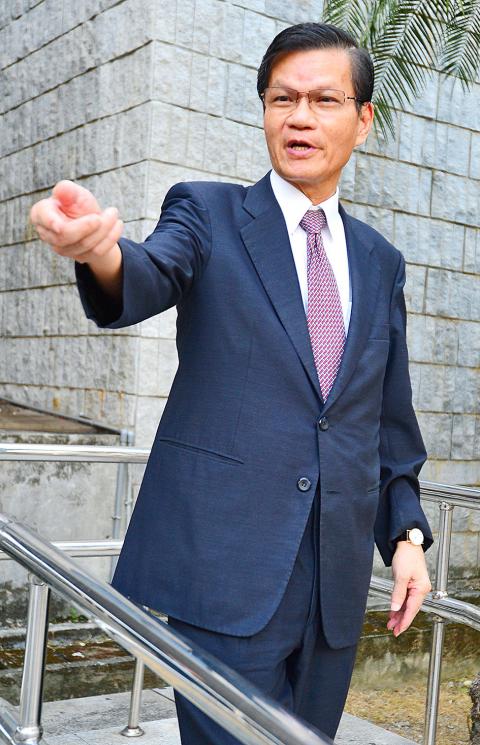
Photo: Wang Yi-sung, Taipei Times
It was alleged that Wong and the executives had advance knowledge of unfavorable results in a double-blind clinical trial of a cancer drug, and sold the shares before the drop in share prices after the news was officially released.
It is the second time insider trading charges have been dropped in the case; the first was in January last year.
However, at the time the Taiwan High Prosecutors’ Office cited several issues and ordered prosecutors to reassess whether to proceed with the indictments.
The investigation into the sales of shares began in April 2016, with Wong, then-OBI Pharma chairman Michael Chang (張念慈) and other company executives summoned for questioning, which resulted in indictments against them.
Allegations of improper conduct began after Wong endorsed a new OBI Pharma cancer drug, despite discouraging clinical trial results in February 2016, and it emerged that his daughter was a major shareholder in the company.
The shares he sold belonged to his daughter and he was acting on her behalf.
In Wong’s case, the original indictments were divided into charges of insider trading and charges of corruption and misconduct as a public servant.
Prosecutors said their investigation found that on Feb. 21, 2016, a broker telephoned Wong to tell him of a rise in company share prices and suggested he sell.
“Wong was acting on the broker’s advice, which is not deemed insider trading,” prosecutors said. “The other company executives sold OBI shares on Aug. 28, 2016, after a meeting of biotech experts where the results of the clinical testing were discussed.”
However, the 11 executives, including Chang, did not participate in the meeting and it was decided to drop the insider trading charges against them,” the statement said.
Wong is a world-renowned biochemist and had been touted as a potential Nobel Prize candidate.
Wong’s offer of resignation, his second, was accepted by then-president Ma Ying-jeou (馬英九) on May 10, 2016.
Additional reporting by staff writer

The National Chungshan Institute of Science and Technology yesterday showcased its locally developed variants of the Vision 60 robotic patrol dog, which it plans to deploy on the nation’s outlying territories in the South China Sea. The variants were produced under the Joint Lab project — created by the institute and domestic companies — and assembled with domestically produced motors, lenses and artificial intelligence (AI) systems alongside licensed tech from the US, Missile and Rocket Systems Research Division deputy director Jen Kuo-kang (任國光) told the media event at a military base in Taipei’s Dazhi (大直) area. Taiwan has built up its strengths
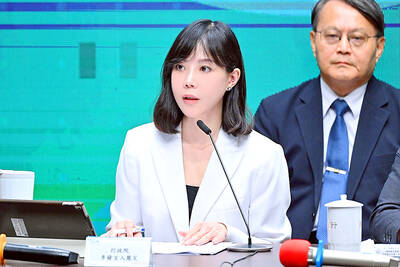
RIGHT DIRECTION: Taiwan’s efforts to prevent forced labor include a proposal to ‘fully prohibit’ employers from withholding workers’ documents, an official said Taiwan is to establish a mechanism to restrict imports of goods linked to forced labor, the Executive Yuan said yesterday, after the US proposed imposing additional tariffs on Taiwanese goods over labor concerns. “The Ministry of Labor and the Ministry of Economic Affairs are to establish an interministerial review procedure,” Executive Yuan spokesperson Michelle Lee (李慧芝) said at a news briefing in Taipei. “The government is to use the Foreign Trade Act [貿易法] as the legal basis to restrict imports of goods produced with forced labor” and bring its supply chain governance more in line with international standards on human rights, resilience

NOT IMMEDIATE: Taiwan has a chance to appeal the proposed 10 percent tariff before it starts, while other countries face a 12.5 percent tariff from the trade office Taiwan is among 60 economies determined by the US to have failed to impose or enforce a ban on the importation of goods produced with forced labor, according to a notice released on Tuesday by the Office of the US Trade Representative (USTR), which proposed imposing an additional 10 percent or more tariff on them. The USTR in a statement said that following an investigation, it had determined under Section 301 of the Trade Act of 1974 that the failure of the 60 economies to impose and effectively enforce a prohibition on the importation of goods produced with forced labor is

TIT-FOR-TAT: The US allegedly revoked the visa of a Chinese national working at Xinhua News Agency in the US in response to Beijing’s expulsion of Vivian Wang The Presidential Office yesterday condemned China for expelling a New York Times correspondent from Beijing following the newspaper’s interview with President William Lai (賴清德), saying the move highlighted Beijing’s suppression of press freedom and its threat to international news media. Taiwan has noted a series of recent incidents in which Beijing used similar tactics to “threaten and pressure international media outlets and journalists,” Presidential Office spokeswoman Karen Kuo (郭雅慧) said in a statement. “This concerns not only press freedom and freedom of expression, but also the safety of journalists, and Taiwan and relevant partners are paying close attention to the situation,” she


 RSS
RSS