


The day US Navy vessels arrive in Kaohsiung would be the day the Chinese People’s Liberation Army “unifies” Taiwan by force, said Li Kexin (李克新), minister at the Chinese embassy in the US.
Li made the remarks on Friday at an explanatory session at the Chinese embassy in Washington about the Chinese Communist Party’s 19th National Congress and US President Donald Trump’s visit to China last month.
The Taiwan issue is still a challenge to US-China relations, Li said, adding that the US’ National Defense Authorization Act (NDAA) passed by the US Congress — which enables mutual visits between Taiwanese and US naval vessels — violates the basic spirit of the establishment of diplomatic relations between the US and China.

Photo: Nadia Tsao, Taipei Times
As of Nov. 16, the NDAA for next fiscal year has been passed by both the US House of Representatives and the US Senate, and is awaiting Trump’s signature to become law.
Li said he went to the US Capitol and told US congressional staff that “I may have to thank you American friends,” adding that the officials asked what he meant with those words.
“I said: ‘Are you not going to send military vessels to Taiwan, to Kaohsiung...? If you send military vessels over there, [you] will activate the Anti-Secession Law [of China],” Li said on Friday.
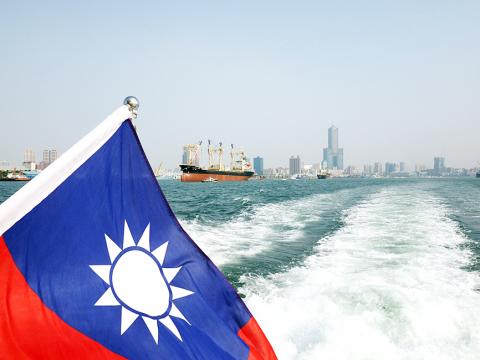
Photo: EPA / DAVID CHANG
Li said he was not joking, adding that US military vessels need to obtain China’s approval to visit Shanghai and if they want to visit Taiwan, China will definitely disapprove.
Citing Taiwanese human rights advocate Lee Ming-che’s (李明哲) conviction by a Chinese court for “subversion of state power,” General Association of Chinese Culture deputy secretary-general Chang Tieh-chih (張鐵志) being denied entry to Hong Kong and the increased frequency of Chinese military aircraft flying around Taiwan, Taiwanese journalists in attendance asked Li whether the incidents suggest that China’s policy toward Taiwan has tightened.
Li said that they were all individual cases and do not need to be “over-analyzed.”
Chinese President Xi Jinping’s (習近平) talk of “one China, 1992 consensus” (一個中國、 九 二共識) at the congress suggests that he has left the door open for cross-strait talks.
The “spiritual union” (心靈契合) Xi mentioned at the congress means that integration between the two sides of the Taiwan Strait is not a completely forceful one and that China wants Taiwanese to feel that “unification will let your feeling of a ‘small happiness’ (小確幸) turn into a ‘great happiness’ (大確幸),” Li said.
Peaceful unification is the highest goal, but China will not give up the option of unification by military force, Li said, adding that cross-strait relations are none of the US’ business and do not need to rely on the mediation of any other nation.
The Ministry of Foreign Affairs in Taipei yesterday said although the government welcomes and appreciates the US Congress’ demonstration of goodwill and support for improved Taiwan-US security cooperation through legislation, it cannot speak on Washington’s behalf about how it intends to execute the Taiwan-friendly elements of the NDAA.
Reiterating the Democratic Progressive Party (DPP) administration’s cross-strait stance, the ministry said the government is determined to push for peaceful and stable development of cross-strait ties and resolve differences through dialogue.
The Mainland Affairs Council also issued a statement highlighting the nation’s capability and determination to defend itself, adding that it would continue to reinforce communication with the US and its regional partners to ensure peace and stability across the Taiwan Strait.
Meanwhile, Chinese Nationalist Party (KMT) Culture and Communications Committee deputy director-general Hung Meng-kai (洪孟楷) said that the KMT would not tolerate any threats or finger-pointing aimed at the Republic of China’s homeland or the security of its people.
The DPP administration should face up to the importance of maintaining peaceful cross-strait relations and avoid any unnecessary misunderstandings that could cause irrepressible losses to Taiwan, he added.
Additional reporting by Stacy Hsu
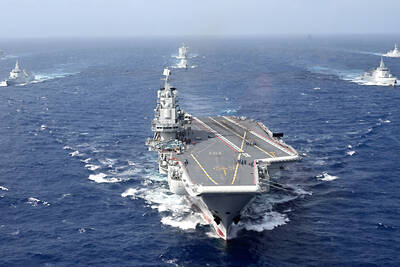
PROVOCATIVE: Chinese Deputy Ambassador to the UN Sun Lei accused Japan of sending military vessels to deliberately provoke tensions in the Taiwan Strait China denounced remarks by Japan and the EU about the South China Sea at a UN Security Council meeting on Monday, and accused Tokyo of provocative behavior in the Taiwan Strait and planning military expansion. Ayano Kunimitsu, a Japanese vice foreign minister, told the Council meeting on maritime security that Tokyo was seriously concerned about the situation in the East China and South China seas, and reiterated Japan’s opposition to any attempt to change the “status quo” by force, and obstruction of freedom of navigation and overflight. Stavros Lambrinidis, head of the EU delegation to the UN, also highlighted South China Sea
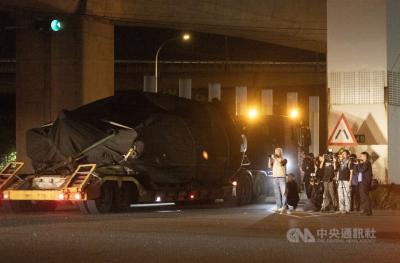
The final batch of 28 M1A2T Abrams tanks purchased from the US arrived at Taipei Port last night and were transported to the Armor Training Command in Hsinchu County’s Hukou Township (湖口), completing the military’s multi-year procurement of 108 of the tanks. Starting at 12:10am today, reporters observed more than a dozen civilian flatbed trailers departing from Taipei Port, each carrying an M1A2T tank covered with black waterproof tarps. Escorted by military vehicles, the convoy traveled via the West Coast Expressway to the Armor Training Command, with police implementing traffic control. The army operates about 1,000 tanks, including CM-11 Brave Tiger
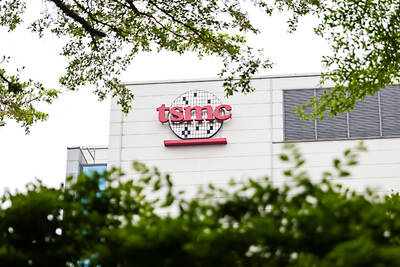
Taiwan Semiconductor Manufacturing Co (TSMC, 台積電), the world’s largest contract chipmaker, said it expects its 2-nanometer (2nm) chip capacity to grow at a compound annual rate of 70 percent from this year to 2028. The projection comes as five fabs begin volume production of 2-nanometer chips this year — two in Hsinchu and three in Kaohsiung — TSMC senior vice president and deputy cochief operating officer Cliff Hou (侯永清) said at the company’s annual technology symposium in Silicon Valley, California, last week. Output in the first year of 2-nanometer production, which began in the fourth quarter of last year, is expected to
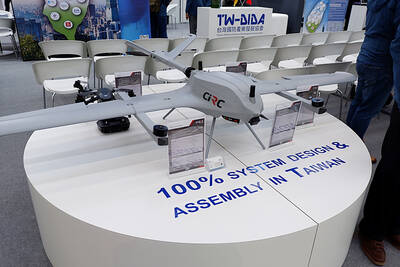
Taiwan’s drone exports surged past US$100 million in the first quarter, exceeding last year’s full-year total, with the Czech Republic emerging as the largest buyer, the Ministry of Economic Affairs said. Exports of complete drones reached US$115.85 million in the period, about 1.2 times the total recorded for all of last year, the ministry said in a report. Exports to the Czech Republic accounted for about US$100 million, far outpacing other markets. Poland, last year’s top destination, recorded about US$11.75 million in the first quarter. Taiwan’s drone exports have expanded rapidly in the past few years, with last year’s total


 RSS
RSS