


A proposal to amend the Constitution and transform the government into a true presidential system has been sent to the Executive Yuan after receiving support from 41 Democratic Progressive Party (DPP) legislators.
The proposal follows findings from the party’s think tank, the New Frontier Foundation, which were brought up for discussion during Sunday’s DPP National Congress, after which the proposal was raised by DPP legislators Su Chiao-hui (蘇巧慧), Chang Hung-lu (張宏陸) and others.
With 41 lawmakers supporting it, the proposal has already passed the 29-legislator threshold — or one-quarter of all legislators — required for it to be sent for consideration, the party said.
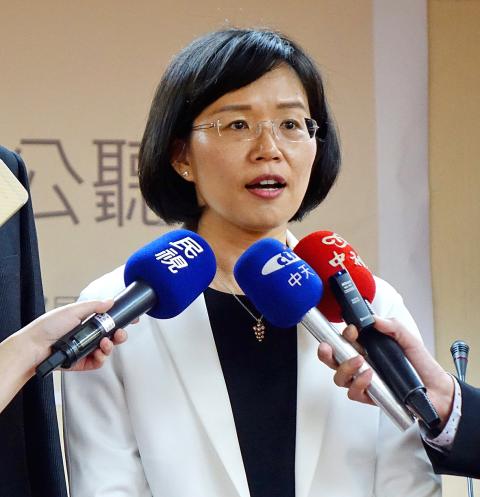
Photo: Chien Jung-fong, Taipei Times
Legislators said that while a democracy ought to be a responsible form of government where authority and responsibility is clearly demarcated, the current Constitution does not facilitate this.
The current system is like a Cabinet system where things “operate in a backward manner,” they said, adding that this makes it difficult for the government to execute legal and practical operations.
A presidential system is more in line with the public will, they said.
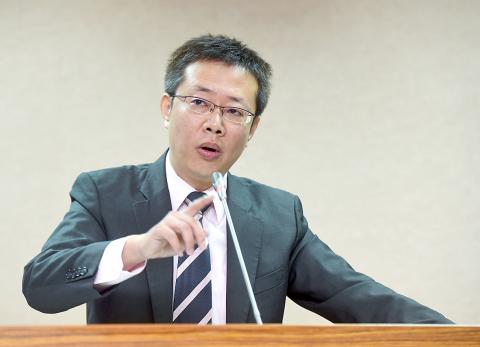
Photo: Chien Jung-fong, Taipei Times
If it is passed, the proposal will see the abolition of the Executive Yuan and the premiership, with those affected being reassigned by the president.
Under a presidential system the president has the highest level of executive power, oversees national affairs conferences, submits annual budget reports to the Legislative Yuan, makes decisions on imposing martial law and granting amnesty, makes declarations of war, signs peace treaties and passes resolutions on proposals made during national affairs conferences.
The authority of the Examination Yuan would be absorbed into the executive branch, which will be a new independent body.
More authority will be given to Aborigines through the appointment of a minimum quota of Aboriginal legislators, with smaller Aboriginal groups coordinating on the appointment of shared representatives.
The Legislative Yuan will deal with accusations of and investigations into government misconduct, handling such cases through the execution of the law.
In regard to the relationship between legislative and executive authority, the president will be required to submit reports on the state of national affairs and planned legislation within one month of every second meeting at the Legislative Yuan. The president will also be required to send reports on closed and planned budgets to the Legislative Yuan before specified deadlines. Ministers will be required to report to legislative committees upon request and will not be permitted to abstain from hearings, while question-and-answer sessions will no longer be held for Cabinet members. The current system whereby lawmakers can pass votes of no confidence to dismiss the Cabinet, and in which the president can dismiss the legislature, will be abolished.
The threshold for sending legal, budget and amendment proposals to the Legislative Yuan will be changed from 50 percent in support to two-thirds support from lawmakers.
Although there have been six changes to the Constitution, the operations of the government remain relatively unclear, Su said, adding that she hopes a presidential system will better balance administrative authority, with a clearer demarcation of executive, legislative and judicial powers.
Su said every country has a different political system and there is no “best” system, but each country should employ the system most suitable for its needs.
The system of two heads of state used in Taiwan has brought conflicts, she said, adding that after the 30 years of democratic development a new political system is needed to better clarify administrative authority.
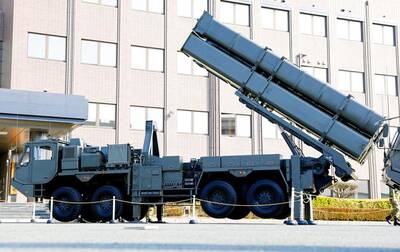
Japan has deployed long-range missiles in a southwestern region near China, the Japanese defense minister said yesterday, at a time when ties with Beijing are at their lowest in recent years. The missiles were installed in Kumamoto in the southern region of Kyushu, as Japan is attempting to shore up its military capacity as China steps up naval activity in the East China Sea. “Standoff defense capabilities enable us to counter the threat of enemy forces attempting to invade our country ... while ensuring the safety of our personnel,” Japanese Minister of Defense Shinjiro Koizumi said. “This is an extremely important initiative for
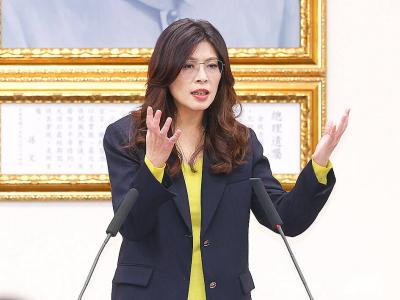
Chinese Nationalist Party (KMT) Chairwoman Cheng Li-wun (鄭麗文) today accepted an invitation from Chinese President Xi Jinping (習近平) to lead a delegation to China next month, saying she hopes to promote the peaceful development of cross-strait relations and bring stability to the Taiwan Strait. “I am grateful and happy to accept this invitation,” Cheng said in a statement from the KMT chairperson’s office. Cheng said she hopes both sides can work together to promote the peaceful development of cross-strait relations, enhance exchange and cooperation, bring stability to the Taiwan Strait and improve people’s livelihoods. At today's news conference, Cheng said any efforts to
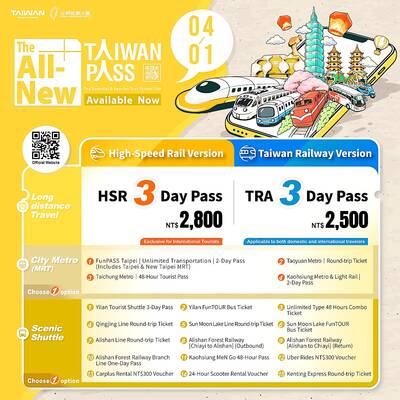
MORE POPULAR: Taiwan Pass sales increased by 59 percent during the first quarter compared with the same period last year, the Tourism Administration said The Tourism Administration yesterday said that it has streamlined the Taiwan Pass, with two versions available for purchase beginning today. The tourism agency has made the pass available to international tourists since 2024, allowing them to access the high-speed rail, Taiwan Railway Corp services, four MRT systems and four Taiwan Tourist Shuttles. Previously, five types of Taiwan Pass were available, but some tourists have said that the offerings were too complicated. The agency said only two types of Taiwan Pass would be available, starting from a three-day pass with the high-speed rail and a three-day pass with Taiwan Railway Corp. The former costs NT$2,800

The nation’s fastest supercomputer, Nano 4 (晶創26), is scheduled to be launched in the third quarter, and would be used to train large language models in finance and national defense sectors, the National Center for High-Performance Computing (NCHC) said. The supercomputer, which would operate at about 86.05 petaflops, is being tested at a new cloud computing center in the Southern Taiwan Science Park in Tainan. The exterior of the server cabinet features chip circuitry patterns overlaid with a map of Taiwan, highlighting the nation’s central position in the semiconductor industry. The center also houses Taiwania 2, Taiwania 3, Forerunner 1 and


 RSS
RSS